Question about TH product
Question
isoflavones ปกติจะผลิตจาก soybean ที่ปลูกเอง ควบคุมภายใต้สภาวะที่เหมาะสม บางทีใช้ GMO บางทีไม่ใช้ GMO (สรุปคือสกัดจากถั่วเหลืองบ้านๆนี้แหละคะ)
glycine soja ต่างกับ cultivated soybean หรือเปล่า ตรงนี้ ตามที่เห็นข้อมูล ไม่สามารถยืนยันได้ คือโปรตีนสกัด ([url=http://www.myskinrecipes.com/shop/protein-cosmetic-ingredients/54-elhibin.html:2vucvv3n]glycine soja protein[/url:2vucvv3n]) มีคุณสมบัติที่ดีมากต่อผิว ซึ่งตรงนี้เราเองไม่แน่ใจว่า เป็นเพราะเทคนิคการสกัด หรือเป็นเพราะสายพันธุ์โดยตรง ที่ทำให้คุณสมบัติดีกว่า โปรตีนสกัดทั่วๆไปคะ เนื่องจากเทคนิคการสกัดมีผลต่อคุณภาพของสารธรรมชาติต่างๆมากเช่นกัน บางครั้งสกัดไม่เป็นนำมาใช้ก็ไม่ได้ประโยชน์เลย แต่ถ้าให้คาดการ เนื่องจาก Pentapharm ผู้ผลิต Elhibin โปรตีนถั่วเหลืองสกัดตัวนี้ เป็น R&D Lab ที่ switzerland ซึ่งมี know-how กับ technology ที่สูงมากๆ เชื่อว่า เทคนิคการสกัดของเค้าต้องพิเศษคะ
ขอบคุณค่ะ
Staff - MySkinRecipes
Answer
Here are the answers to your questions about cosmetic ingredients:
Interaction of Alpha Arbutin with AHA/BHA in Acidic Conditions:
- If alpha arbutin is mixed directly with AHA/BHA in a formula, its stability range is pH 3.5-6.6. If the resulting pH is below 3.5, alpha arbutin will degrade over time, but not instantly.
- If you apply AHA/BHA first and then alpha arbutin, the alpha arbutin will not degrade immediately upon contact with the acidic layer on your skin. The concern is less about alpha arbutin degrading and more about the effectiveness of the AHA/BHA being reduced if the subsequent product (which is often formulated at a higher pH) raises the skin's surface pH too quickly. Alpha arbutin can still work even at a slightly lower pH after absorption.
Effectiveness of Alpha Arbutin at Lower pH:
- While alpha arbutin is stable between pH 3.5-6.6, its optimal working pH is generally considered to be in the higher part of this range or slightly above. If the pH is significantly lower than its optimal working range (even if it's still stable), its activity might be reduced compared to its performance at an ideal pH. However, as the staff mentioned, it can still work after penetrating the skin.
Optimal pH for AHA:
- The optimal pH for AHA to be effective is typically between 3.0 and 4.0, with the range of 3.0-3.5 being considered best for efficacy. Effectiveness significantly decreases above pH 4.0. For safety according to FDA guidelines, the pH should be above 3.5 and the concentration below 10%.
Adding Ingredients to BHA + Niacinamide for Faster Acne Reduction:
- It is recommended to use BHA and Niacinamide separately rather than mixing them in the same formula, especially if pH is a concern (Niacinamide is typically formulated at a higher pH than BHA). For a skincare routine aimed at reducing acne, consider using BHA as a targeted treatment. For overall skin health and reducing inflammation associated with acne, a formula combining Niacinamide (Vitamin B3) with Panthenol (Vitamin B5) and Green Tea Extract is suggested.
Layering AHA/BHA and Waiting:
- Applying AHA/BHA first and waiting (e.g., 20 minutes) is recommended because AHA/BHA work best at a low pH. Applying another product immediately afterwards, especially one with a higher pH, will raise the pH on the skin's surface, reducing the effectiveness of the AHA/BHA. Waiting allows the acids time to exfoliate and penetrate at their optimal pH before the pH is altered by subsequent layers. As mentioned before, this primarily affects the acid's performance, not necessarily the subsequent product like alpha arbutin, although maintaining an appropriate pH layer by layer can optimize the overall routine.
Acne Ingredients: Sulfur / Zinc Oxide / Sulfur Shale Oil:
- Sulfur: Is effective for acne. It helps with skin exfoliation (similar to AHA/BHA) and is particularly good at absorbing excess oil. It can help dry out inflamed acne lesions quickly.
- Zinc Oxide: Some sources say it is effective for acne, others do not. It is definitely effective for treating rashes and irritation.
- Sulfur Shale Oil: Information on its effectiveness for acne is not available in the provided context.
Effectiveness of Topical Tranexamic Acid:
- Based on the previous conversation, current research is not yet sufficient to definitively confirm the effectiveness of topical tranexamic acid for skin concerns.
3-O-Ethyl Ascorbic Acid vs. MAP/SAP:
- It is difficult to definitively say whether 3% 3-O-Ethyl Ascorbic Acid is more effective than 10% MAP/SAP. Effectiveness depends on many factors, including the specific formulation, individual skin type, and the target concern. 3-O-Ethyl Ascorbic Acid is popular partly due to its stability and good skin penetration, but its superior effectiveness compared to other stable vitamin C derivatives like MAP/SAP at different concentrations is not universally confirmed and can vary. Popularity can also be influenced by market trends.
Soy-Derived Ingredients (Soy Protein, Soy Extract, Hydrolyzed Soy Protein, Glycine Soja):
- These are different forms or sources of soy components.
- Soy Protein: The whole protein from soy. It is difficult for the skin to absorb due to its large molecular size.
- Hydrolyzed Soy Protein: Soy protein that has been broken down into smaller peptides or amino acids. This form is much easier for the skin to absorb and utilize.
- Soy Extract: A general term for an extract from soy. The specific beneficial compounds extracted need to be identified (e.g., isoflavones) to understand its properties. Isoflavones are beneficial for the skin.
- Glycine Soja: Refers to a specific species of soy, the wild soybean, as opposed to cultivated soybean.
- These are different forms or sources of soy components.
Glycine Soja vs. Regular Soy and Isoflavone Source:
- Glycine Soja (wild soybean) is a different species from the common cultivated soybean.
- Isoflavones are typically extracted from cultivated soybeans.
- Whether Glycine Soja protein has different or superior benefits compared to protein from cultivated soybean is not definitively confirmed. It might be due to inherent differences in the species or the specific extraction techniques used by suppliers.
Glycine Saponin:
- Information on the use and effectiveness of Glycine Saponin as a cosmetic ingredient is not available in the provided product database.
Related Products Mentioned
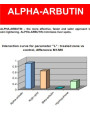
Alpha Arbutin (Switzerland)
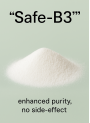
Safe-B3™ (Vitamin B3, Niacinamide)
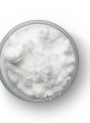
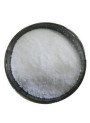
Salicylic Acid (BHA, Pharma Grade)

Vitamin C Ethyl Ether Ascorbic Acid
