Questions about Cosmetic Formulation with Specific Ingredients
Question
I have a formula containing the following ingredients:
- MSH White Absorb™
- Activated Resorcinol S™ (Stabilized Liquid)
- ODA-White Plus™
- Ume Extract (Anti-Glycation)
- Phenoxyethanol SA (Optiphen Plus)
- Ethyl Alcohol 99.5%
I have the following questions:
- What is the pH of the distilled water sold on your website?
- If the formula contains the ingredients mentioned, can I add Activated Resorcinol S™ (Stabilized Liquid) and Ume Extract (Anti-Glycation) directly without using a pH meter? Since most of the ingredients are oils, the formula's pH should not exceed 7, right?
- Does Ethyl Alcohol 99.5% help penetrate ingredients into the skin? If so, what quantity should be used without irritating the skin?
- If the formula contains 10% oil, what is the minimum percentage of Light Cream Maker™ that should be used?
- Can 1,2-Hexanediol be used in formulas that contain oil?
- If Easy Hair Styler (8 Hr.) is exposed to sweat, will the hair lose its style?
- When using Water-in-Oil EZ™ to make sunscreen, what is the maximum amount of oil in the sunscreen formula that will not feel sticky?
- The website claims that Natto Gum provides more moisture than Hyaluronic Acid. Does this mean at a 1% ratio compared to 1%?
- Do Activated Resorcinol and Sym-White™ have the same mechanism of action? If both ingredients are used at 1% concentration, which one has better whitening quality? I assume the quality is definitely not the same.
- Are there any ingredients that can treat skin sensitivity to sunlight and restore the skin to normal condition?
- Can Coconut Flavor/Fragrance be added as a perfume to cream?
Answer
Formulation Questions Answered
Here is the information based on the ingredients you listed and your specific questions:
pH of Distilled Water: Purified or distilled water typically has a neutral pH of around 7. However, upon exposure to air, it can absorb carbon dioxide, which can slightly lower the pH to around 5.5-6.5. The exact pH can vary slightly depending on the purification process and storage.
Adding Activated Resorcinol S and Ume Extract without pH meter:
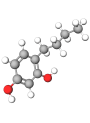
- Activated Resorcinol S is a stabilized liquid form of 4-butyl Resorcinol. Its description states it can be used in cream or lotion formulas with a pH between 4-7. It is soluble in water and should be added in the final step.
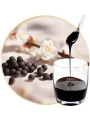
- Ume Extract is an anti-glycation ingredient. Its description states it should be mixed in water, not exposed to heat above 40°C, and added in the last step after the formula has cooled. The final formula pH should be in the range of 4.0-6.5.
- If your formula is primarily oil-based, achieving a specific pH for the water phase where these ingredients are soluble might be challenging without measurement. While Activated Resorcinol S has a wider compatible pH range (4-7), Ume Extract is more sensitive (4.0-6.5). If your formula is truly mostly oil, the water phase might be minimal, and ensuring the pH is within the optimal range for these water-soluble actives without a pH meter is difficult and not recommended for stability and efficacy. The assumption that the pH will be below 7 just because there are oils is not sufficient to guarantee the required pH range for these specific ingredients. It is best practice to measure and adjust the pH of the water phase or the final emulsion if possible.
Ethyl Alcohol (99.5%) as a Penetration Enhancer:
- Ethyl Alcohol is primarily used as a solvent in cosmetics. Its description mentions it can act as a solvent for ingredients that need to be dissolved in alcohol.
- While alcohol can temporarily disrupt the skin barrier and potentially enhance penetration of some substances, it is also known to be drying and potentially irritating to the skin, especially at higher concentrations or with frequent use. The description for 1,2-Hexanediol explicitly lists it as a penetration enhancer and mentions using it at 2-4% to help carry various ingredients, while also having other benefits like being a humectant and preservative booster.
- Using Ethyl Alcohol solely for penetration enhancement is generally not recommended due to its drying effect. If you need a penetration enhancer that is less irritating, consider alternatives like 1,2-Hexanediol at the recommended usage rate (2-4%). The amount of Ethyl Alcohol that would be effective for penetration without causing irritation varies greatly depending on the overall formula and individual skin sensitivity, but minimizing its use is generally advisable for skin comfort.
Minimum Light Cream Maker for 10% Oil:
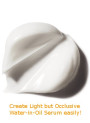
- Light Cream Maker™ is an emulsifier and thickener for oil-in-water emulsions that works without heat. Its description states it can contain up to 20% oil.
- The recommended usage rate for Light Cream Maker is 0.5-3%, with 1-1.5% recommended for most formulas. For a formula with 10% oil, starting with 1% Light Cream Maker is a reasonable minimum recommendation, as it falls within the suggested range for typical formulas and is designed to handle up to 20% oil. You may need to adjust slightly based on the specific oils used and desired viscosity.
1,2-Hexanediol in Oil-Based Formulas:
- 1,2-Hexanediol is described as a solvent that can dissolve in water. Its product characteristics state it is a clear liquid similar to oil and can dissolve in water.
- While it dissolves in water, its description also notes it can be used to help increase the efficiency of leading ingredients when used together with oil-soluble carriers. It is primarily a water-soluble ingredient with some oil-like characteristics, but it is not typically used as a primary component in purely oil-based formulas. Its main benefits listed relate to water-binding, preservative boosting, and enhancing penetration of ingredients (which implies a system where ingredients need to be carried into the skin, often from a water or emulsion base). If your formula is entirely oil-based with no water phase, 1,2-Hexanediol would likely not incorporate well or provide its intended benefits.
Easy Hair Styler (8 Hr.) and Sweat Resistance:
- The description for Easy Hair Styler (8 Hr.) explicitly states that it is capable of styling hair for about 8 hours even in high humidity conditions.
- This indicates that it is designed to be resistant to moisture like sweat and should maintain its hold when exposed to it, preventing the hair from losing its style or becoming loose.
Water-in-Oil EZ Maximum Oil Percentage in Sunscreen for Non-Greasy Feel:
- Water-in-Oil EZ™ is a water-in-oil emulsifier. Its description provides examples of popular products and their oil/water ratios. For sunscreen, it suggests an oil (including sunscreen actives, oil, and silicone) percentage of 30-35% with 65-70% water.
- The description also notes that if the formula contains a lot of oil or silicone, the formula will be more liquid, and if using heavy oil, the proportion should be reduced. While Water-in-Oil EZ creates a formula that coats the surface well and is water-repellent (beneficial for sunscreen), water-in-oil emulsions can sometimes feel heavier or more occlusive than oil-in-water emulsions. To minimize stickiness in a sunscreen using Water-in-Oil EZ, keeping the total oil + silicone percentage within the recommended 20-35% range (as mentioned for nourishing creams/serums) and potentially using lighter oils or silicones within that percentage would be advisable. Exceeding 35% oil might require additional stabilizers like Oil-Fix™ and could increase the likelihood of a greasy feel.
Natto Gum vs. Hyaluronic Acid Moisturizing Power at 1%:
- The description for Natto Gum states that research results found it has the ability to moisturize the skin more than Hyaluronic Acid.
- The description for Double Hyaluron Liquid is a liquid containing 5% Hyaluronic Acid (2.5% Nano and 2.5% Standard). It provides recommended usage rates based on skin dryness (e.g., 3-5% for normal/dehydrated skin).
- While the Natto Gum description claims higher moisturizing ability than Hyaluronic Acid, it doesn't specify the concentration used in that comparison. The claim "more than Hyaluronic acid" likely refers to an equivalent concentration basis, implying that at the same percentage (e.g., 1%), Natto Gum would provide superior moisturization compared to 1% pure Hyaluronic Acid. However, the Double Hyaluron Liquid product is a 5% solution, so a 1% usage of Double Hyaluron Liquid would only provide 0.05% actual Hyaluronic Acid. To make a direct comparison at 1% active ingredient concentration, you would need to compare 1% Natto Gum to 1% pure Hyaluronic Acid powder (or a 20% solution of Double Hyaluron Liquid). Based on the description, the claim suggests Natto Gum is more potent on a percentage basis of the active ingredient.
Activated Resorcinol vs. Sym-White™ (Phenylethyl Resorcinol) Mechanism and Efficacy at 1%:
- Activated Resorcinol™ (4-Butyl Resorcinol) works by reducing Tyrosinase activity, binding to fatty acids to prevent pigment movement, and acting against melasma. Its recommended usage rate for leave-on products is not more than 1%.
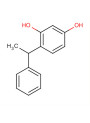
- Phenylethyl Resorcinol (e.q. SymWhite 377) is also a skin brightener classified as safe and highly effective. Its primary mechanism highlighted is powerful inhibition of tyrosinase. Its recommended usage rate is 0.1-1.0%, with 0.5% recommended for leave-on products. The description states that in experiments with Melanoma Cells, Phenylethyl Resorcinol was effective in reducing pigmentation more clearly than popular whitening substances and had an efficiency of more than 210 times compared to Kojic Acid (in an experimental plate).
- Both ingredients primarily work by inhibiting tyrosinase, although Activated Resorcinol also mentions preventing pigment movement. While both are effective tyrosinase inhibitors, the description for Phenylethyl Resorcinol provides a specific comparison showing it to be significantly more potent than Kojic Acid and highlights its high efficiency even at lower concentrations (0.1-1.0%). Activated Resorcinol's description mentions it is more effective than Vitamin C and Arbutin and more efficient than Alpha Arbutin.
- Comparing them directly at 1% concentration based on the provided descriptions, Phenylethyl Resorcinol appears to be presented as having higher potency in inhibiting tyrosinase based on the experimental data cited (210 times more effective than Kojic Acid in a lab setting), and it is recommended at a slightly lower typical usage rate (0.5% vs up to 1% for Activated Resorcinol in leave-on). Therefore, at a 1% concentration, Phenylethyl Resorcinol is likely to have a stronger whitening effect based on the information provided.
Ingredients for Sun Sensitivity:
Sun sensitivity can be caused by a damaged skin barrier, inflammation, or oxidative stress from UV exposure. Ingredients that help soothe, reduce inflammation, repair the skin barrier, and provide antioxidant protection can help improve skin's resilience to the sun. Based on the product descriptions, several ingredients could be beneficial:- Stearyl Glycyrrhetinate: Known for anti-inflammatory, soothing, antioxidant, and skin barrier-enhancing properties.
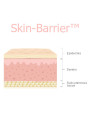
- Skin-Barrier™: Contains ceramides, cholesterol, and fatty acids to restore the skin barrier and reduce irritation.
- Portulaca Extract: Shown to be effective in reducing skin irritation.
- ActiveRelease™ Centella Asiatica: A combination of Centella Asiatica extracts with high anti-inflammatory and anti-irritant properties, also supports skin barrier repair.
- Bifida Repair Complex™: Enhances skin barrier function and resists damage from oxidative stress and inflammation.
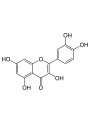
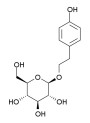
- Pure-Quercetin™, Pure-Kaempferol™, and Pure-Salidroside™: These have antioxidant and anti-inflammatory properties that can help protect the skin and reduce sensitivity.
Incorporating ingredients like these into a skincare routine, alongside consistent sunscreen use, can help improve the skin's condition and reduce sensitivity to sunlight.
Coconut Flavor/Fragrance as Perfume for Cream:
- Fragrance oils sold for cosmetic use are generally suitable for adding scent to creams and other personal care products. You should check the specific product details for the Coconut Flavor/Fragrance you are interested in to confirm its suitability and recommended usage rate in creams.
Related Products Mentioned
Light Cream Maker™

Ume Extract (Anti-Glycation)

Easy Hair Styler (8 Hr.)
Double Hyaluron Liquid
Pure-Quercetin™ (98% Purity, Powder)
Stearyl Glycyrrhetinate
Pure-Kaempferol™ (98%)
Pure-Salidroside™ (98%)