Questions about Oil Soap Formulation: Suitability for Children, Antioxidants, and Odor Masking
Question
I have questions about formulating with Oil Soap:
- Is the Oil Soap formulation using MIPA Laureth Sulfate a "no-tear" formula? Is it suitable for children?
- I currently use Vitamin E Acetate at 1% to prevent rancidity. Can I replace it with Protec OX and Protec UV? Will this be more effective for preventing rancidity? What are the recommended usage percentages for Protec OX and Protec UV for this purpose, and will they be suitable for children's skin?
- If I want to add Citromask™ to the formula for adults to help mask body odor, what is the recommended usage percentage, and how should I incorporate it into the Oil Soap base?
Answer
Oil Soap Formulation Questions
1. Suitability for Children and Eye Irritation
Based on the information, the original Oil Soap formulation using MIPA Laureth Sulfate is not a "no-tear" formula and can cause eye irritation. It is not recommended for use with children if a tear-free product is desired.
To create a no-tear formula, you would need to use a different base, such as the Sulfate Free No-Tear Shampoo Base. A usage rate of 20-30% of this base is suggested, depending on the desired level of cleansing.
2. Replacing Vitamin E Acetate with Protec OX + Protec UV for Rancidity
Replacing Vitamin E Acetate with Protec OX would be more effective for preventing rancidity (oxidation) in the formula. Protec OX is a highly efficient antioxidant, more so than Vitamin E.
- Vitamin E Acetate primarily acts as an antioxidant to protect the formula from oxidation. The description indicates 0.01-0.1% is sufficient for this purpose, although your formula uses 1%.
- Protec OX is a stronger antioxidant specifically designed to protect ingredients from deterioration due to oxidation (free radicals). Recommended usage is 0.01% - 0.5%. For general formulas, 0.01% is recommended, and 0.05% for formulas with ingredients that degrade easily.
- Protec UV is a UV absorber, protecting ingredients from damage caused by UV light. While UV can contribute to degradation, Protec OX is the primary ingredient for preventing oxidation/rancidity.
Therefore, using Protec OX at a low concentration (e.g., 0.01% to 0.05%) would be better for preventing rancidity than using Vitamin E Acetate. Adding Protec UV is beneficial for protecting against UV degradation, but it doesn't directly replace the antioxidant function for rancidity prevention as effectively as Protec OX does.
Regarding the effect on children's skin, both Protec OX and Protec UV are synthetic chemicals. The product descriptions do not specifically address their suitability for children's skin or eye irritation potential relative to Vitamin E Acetate. However, since the base Oil Soap is already not tear-free, the primary concern for eye irritation lies with the base surfactant system rather than these additives at low concentrations. For a rinse-off product like soap, Protec OX is allowed by the FDA up to 0.5%.
3. Using Citromask™ for Body Odor (Adults)
If you are using the formula for adults and want to add Citromask to help mask body odor, a usage rate of approximately 1% is recommended.
To incorporate Citromask, you should add it directly to the Oil Soap component and mix them together before combining with the other ingredients in your formulation.
Related Products Mentioned
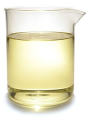
Vitamin E (Tocopheryl Acetate)
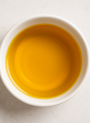
Jojoba Oil (Golden - Deodorized)
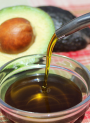
Avocado Oil (Refined)
Fractionated Coconut Oil