Questions about Silicone-Based Physical Sunscreen Formulation Issues
Question
I have questions about a silicone-based physical sunscreen formulation based on staff recommendations. After understanding the mixing principles, I have the following questions:
When using physical sunscreen powders (200nm TiO2 and ZnO), I find that it makes the skin feel very dry. How can I fix this dryness and prevent the skin from looking 'crepey' due to the powder sunscreens used in the following formula:
- Titanium Dioxide 200nm: 6%
- Zinc Oxide 200nm: 5%
- Silicone Blender (ประสานซิลิโคนหลากชนิด): 3%
- Silicone Film: 20%
- Silicone Gel (Ultra Clear): 37%
- Cyclomethicone: 9%
- Dimethicone: 20%
Is the amount of powder sunscreen in the formula above too high? The product texture is not as smooth as formulas using liquid sunscreens.
What would be the approximate SPF and PA values for Titanium Dioxide 200nm at 6% and Zinc Oxide 200nm at 5%?
At a usage rate of 20% Silicone Film, it still rubs off the skin. Compared to Vinyl Film at 10%, which adheres better but has an uneven texture (thick in some areas, thin in others), what do you recommend?
If I mix various types of long-lasting film formers together, such as Silicone Film, Oil Film, and Vinyl Film, will there be any problems?
Based on the recommendation that Silicone Film should be used if the base is silicone, I would like to know if Oil Film or Vinyl Film can be used in a silicone base.
When adding the long-lasting film former, I found that the sunscreen sticks strongly to the glassware used for mixing and is difficult to wash off. Are there any techniques for cleaning it?
Thank you.
Answer
Formulation Feedback and Recommendations
Thank you for sharing your silicone-based physical sunscreen formula and questions. It's great that you are experimenting and refining your formulation based on your observations. Here is some feedback and recommendations based on your questions:
1. Dry Skin Feeling
Physical sunscreens like Titanium Dioxide and Zinc Oxide, especially at higher concentrations, can sometimes contribute to a dry feeling on the skin. Your formula is also primarily silicone-based, which provides a smooth, non-greasy feel but doesn't offer significant hydration like oils or emollients would. To counteract the dryness and prevent a "crepey" appearance, consider incorporating emollients that are compatible with your silicone base. Adding a small percentage (e.g., 1-5%) of a light, non-volatile emollient or a silicone fluid with conditioning properties can help improve skin feel and reduce dryness without compromising the silicone texture. Examples of compatible emollients include certain types of Dimethicone with different viscosities or specific silicone esters.
2. Powder Amount and Texture
An 11% total concentration of physical sunscreen powders (6% Titanium Dioxide and 5% Zinc Oxide) is a moderate amount. The texture issue you are experiencing (not as smooth as liquid sunscreen formulas) is likely related to the dispersion of these powders in your silicone base and the overall composition with high silicone and film former content. Even with "EasyDisperse" powders, proper and thorough mixing is crucial to ensure the particles are evenly distributed and minimize grittiness or unevenness. Using a high-shear mixer can help. Additionally, the interaction between the powder particles, the various silicones (Silicone Gel, Cyclomethicone, Dimethicone), and the film formers (Silicone Film, Silicone Film) can significantly impact the final texture. Adjusting the ratios of the different silicone components or incorporating ingredients specifically designed to improve powder dispersion and texture in silicone systems might be beneficial.
3. SPF and PA Values
Determining the exact SPF and PA values for your specific formula requires in-vivo or in-vitro testing of the final product. Formulations are complex, and the interaction between ingredients, including the dispersion quality of the UV filters, significantly affects the final protection level. While 6% Titanium Dioxide and 5% Zinc Oxide are common concentrations in physical sunscreens, providing a precise SPF and PA value without testing is not possible. Generally, these concentrations can contribute to a broad spectrum SPF, but the exact level depends on the particle size, coating, and the overall formula matrix.
4. Silicone Film Performance
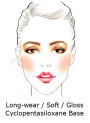
You noted that 20% Silicone Film (Soft Film, Low Viscosity, Cyclopentasiloxane Base) still rubs off, while 10% Vinyl Film adhered better but was uneven. The Silicone Film you used is described as providing a soft film. If you need better rub-off resistance, consider using a film former that creates a harder or longer-wearing film, provided it is compatible with your silicone base. For instance, Silicone Film (Powder, Hard Film, Comfort-Wear) (Trimethylsiloxysilicate) or Hydrogenated Polycyclopentadiene (Oil Film), which is soluble in silicone, are designed for longer wear and might offer better adhesion. You may need to experiment with different types and concentrations to achieve the desired balance of wear, feel, and evenness.
5. Mixing Film Formers
Mixing different film formers like Silicone Film, Oil Film (Hydrogenated Polycyclopentadiene), and Vinyl Film is possible in a silicone base, but it requires careful consideration of compatibility. Silicone Film and Hydrogenated Polycyclopentadiene are generally soluble in silicone. However, Vinyl Film (VP/Hexadecene Copolymer) is described as oil-soluble, which means it may not be directly compatible with a silicone base without a suitable blender or emulsifier to bridge the oil and silicone phases. Always perform small-scale tests to check for compatibility, stability, and desired film properties when mixing different film formers.
6. Using Oil Film / Vinyl Film in Silicone Base
As mentioned, Hydrogenated Polycyclopentadiene (Oil Film) is soluble in silicone and can be used in a silicone base. Vinyl Film (VP/Hexadecene Copolymer), being oil-soluble, is less likely to be directly compatible with a silicone base. While it might be possible to incorporate it using a suitable blender, it is generally recommended to use film formers that are soluble in your base for better stability and ease of formulation. For a silicone base, silicone-soluble film formers are typically the most straightforward choice.
7. Cleaning Equipment
Silicone-based formulations and film formers can indeed be difficult to clean from glassware with just soap and water. Silicones and many film formers are non-polar and hydrophobic. To effectively clean your equipment, first try rinsing with a non-polar solvent that can dissolve the silicone and film former residue. Isododecane or other similar cosmetic-grade solvents are often effective for this purpose. After dissolving the bulk of the residue with a solvent, you can then wash the glassware with detergent and water as usual. Ensure you work in a well-ventilated area when using solvents and follow proper safety precautions.
Updated Review: May 2026
This section was added after reviewing the original answer against current product availability and formulation knowledge at the stated point in time.
Update as of 2026-05-24
The original practical direction is still broadly valid, but a few points should be made more precise with current information:
- Titanium Dioxide and Zinc Oxide powders do not dissolve in a silicone base. They must be well wetted, dispersed, and deagglomerated. For this type of anhydrous silicone formula, pre-disperse the mineral powders first in a low-viscosity compatible silicone/oil phase, then add Silicone Gel and film formers later. Hand mixing is often not enough; high-shear mixing, three-roll milling, or bead milling gives a much better chance of a smooth film.
- The 6% TiO2 + 5% ZnO level is 11% total mineral powder. This is not automatically too high, but it is technically demanding: skin feel, streaking, dryness, whitening, and protection depend strongly on dispersion quality, particle treatment, film uniformity, and the final vehicle.
- Current catalog options also include pre-dispersed mineral systems such as Titanium Zinc NanoLiquid™ CYCLO, Titanium Zinc NanoLiquid™ DEC, Titanium Dioxide Transparent (15nm, Cyclopentasiloxane Base), and Zinc Oxide Transparent Dispersion types. These can reduce powder-dispersion difficulty and improve smoothness, but the formula must be rebalanced and retested after substitution.
- Please verify the exact current Titanium Dioxide product before using it as a sunscreen active. Some Titanium Dioxide EasyDisperse materials are positioned for makeup/powder use rather than as the sunscreen-grade UV-protection choice.
- SPF, PA, broad-spectrum performance, water resistance, and long-wear claims still cannot be calculated reliably from TiO2/ZnO percentages alone. The finished formula must be tested.
- If Silicone Film (Soft Film, Low Viscosity, Cyclopentasiloxane Base) rubs off, harder Trimethylsiloxysilicate film formers or Hydrogenated Polycyclopentadiene film formers may be trialed. However, more film former is not always better; mixed Silicone Film / Oil Film / Vinyl Film systems should be tested in small batches for pilling, tack, stringing, uneven film, phase separation, and skin comfort.
- Do not use nano TiO2/ZnO powder formulas in aerosol or spray formats that may be inhaled unless a proper inhalation safety and regulatory assessment has been completed.
- Cleaning advice remains similar: wipe off bulk residue first, then use a compatible non-polar solvent such as isododecane for silicone/film residues, followed by detergent and water, with good ventilation and fire-safety precautions.
References: FDA OTC sunscreen Q&A, updated 2025; SCCS opinions on nano TiO2 and nano ZnO dermal use and inhalation caution; Smijs & Pavel, Nanotechnology, Science and Applications (2011) on mineral sunscreen performance depending on particle size, dispersion, and vehicle.
Related Products Mentioned
Silicone Gel (Ultra Clear, Super Silky)

Zinc Oxide 200nm EasyDisperse™
Dimethicone (Light/50, Low-Odor)
Silicone Blender
Titanium Zinc NanoLiquid™ CYCLO