Questions about Stabilized Vitamin C Serum Base
Question
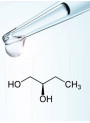
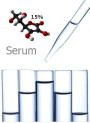
Regarding the Stabilized Vitamin C (Natural-C Glycol™) Serum base with the listed composition (Butylene Glycol 79%, Ethoxydiglycol 5%, Phenoxyethanol 1%, L-ascorbic acid 15%), can this formula be mixed from raw ingredients? Is it an anhydrous formula, and does the ultra-fine particle size of L-ascorbic acid affect its efficacy?
Answer
Understanding the Stabilized Vitamin C (Natural-C Glycol™) Serum Formula
You've listed the components and percentages for what appears to be the composition of the Stabilized Vitamin C (Natural-C Glycol™) Serum sold as a ready-made base. Let's break down your questions:
Can you mix this formula yourself from individual ingredients?
The Stabilized Vitamin C (Natural-C Glycol™) Serum is designed and sold as a finished base product. According to the product information, it is not suitable for mixing any additional ingredients as this may affect the stability of the vitamin C. It is intended to be used as is or with only minor additions like fragrance or coloring (up to 1%).
Therefore, while you have the list of ingredients and their percentages (Butylene Glycol 79%, Ethoxydiglycol 5%, Phenoxyethanol 1%, Vitamin C (L-ascorbic acid) (Ultra-Fine) 15%), this is the composition of the ready-made base, not a recipe intended for users to replicate by combining the raw materials themselves. The stability of L-ascorbic acid, especially at a high concentration like 15%, in this specific glycol blend is achieved through precise manufacturing processes that are difficult to replicate at home.
Is this formula anhydrous?
Based on the high percentage of Butylene Glycol (79%) and Ethoxydiglycol (5%), and the fact that L-ascorbic acid is often formulated in anhydrous or low-water systems for stability, this formula is likely anhydrous or contains very little water. The glycols act as the primary solvent and carrier for the L-ascorbic acid.
Does ascorbic acid dissolve in glycol?
Yes, L-ascorbic acid can be dissolved or well-dispersed in glycols like Butylene Glycol and Ethoxydiglycol. These glycols are effective solvents and carriers that help to stabilize the L-ascorbic acid, which is prone to degradation in the presence of water.
Does the particle size of ascorbic acid affect its efficacy in this formula?
While the particle size of L-ascorbic acid (such as the Ultra-Fine grade) doesn't directly change the inherent efficacy of the molecule itself, it significantly affects the formulation's performance and stability. The Ultra-Fine particle size (smaller than 45 microns) is specifically noted for being easily dispersed in non-aqueous formulas like this glycol-based serum. Good dispersion ensures that the L-ascorbic acid is uniformly distributed throughout the product, which is crucial for consistent application and potential delivery to the skin. Therefore, using the appropriate particle size is important for creating a stable and effective formulation.
In summary, while you know the components of the Stabilized Vitamin C (Natural-C Glycol™) Serum, it is sold as a finished base and is not recommended for self-mixing from raw ingredients due to stability considerations. The formula is likely anhydrous, using glycols to dissolve/disperse the L-ascorbic acid, and the ultra-fine particle size of the vitamin C is important for its dispersion in this type of base.
Related Products Mentioned
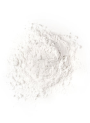
Vitamin C (L-ascorbic acid) (Ultra-Fine)
Ethoxydiglycol (e.q. Transcutol)
Phenoxyethanol (Extra Pure)