Questions about Thickeners and Surfactants in Cleansing Gel Formulation
Question
I have questions about formulating a facial cleansing gel:
1. When using `Xanthan Gum` as a thickener, is it necessary to also use `Carbomer` and `Sodium Hydroxide`? What are the functions of each ingredient in this context?
2. What is the recommended mixing method for `Coco Betaine` in a facial cleansing gel formulation to avoid excessive foaming? Also, what should be considered regarding the ratio between `SLS (Sodium Lauryl Sulfate)` and `Coco Betaine` in terms of foaming and mildness?
Answer
Formulation Questions Answered
Here are the answers to your questions regarding cosmetic formulations:
1. Xanthan Gum, Carbomer, and Sodium Hydroxide
If you are using Xanthan Gum as a thickener in your cosmetic formulation, you generally do not need to add Carbomer and Sodium Hydroxide.
- Xanthan Gum is a natural gum that functions as a thickener and stabilizer on its own when dispersed in water.
- Carbomer is another type of gelling agent, but it requires a neutralizing agent, such as Sodium Hydroxide or Triethanolamine, to form a gel and achieve the desired viscosity.
Using multiple thickeners like Xanthan Gum and Carbomer together is typically done only when a formulator wants to achieve a specific texture or feel that cannot be obtained with a single thickener. For simple DIY formulations, using just one thickener like Xanthan Gum is usually sufficient.
2. Mixing Coco Betaine in Facial Cleansing Gel
When making a facial cleansing gel with Coco Betaine (or Cocamidopropyl Betaine), the recommended method to avoid excessive foaming during mixing is to first mix the Coco Betaine with other liquid ingredients in your formula that do not contain water. After these are combined, slowly add the water phase while stirring gently. Avoid high-speed mixing, as this will create a lot of foam.
Adding it at the end might seem problematic if stirred vigorously, leading to excessive foam that is hard to dissipate. Mixing it with non-water liquids first helps manage this.
Regarding the ratio between SLS (Sodium Lauryl Sulfate) and Coco Betaine:
- SLS is known for producing a lot of foam but can be irritating to the skin.
- Coco Betaine is much milder and produces less foam on its own.
Combining SLS and Coco Betaine in a formulation helps to increase the overall mildness of the product compared to using SLS alone. The specific ratio depends on the desired balance between foaming performance and skin mildness. There is no single fixed ratio; you can adjust the proportions to achieve the characteristics you prefer for your cleansing gel.
Combining different surfactants is a common practice to improve both cleansing performance and mildness.
Related Products Mentioned
Cocamidopropyl Betaine
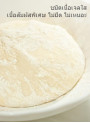
Sodium Hydroxide
Carbomer 940 (EasyDisperse™, France)