Questions on Ingredient Mixing, Compatibility, Formulation, and Ingredient Identification
Question
I have several questions regarding cosmetic ingredients and formulations:
- Can Activated Resorcinol and Lemon Peel Bioferment be mixed together? If not using CC cream, what other bases can they be used in? Please provide the mixing method. Why are these two ingredients not available in the tester options, as I find the pre-mixed testers more convenient than Alpha Arbutin, which hasn't shown much result for me?
- In my BHA Release toner, I added Zinc because I heard it helps with Vitamin C. I then apply the BHA Release toner followed by a Vitamin C product. I'm concerned if the acidity of Vitamin C degrades the BHA Release and Zinc, as their pH is neutral.
- Is the Activated Resorcinol on your website the same as the Resorcinol used in acne treatments like Siriraj lotion?
- I'm concerned about applying a product containing Zinc followed by a product containing Azelaic Acid, as they might be incompatible when mixed in a single formula. Is this an issue when applied in separate layers?
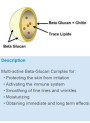
- The label on my Beta Glucan tester says to shake well. Why is this necessary?
- I want to make a body spray with a minty fresh and slightly sweet scent. Which fragrance oils would you recommend from your selection, and how should I mix them?
Answer
Answers to Your Formulation Questions
Here are the answers to your questions regarding cosmetic ingredients and formulations, based on the information available:
1. Activated Resorcinol and Lemon Peel Bioferment
Yes, Activated Resorcinol and Lemon Peel Bioferment can be mixed together. As the staff mentioned, they can be easily combined, particularly in a cream base. They can also be formulated into other product types like serums or lotions, not just CC cream.
How to Mix:
Both ingredients are typically added during the final step of formulation, at temperatures below 40°C (for Lemon Peel Bioferment) or 30°C (for Activated Resorcinol). Activated Resorcinol is oil-soluble, while Lemon Peel Bioferment is water-soluble. You would incorporate them into the appropriate phase (oil or water) of your base formula before the final mixing step. For a cream, you would dissolve Activated Resorcinol in the oil phase and Lemon Peel Bioferment in the water phase, then combine the phases and mix thoroughly.
Regarding their availability in testers, the staff explained that adding ingredients to testers requires lab approval and can take time, and not all ingredients may be included.
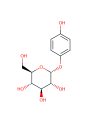
Compared to Alpha Arbutin, Activated Resorcinol is considered significantly more effective at reducing pigmentation.
2. Mixing Zinc and Vitamin C with BHA Release Toner
You are using a BHA Release toner with added Zinc, followed by a Vitamin C product. Your concern about the acidity of Vitamin C degrading the BHA Release and Zinc is understandable.
As the staff explained, when applying different products sequentially on the skin, the contact time is relatively short. This short duration is generally not enough to cause significant degradation of ingredients in the way that mixing incompatible ingredients in a single formula for a long shelf life would. While some interaction could occur, the effect is usually minimal and not something you typically need to be concerned about for product stability or efficacy on the skin during use.
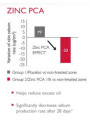
For formulation purposes (mixing in one product), some forms of Vitamin C (like L-Ascorbic Acid) require a low pH, while Zinc PCA works best in a slightly higher pH range (4-6) and should not be mixed with Ethyl Ascorbic Acid. However, when applied in separate layers, the impact is much less drastic.
3. Activated Resorcinol vs. Resorcinol in Siriraj Lotion
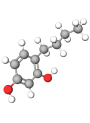
The Activated Resorcinol available on the website (4-Butylresorcinol) is not the same as the general Resorcinol that might be used in some older formulations or treatments for acne, such as potentially in Siriraj lotion (though we do not have the specific ingredient list for Siriraj lotion to confirm). The website's Activated Resorcinol (4-Butylresorcinol) is a distinct ingredient specifically developed for skin brightening and is considered safe for cosmetic use within recommended concentrations. General Resorcinol is used in other applications like hair dye and is not permitted for use in skincare products by the FDA.
4. Azelaic Acid and Zinc Application
You are concerned about applying a product containing Zinc followed by a product containing Azelaic Acid, as they might be incompatible when mixed in a single formula.
Similar to the Vitamin C and Zinc question, applying these ingredients in separate products sequentially on the skin is generally less problematic than mixing them together in one formula. The brief contact time on the skin surface is unlikely to cause significant negative interactions or degradation of the active ingredients. While some forms of Zinc (like Zinc PCA) and Azelaic Acid (Liquid Azelaic™) have specific pH ranges for optimal stability and function in a formula, applying them in layers from different products typically does not lead to the same stability issues as long-term storage in a single mixed product.
5. Beta Glucan Tester - Shaking
The label on your Beta Glucan tester says to shake well because Beta Glucan particles can be heavy and may settle or precipitate over time, especially in less viscous formulations like toners or light serums. Shaking helps to re-disperse these particles evenly throughout the product, ensuring you get the intended concentration of Beta Glucan with each use. If you forget to shake, you might not get the full amount of Beta Glucan in that application, but it does not damage the quality or effectiveness of the product itself. Just shake before the next use to ensure even distribution.
6. Fragrance for Body Spray (Minty Fresh + Sweet)
For a refreshing minty and sweet body spray, you could consider combining fragrance oils. Based on the available options, you might like:
- Honey Mint for a fresh, slightly sweet mint scent.
- Mint / Rose / Lemon for a fresh, slightly floral and citrusy mint scent.
- You could potentially combine a minty scent like Honey Mint or Mint / Rose / Lemon with a sweet scent like Sweet Vanilla to achieve your desired profile.
To make a body spray, you would typically mix your chosen fragrance oil(s) with a suitable base like the 8 Hours Fragrance Spray Base (Musk-Free). This base is designed for alcohol-based sprays and helps the scent last longer. You can mix the fragrance oil(s) into the base according to the recommended usage rates for both the fragrance oil(s) and the base (the spray base is used at 60-90%). Always perform a small test batch first to get the scent concentration and mix right.
Related Products Mentioned
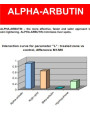
Alpha Arbutin (Switzerland)
Vitamin C (L-ascorbic acid) (Ultra-Fine)

Lemon Peel Bioferment (Lemon Skin™)

Zinc PCA
Zinc Oxide (Micronized)
Zinc Gluconate

Sweet Vanilla

Honey Mint
Mint / Rose / Lemon
Alpha Arbutin (China, Crystal Form)