Questions on Sea Kelp Extract Usage and Licorice vs. Alpha Arbutin for Whitening
Asked by: nongj
On: November 11, 2012
Product Type:
Cosmetics
Answered
Question
I have some questions about Sea Kelp Extract and using Licorice Extract for skin whitening.
Regarding Sea Kelp Extract:
- The description mentions it can be mixed into cream (for skin care) directly at approximately 5-100%. Could you please advise on the appropriate quantity to mix per 100ml of cream base or facial moisturizer?
- Can I mix it directly into Hyaluronic Acid instead of a cream base?
- When mixed into a face cream or applied purely (as mentioned in the description), can it be used all over the face, including around the eyes? Will it cause irritation to the skin around the eyes?
Regarding skin whitening, I previously read about mixing Alpha Arbutin into lotion for whitening and adding Licorice for increased whitening. I have some questions about this:
- If the body lotion base I use primarily contains B3, can I mix Licorice instead of Alpha Arbutin for skin whitening?
- Can it be mixed directly into the body lotion, and what quantity should I use?
- Is the effectiveness of Licorice for skin whitening greater than using Alpha Arbutin (mixed)? Is the result significantly more visible?
Answer
Sea Kelp Extract and Whitening Ingredients
Here is information regarding your questions about Sea Kelp Extract and using Licorice Extract for skin whitening:
Sea Kelp Extract (Product ID: 77)
- Mixing Percentage in Cream Base: The product description indicates a usage rate of 1-10%, with 1-3% recommended for skin care. While the description on the website mentions a range of 5-100%, the exact amount to use in 100ml of cream base depends on your desired feel and concentration. You can start with a lower percentage (e.g., 5%) and adjust based on your preference, up to 100% if using it pure.
- Mixing with Hyaluronic Acid: Yes, Sea Kelp Extract can be mixed directly into a Hyaluronic Acid base.
- Applying Pure or Around the Eyes: Sea Kelp Extract is gentle and can be applied directly to the skin, including around the eyes. It is suitable for sensitive skin and is not expected to cause irritation when used around the eye area (avoid direct contact with the eye itself).
Licorice Extract vs. Alpha Arbutin for Whitening
Regarding your questions about using Licorice Extract for whitening:
- Replacing Alpha Arbutin with Licorice: Yes, you can use Licorice Extract for skin whitening, specifically the type containing Glabridin (e.g., Licorice Extract (Glabridin 4.5%, Water-Soluble), Product ID: 7798). However, note that Licorice Extract (Licochalcone A 1%, Water-Soluble), Product ID: 69, is primarily for anti-inflammation and not whitening.
- Mixing Method and Percentage: The Glabridin-type Licorice Extract (Product ID: 7798) is water-soluble and can be dissolved directly in your lotion base. If your lotion is heated during preparation, add the extract in the final step after cooling. The recommended usage rate for this type is 1-2%.
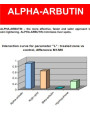
- Comparative Effectiveness: Research generally indicates that Alpha Arbutin (Product ID: 68) is more effective for skin brightening than Licorice Extract. For the best whitening results, it is recommended to use both Alpha Arbutin and a Glabridin-type Licorice Extract together in your formulation, rather than using a high concentration of just one ingredient.
Using a combination of whitening ingredients often yields better results than relying on a single ingredient at a high concentration.
Related Products Mentioned
Alpha Arbutin (Switzerland)
Cosmetics
Sea Kelp Extract
Cosmetics