Questions on Whitening Agents, Emulsifiers, Silicones, and Formulation
Question
I have several questions regarding cosmetic formulation:
- Which whitening agents can be combined in one formula, and which have similar structures or mechanisms of action?
- What are some easy-to-use emulsifier alternatives to
Light Cream Maker™? - How can I reduce the sticky feeling of a cream and achieve a drier, non-greasy finish without using silicones?
- If I have used products containing silicone in the past without allergic reactions, is it generally okay to use silicones as ingredients in my own cosmetic formulations?
- Is the following statement true? "Hair conditioning creams containing silicone should be strictly avoided. If silicone must be used, it should only be in sunscreens, foundations, or applied as a final step on the face after moisturizing, but should not be used in cleansing or moisturizing steps, and is highly unsuitable for the scalp."
Answer
Here is information regarding your questions about cosmetic formulation:
1. Whitening Agent Compatibility and Similarity
Several of the whitening agents you listed can be combined in a single formula, while others have similar mechanisms of action or structure.
Compatible Combinations:
- Ethyl Ascorbic Acid can generally be combined with MSH White Absorb™ and N-Acetyl Glucosamine. Avoid combining it with Vitamin B3 or Zinc PCA.
- Alpha Arbutin can be combined with MSH White Absorb™, Vitamin C, Vitamin B3, and N-Acetyl Glucosamine.
- MSH White Absorb™ works via a different mechanism (reducing Alpha-MSH) than many other whitening agents and can often be combined with ingredients like Vitamin C, Vitamin B3, and N-Acetyl Glucosamine to enhance overall whitening efficacy.
- Activated Resorcinol™ can be used with Vitamin B3 and N-Acetyl Glucosamine.
- Sym-White™ (Phenylethyl Resorcinol) pairs well with Vitamin C, Niacinamide (Vitamin B3), Kojic Acid, and sunscreen agents.
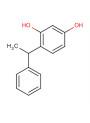
- ODA-White Plus™ can be included in cream or lotion formulas that use an oil-water emulsifier and can be combined with other whitening agents.
Similar Structure and Mechanism:
- Activated Resorcinol™ (4-Butyl Resorcinol) and Sym-White™ (Phenylethyl Resorcinol) are both resorcinol derivatives and work primarily by inhibiting the Tyrosinase enzyme, which is key in melanin production. Activated Resorcinol is noted as being more efficient than Alpha Arbutin, while Sym-White is noted as being more efficient than Kojic Acid and Alpha Arbutin in lab tests. Due to their similar mechanism, you might choose one over the other rather than using both, depending on your desired efficacy and formula compatibility requirements (like pH range and compatibility with other ingredients).
- Other ingredients that primarily work by inhibiting Tyrosinase include Alpha Arbutin, Ethyl Ascorbic Acid, and ODA-White Plus™. While they share a similar target enzyme, their chemical structures and optimal formulation conditions (like pH and solubility) differ, which can influence how they are used and combined.
2. Emulsifier Alternatives to Light Cream Maker™
If you are looking for emulsifiers that are easy to use, similar to Light Cream Maker™, consider these options:
- Easy Cream Maker™: This emulsifier can be used without heat (cold process), making it very easy to incorporate. However, it cannot tolerate electrolytes (salts, some natural extracts) and can only bind up to 10% oil in a formula. It tends to produce a slightly heavier texture than Light Cream Maker™. It is also generally cheaper.
- Light Lotion Maker: This emulsifier is ECOCERT certified and can also be used with a cold process. It can bind up to 40% oil and results in a light texture, suitable even for sprayable formulas.
Other options like Soft Cream Maker™ and Milk Lotion Maker™ require heating during the mixing process, which might be less convenient if you are looking for the simplest method. Velvet Cream Maker™ dissolves in oil and provides a matte finish.
3. Reducing Cream Tackiness (Silicone-Free)
To reduce the sticky feeling of your cream and achieve a drier, non-greasy finish without using silicones, consider incorporating emollients that provide a light feel and quick absorption:
- LipidSoft™ Moist: This emollient is designed to provide good moisturization without feeling sticky or heavy. It has a light texture, spreads easily, and does not clog pores, making it suitable for normal to oily skin.
- LipidSoft™ B: Often used in sunscreens, this emollient is known for being easy to spread, drying quickly, and leaving a smooth, light touch. It is also non-comedogenic.
These emollients can help improve the feel of your cream, making it less tacky and more comfortable on the skin.
4. Using Silicone if No Allergic Reaction
If you have used products containing silicone in the past without experiencing any allergic reactions, it generally suggests that you are not sensitive to the specific types of silicones present in those products. You can likely use silicones as ingredients in your own cosmetic formulations. However, it's important to remember that individual skin sensitivity can change over time, and reactions can sometimes occur with different concentrations, types of silicones, or combinations of ingredients. Always patch test new formulations if you have concerns.
5. Silicone Use in Hair vs. Skin Products (Article Validity)
The article's statement that silicones should be strictly avoided in hair products (especially on the scalp) but are acceptable in certain skin products (like sunscreen, foundation, or as a final step) is an oversimplification and not entirely accurate.
- There are many different types of silicones with varying properties. Some silicones used in hair products, particularly certain types in conditioners or styling products, can build up on the hair and scalp over time if they are not easily washed out by shampoo. This build-up can potentially lead to issues for some individuals, especially on the scalp.
- However, not all silicones cause significant build-up, and many can be effectively removed with proper cleansing. The concern is more about the type of silicone and the formulation (e.g., a leave-on scalp treatment vs. a rinse-off conditioner).
- For skin, silicones are widely used in various products, including moisturisers, primers, sunscreens, and foundations, for their ability to provide a smooth feel, fill fine lines, and improve product spreadability and water resistance. As long as a person does not experience irritation or sensitivity, using silicones in skin care is generally considered safe and effective for achieving certain textural and performance benefits.
- Furthermore, there are non-silicone ingredients available that can provide similar conditioning and smoothing benefits in hair care, offering alternatives for those who wish to avoid silicones or have experienced build-up issues.
In summary, the issue with silicones, particularly in hair care, is more nuanced than a blanket avoidance rule. It depends on the specific silicone, the product type, and individual tolerance and cleansing habits.
Related Products Mentioned
Alpha Arbutin (Switzerland)
Light Cream Maker™

LipidSoft™ Palm (Ethylhexyl palmitate)
Easy Cream Maker™
Soft Cream Maker™

MSH White Absorb™

ODA-White Plus™
LipidSoft™ Moist (Triethylhexanoin)
Milk Lotion Maker™
Light Lotion Maker
Dioctyl Adipate (DOA)
LipidSoft™ B (Dibutyl adipate)