Recommended Batch Size and Essential Equipment for Lab-Scale Formulation

Asked by: sasikarn.str On: April 20, 2026 Product Type: Cosmetics Answered

Question

Normally, what batch size should be used for cream formulation in a lab scale to ensure comprehensive measurement results?

  • Please recommend the essential equipment needed for product preparation.

Answer

For laboratory-scale cosmetic formulation development, selecting the appropriate batch size is critical to ensure that the results are representative and that there is sufficient material for all necessary testing.

Recommended Batch Sizes

  • Screening Stage (50–250 g): Suitable for early trials, such as testing ingredient compatibility, fragrance levels, or color direction. However, these small batches are not reliable for final viscosity or stability assessments.
  • Main Laboratory Development (500 g – 1 kg): This is the recommended routine batch size. It provides enough bulk for accurate pH and viscosity measurements, centrifuge testing, and filling multiple containers for accelerated stability studies without the "wall loss" (material sticking to the vessel wall) significantly affecting the results.
  • Final Lab Confirmation / Pre-pilot (1–2 kg): Recommended for process-sensitive systems like emulsions or high-viscosity creams. This size better simulates the cooling rates and shear forces encountered during scale-up.

Why 500 g – 1 kg is the standard:

  1. Reduced Weighing Error: A 0.1% ingredient in a 100 g batch is only 0.1 g; a tiny weighing error can lead to a large percentage deviation. In a 1 kg batch, that same ingredient is 1.0 g, making it much easier to weigh accurately.
  2. Stability Testing: You need enough product to fill separate jars for different conditions (e.g., room temperature, 45°C, refrigerator) so you don't have to repeatedly open the same jar, which can cause evaporation or contamination.
  3. Representative Mixing: Small beakers heat and cool too quickly and do not allow for the same mixing geometry as larger vessels.

Essential Equipment for a Formulation Lab

To develop professional-grade products, the following equipment is essential:

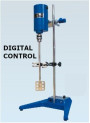
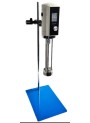
1. Mixing and Dispersion

2. Measurement and Quality Control

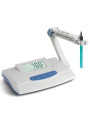
  • pH Meter: Critical for safety and formula stability. A Digital pH meter for the laboratory is required for accurate readings.
  • Viscometer: Used to measure the thickness and flow of the product. Tools like a Glass Capillary Viscometer or a rotational viscometer are used to ensure consistency.
  • Precision Balance: A balance with at least 0.01 g readability is necessary for general weighing, while an analytical balance (0.001 g) is preferred for high-potency actives or dyes.

3. Heating and Containers

  • Hot Plate / Water Bath: For heating oil and water phases.
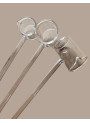
  • Beakers: Heat-resistant glass beakers (e.g., Beaker (long glass handle, 100ml) and larger sizes like 500ml or 1000ml) are used for mixing.

4. Stability Testing

  • Incubator: To perform accelerated stability testing at controlled temperatures (typically 40-45°C). An Incubator Shaker can be used for both temperature control and stability under motion.
Relevant References

Sources supporting the key technical claims in this answer

Harry’s Cosmeticology, 9th ed.
2015

Supports the recommendation of 500g-2000g batch sizes and the impact of processing on viscosity and stability.

Harry’s Cosmeticology, 9th ed., “Cosmetic Manufacturing Processes.”

Guidelines on Stability Testing of Cosmetic Products

Supports the methodology for stability testing and the need for sufficient sample volume for different conditions.

Colipa/CTFA (Cosmetics Europe/PCPC), Guidelines on Stability Testing of Cosmetic Products.