Recreating Gel Cream: Ingredient Percentages for Texture and Benefits
Question
I have been using a product with the following ingredients and would like to buy the ingredients to make it myself. However, I don't know what percentages to use. Could you please help analyze and suggest suitable amounts? The product has a gel texture unlike typical aloe vera gels; it is soft, smooth, and clear. It feels very smooth and easy to apply on the face, provides excellent moisture that lasts until morning, and is not quickly absorbed. It also treats acne well.
- Ingredients:
- Aqua
- Aloe Barbadensis Leaf Juice (I'm thinking of adding about 3%)
- Glycerin
- Hydroxyethyl Cellulose
- Carbomer
- Propylene Glycol
- Rose Water
- Triethanolamine
- Hamamelis Virginiana extract
Answer
Recreating Your Gel Cream: Understanding the Ingredients
It's great that you're interested in making your own skincare! Recreating a specific product's texture and performance requires careful formulation, and while I can't give you the exact percentages used in the original product, I can explain the role of each ingredient you listed and provide typical usage rates to help you experiment.
Here's a breakdown of the ingredients and their functions:
- Aqua (Water): This is the base of your gel cream, providing hydration and acting as a solvent for other water-soluble ingredients.
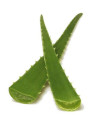
- Aloe Barbadensis Leaf Juice (Aloe Vera Extract): Known for its soothing, moisturizing, and anti-inflammatory properties. The product description for Aloe Vera Extract (10:1 concentration) indicates a typical usage rate of 1-10%. Your idea of using 3% is within this range and is equivalent to 30% fresh Aloe Vera. This ingredient likely contributes significantly to the moisturizing and acne-fighting benefits you observed.
- Glycerin: A powerful humectant that draws moisture into the skin, contributing to the product's excellent moisturizing ability. Glycerin is commonly used in cosmetics at rates from 1% to 100%, though typically in lower percentages in a finished product.
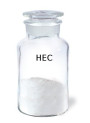
- Hydroxyethyl Cellulose (HEC): This is a non-ionic polymer used as a thickener and gelling agent. It helps create the gel texture and can contribute to the smooth feel. Different grades of HEC are available, offering varying viscosities. Typical usage rates are 0.5-3%.
- Carbomer: Another common gelling agent used to create clear gel textures. It requires neutralization with an alkali like Triethanolamine to form a gel. Carbomer contributes to the structure and feel of the gel. Different types of Carbomer exist, some with better electrolyte tolerance or ease of dispersion. Typical usage rates are 0.1-3%.
- Propylene Glycol: Acts as a humectant (attracts water), solvent, and can help improve the spreadability and feel of the product. It contributes to the moisturizing effect. Typical usage rates are 1-20%.
- Rose Water (Rosa Damascena Flower Water): Often used for its soothing properties and pleasant scent. It can also provide some hydration. It can be used at high percentages, even up to 100% as a base.
- Triethanolamine: An alkaline ingredient used to neutralize Carbomer and adjust the pH of the formulation, allowing the gel to form. It is typically used at low percentages (0.1-2.5%) depending on the amount of Carbomer used.
- Hamamelis Virginiana Extract (Witch Hazel): Known for its astringent and anti-inflammatory properties, which can help tighten pores and soothe skin. This ingredient likely contributes to the acne-fighting benefits. The distilled, alcohol-free version can be used at rates from 10-100%.
To achieve a texture similar to the product you like, you would need to carefully balance the amounts of the gelling agents (Hydroxyethyl Cellulose and Carbomer) and the humectants (Glycerin, Propylene Glycol, Aloe Vera). The specific type and amount of HEC and Carbomer will significantly impact the gel's viscosity and feel. Triethanolamine is crucial for activating the Carbomer.
Experimenting with low percentages of the gelling agents first and gradually increasing them while observing the texture is a common approach in formulation. Remember to adjust the Triethanolamine based on the amount of Carbomer used.
While I cannot provide a precise formula, understanding the role and typical usage range of each ingredient should give you a good starting point for your own formulation experiments.
Related Products Mentioned
Propylene Glycol (USP)
Triethanolamine 99%
Glycerin (USP/Food Grade)
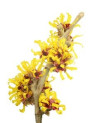
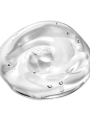
Carbomer 940 (EasyDisperse™, France)
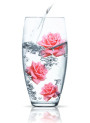
Rose Water (Rosa Damascena)
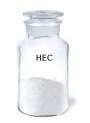
Hydroxyethyl Cellulose (HEC) (4500mPa.s)