Replacing Cetrimonium Chloride (CTAC) in Herbal Hair Conditioner Formulation
Question
Regarding the percentage of Cetrimonium Chloride in a herbal hair conditioner formula:
I am in the process of notifying the formula and found a Ministry of Public Health announcement prohibiting the use of this ingredient in products exceeding 2.5% in the formula. However, the formula I intend to notify contains this ingredient slightly above the limit according to the announcement.
Therefore, I would like to ask:
If I use Cetrimonium Chloride (CTAC) in the formula at 2.5% according to the announcement, what other ingredients can I use to supplement the missing part in the formula to replace the Cetrimonium Chloride (CTAC)?
I saw that there is also Behentrimonium Chloride (BTAC), but I am unsure if it can be used as a direct replacement and how. Could you please provide guidance?
Answer
Replacing Excess Cetrimonium Chloride (CTAC)
- Keep CTAC at the Limit: Adjust the amount of Cetrimonium Chloride (CTAC) in your formula down to the maximum allowed percentage, which is 2.5%.
- Add Behentrimonium Chloride (BTAC): You can use Behentrimonium Chloride (BTAC) to compensate for the reduction in CTAC. BTAC provides strong conditioning and detangling properties. The exact amount of BTAC needed will depend on the desired level of conditioning and the specific BTAC product's active content (the BTAC product ID 1113, for example, has 80% active content, while CTAC ID 161 has 30% active content). You will need to experiment to find the right percentage that gives you the desired feel and performance.
- Consider Other Cationic Conditioners: Other cationic conditioning agents like Behentrimonium Methosulfate (BTMS) or Steartrimonium Chloride can also be used in combination with CTAC (at 2.5%) and/or BTAC.
- Behentrimonium Methosulfate (BTMS): Often used with Cetearyl Alcohol, BTMS creates a creamy texture and provides excellent conditioning and detangling. It is available in different active percentages (e.g., BTMS 50% ID 32753, BTMS 90% ID 9763).
- Steartrimonium Chloride: Similar in function to CTAC but with a longer chain, also providing conditioning and anti-static effects. It is available in liquid (ID 9764) and solid (ID 33580) forms with different active contents.
Formulation Considerations
- Active Content: Pay close attention to the active content of the raw materials you are using. The legal limit for CTAC is based on the percentage of the raw material product, but the conditioning effect comes from the active ingredient. Since BTAC (ID 1113) has a higher active content (80%) than CTAC (ID 161, 30%), you will need less of the BTAC product by weight to get a similar level of active conditioning agent.
- Synergy: Combining different cationic surfactants can sometimes provide synergistic effects, leading to better performance than using a single one.
- Experimentation: You will need to perform small-scale trials to determine the optimal combination and percentages of CTAC (at 2.5%) and the chosen alternative(s) (like BTAC, BTMS, or Steartrimonium Chloride) to achieve the desired conditioning, slip, and feel for your specific herbal hair conditioner formula while staying within all regulatory limits.
- Cetearyl Alcohol: These cationic conditioners are often used in conjunction with fatty alcohols like Cetearyl Alcohol to form a conditioning system that helps thicken the product and enhance conditioning.
By reducing CTAC to the legal limit and supplementing with BTAC or a combination of other suitable cationic conditioners, you should be able to achieve the desired performance for your hair conditioner while complying with the regulations for product notification.
Related Products Mentioned
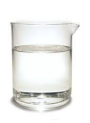
Cetrimonium Chloride (CTAC)
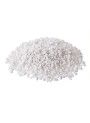
Behentrimonium Chloride (BTAC)
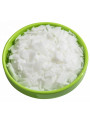
Behentrimonium methosulfate (BTMS 90%)
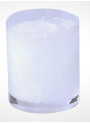
Steartrimonium Chloride (30% liquid)