Research support for Phenylethyl Resorcinol brightening active

Asked by: zay.za.club On: May 20, 2026 Product Type: Cosmetics Answered

Question

Answer

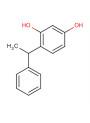
Yes, there is research support for Phenylethyl Resorcinol (e.q. SymWhite 377). This material is Phenylethyl Resorcinol (INCI: Phenylethyl Resorcinol, CAS 85-27-8), a cosmetic brightening/whitening active studied mainly for tyrosinase inhibition and reduction of melanin formation.

Evidence overview

  • Enzyme/cell studies: Research reports that Phenylethyl Resorcinol can reduce tyrosinase activity and melanin content, supporting its use in formulas for dullness, uneven tone, dark spots, and brightening concepts. These are important screening models, but they should not be interpreted as a guarantee of identical human results in every finished formula.
  • Mechanism studies: One mechanistic paper reported anti-melanogenic action involving p44/42 MAPK activation, with reduced tyrosinase activity in B16F10 melanoma cells and human epidermal melanocytes.
  • Delivery/formulation research: There are studies on nanostructured lipid carriers, liposomes, ethosomes, transfersomes, and invasomes to improve delivery, stability, skin deposition, and tyrosinase-inhibition performance of Phenylethyl Resorcinol.
  • Clinical/human support: Some human or model-skin data exist for the active molecule or branded materials reported in literature, but claims should be phrased as evidence for Phenylethyl Resorcinol, not as a guarantee for every formulation or every raw-material source.

For this catalog item, the safest positioning is: it is a Phenylethyl Resorcinol active with the same INCI/CAS/chemical structure as SymWhite 377-type material, but it should not be represented as branded SymWhite 377 raw material unless brand-source documentation confirms that.

Formulation notes from the product data

  • Suggested use level: 0.1-1.0%, commonly 0.5% for leave-on brightening products.
  • Recommended finished pH: around pH 4-5 for stability.
  • It is poorly water-soluble/oil-soluble, so the formula should include a suitable oil, solvent, or solubilizing system.
  • Add during the final stage and avoid excessive heat; catalog guidance allows only mild heat if needed to help incorporation.
  • Protect from light, air, and oxidation; opaque/airless packaging and stability testing are recommended.
  • Patch testing is still needed because strong brightening actives can irritate some users.

Daily sunscreen is also important in any pigmentation-control routine, because UV/visible-light exposure can reactivate pigmentation and reduce the visible benefit of brightening actives.

Relevant References

Sources supporting the key technical claims in this answer

4-(1-Phenylethyl) 1,3-benzenediol: a new highly potent lightening agent
Schmaus G, Vielhaber G, Jacobs K, Franke H Journal of Cosmetic Science 2006

Early direct evidence supporting Phenylethyl Resorcinol as a tyrosinase-inhibiting/skin-lightening active.

Schmaus G, Vielhaber G, Jacobs K, Franke H. 4-(1-Phenylethyl) 1,3-benzenediol: a new highly potent lightening agent. Journal of Cosmetic Science. 2006;57(2):197-198.
PMID: 16758565
4-(1-Phenylethyl)1,3-Benzenediol: A New, Highly Efficient Lightening Agent
Vielhaber G, Schmaus G, Jacobs K, Franke H International Journal of Cosmetic Science 2007

Reported tyrosinase inhibition, B16 melanoma melanin-synthesis inhibition, 3D epidermis model data, and Asian-subject brightening support for the active/branded material in literature.

Vielhaber G, Schmaus G, Jacobs K, Franke H. 4-(1-Phenylethyl)1,3-Benzenediol: A New, Highly Efficient Lightening Agent. International Journal of Cosmetic Science. 2007. DOI: 10.1111/j.1467-2494.2007.00355_6.x.

DOI: 10.1111/j.1467-2494.2007.00355_6.x
p44/42 MAPK signaling is a prime target activated by phenylethyl resorcinol in its anti-melanogenic action
Kang M et al. Phytomedicine 2019

Mechanistic evidence for reduced melanin content and tyrosinase activity via p44/42 MAPK-related anti-melanogenic activity.

Kang M, Park SH, Park SJ, Oh SW, Yoo JA, Kwon K, Kim J, Yu E, Cho JY, Lee J. p44/42 MAPK signaling is a prime target activated by phenylethyl resorcinol in its anti-melanogenic action. Phytomedicine. 2019;58:152877.

DOI: 10.1016/j.phymed.2019.152877 PMID: 30849679
The Improvement of Skin Whitening of Phenylethyl Resorcinol by Nanostructured Lipid Carriers
Kim BS et al. Nanomaterials 2017

Supports use of delivery systems to improve Phenylethyl Resorcinol stability/delivery and anti-tyrosinase/skin-whitening performance.

Kim BS, Na YG, Choi JH, Kim I, Lee E, Kim SY, Lee JY, Cho CW. The Improvement of Skin Whitening of Phenylethyl Resorcinol by Nanostructured Lipid Carriers. Nanomaterials. 2017;7(9):241.

DOI: 10.3390/nano7090241 PMID: 28846658
Ethosomes of Phenylethyl Resorcinol as Vesicular Delivery System for Skin Lightening Applications
Limsuwan T, Boonme P, Khongkow P, Amnuaikit T BioMed Research International 2017

Supports ethosomal delivery research for Phenylethyl Resorcinol in skin-lightening applications.

Limsuwan T, Boonme P, Khongkow P, Amnuaikit T. Ethosomes of Phenylethyl Resorcinol as Vesicular Delivery System for Skin Lightening Applications. BioMed Research International. 2017;2017:8310979.

DOI: 10.1155/2017/8310979 PMID: 28804723