Resolving Pigment Dispersion and Viscosity Issues in W/S Cream
Question
I have two questions regarding my cream formulation:
1. How can I solve the problem of mixing Titanium Dioxide Pigment into the cream formula during the color mixing step when it doesn't blend uniformly and appears as small white particles throughout the cream?
2. For a W/S cream formula using Hectorite Gel as a thickener, if the viscosity is too low after finishing the formulation, is it possible to increase the viscosity afterwards?
Answer
Solutions for Formulation Issues
Here are some recommendations regarding your formulation questions:
1. Dispersing Titanium Dioxide Pigment in Cream
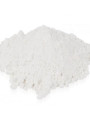
The issue of white spots when adding Titanium Dioxide Pigment to your cream formula during the color mixing step is likely due to poor dispersion of the pigment particles. Based on the product information for Titanium Dioxide 250nm Pigment (Non-Treated), it is dispersible in water.
To achieve a smooth, uniform color without white spots in a W/S (Water-in-Silicone or Water-in-Oil) cream, pigments should be properly pre-dispersed in the appropriate phase before being added to the main emulsion. Since this specific Titanium Dioxide is water-dispersible, you should pre-disperse the pigment in the water phase of your formulation using a high-shear mixer until a smooth, lump-free slurry is achieved. Ensure the pigment is fully wetted and dispersed before combining the water phase with the oil/silicone phase to form the emulsion.
Adding dry pigment powder directly into an emulsion or the wrong phase will often result in agglomerates (white spots) that are difficult to break down later.
2. Increasing Viscosity of W/S Cream with Hectorite Gel After Finishing
Regarding your W/S cream formula using Hectorite Gel™ (Mineral Oil Base) as a thickener, it is generally not possible to effectively increase the viscosity by adding more Hectorite Gel after the formula has been completed. Hectorite Gel works by forming a gel network within the oil phase of the formulation. This gelling process needs to occur during the initial preparation phase, specifically when the Hectorite Gel is mixed into the oil phase and activated.
Attempting to incorporate additional Hectorite Gel into a finished emulsion can disrupt the existing structure and may not lead to a significant or stable increase in viscosity. It could potentially cause instability issues.
The viscosity of the cream should be adjusted during the formulation development stage by varying the concentration of Hectorite Gel added to the oil phase before the emulsification process.
Related Products Mentioned