Resolving White Cast and Stickiness in Physical Sunscreen Formula
Question
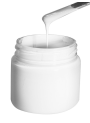
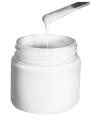
I have a sunscreen formula using Oil Free Titanium Dioxide at 20%. I am facing two main issues:
1. Can this stickiness issue be resolved?
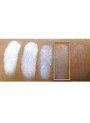
2. For the issue of white cast after application, what ingredients can be added to reduce it?
Answer
Addressing White Cast and Stickiness in Sunscreen Formula
Hello, I understand the issues you're facing with the sunscreen formula resulting in a white cast and stickiness. The formula you have uses Oil Free Titanium Dioxide as the main sunscreen ingredient, which is a Physical Sunscreen.
These issues are common with formulas using Physical Sunscreens, especially at high concentrations like 20% in this formula. The texture is also influenced by the gelling agent like Sepiplus 400 and Caprylic/Capric Triglyceride.
Addressing Stickiness
Stickiness can result from the dispersion of Titanium Dioxide and the overall texture of the formula. Adding ingredients that help the product spread easily and provide a lighter feel can help.
- Cyclopentasiloxane: This is a volatile silicone that provides a soft, smooth, non-sticky feel and helps the formula spread better. It can be added to the oil phase of the formula.
- LipidSoft™ D5: This is a Cyclomethicone replacer that offers similar properties, providing a light, slippery feel and improving texture without stickiness.
- Dimethicone (Very Light/3): This is a non-volatile silicone but has very low viscosity, providing a light and smooth coating on the skin for a longer time than Cyclopentasiloxane without feeling sticky.
Slightly reducing the amount of Sepiplus 400 (if the formula stability is maintained) might also help reduce stickiness.
Addressing White Cast
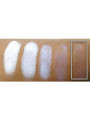
White cast is a characteristic issue of Physical Sunscreens like Titanium Dioxide because it is a white powder that sits on the skin surface to reflect UV radiation.
To reduce white cast while still using Titanium Dioxide, you can choose Transparent Titanium Dioxide types with very small particle sizes (nano-sized) and special surface coatings, such as with Dimethicone or Hydrogen Dimethicone. These coatings help reduce light scattering and minimize the white appearance on the skin.
- Titanium Dioxide Transparent (15nm, Dimethicone Coated): This is an example of a transparent Titanium Dioxide designed for sunscreen formulas that need to be clear and not leave a white cast, while still providing good sun protection.
However, using transparent Titanium Dioxide at high concentrations for high SPF might still leave some feel on the skin, and the sun protection performance might differ slightly from pigmentary types. It's recommended to test the SPF efficacy of the modified formula.
In summary, improving this formula to reduce stickiness and white cast can be achieved by adding ingredients that provide a lighter texture and selecting an appropriate transparent type of Titanium Dioxide.
Updated Review: May 2026
This section was added after reviewing the original answer against current product availability and formulation knowledge at the stated point in time.
Update as of 2026-05-24
The main point remains valid: a high level of Titanium Dioxide can cause drag, powdery feel, and white cast. However, the explanation should be updated. Titanium Dioxide does not dissolve in the formula; it must be properly wetted, dispersed, deagglomerated, and kept evenly suspended/filmed on skin. Poor dispersion or re-agglomeration can increase both stickiness/drag and visible whiteness.
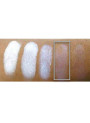
For reducing white cast, choose a transparent/nano Titanium Dioxide grade or a ready-dispersed format that matches the formula phase, for example Titanium Dioxide Transparent (15nm, Dimethicone Coated) for oil/silicone systems, Titanium Dioxide Transparent (15nm, Water-Dispersion) for water-rich or oil-in-water systems, or the C12-15 Alkyl Benzoate based transparent Titanium Dioxide dispersions for oil-phase incorporation. Titanium Zinc NanoLiquid™ DEC or Titanium Zinc NanoLiquid™ CYCLO can also be considered when both Titanium Dioxide and Zinc Oxide coverage are desired. These options can reduce whiteness, but at high mineral loading they still may not be completely invisible.
For reducing tacky/draggy feel, light slip agents such as LipidSoft™ D5, Dimethicone (Very Light/5), Cyclopentasiloxane, or KF-995 can be trialed if compatible with the emulsion system. If the product will be sold in markets that restrict Cyclopentasiloxane/D5, especially the EU, consider D5-replacement options such as LipidSoft™ D5 instead of relying on high D5 levels in a leave-on sunscreen.
The earlier statement that chemical sunscreens are generally less safe than physical sunscreens should not be used as a blanket rule. Mineral, organic, and hybrid sunscreen systems can all be safe when the UV filters and levels comply with the target market regulations and the finished formula is properly tested. Any change in Titanium Dioxide grade, dispersion, emollient, emulsifier, or film former can change SPF/UVA performance, so final SPF, UVA/PA, stability, microbial, packaging, and water-resistance testing are required before making claims or selling. For lower development risk, a ready physical sunscreen base such as Pure Physical Sunscreen (SPF50+, PA3+, Water-in-Oil, Non-White) may be a more practical starting point, followed by testing after customization.
Related Products Mentioned
Sepimax Zen
Sepinov EMT10
Dimethicone (Very Light/3, Low-Odor)
LipidSoft™ D5 (Cyclomethicone Replacer)
Dimethicone (Very Light/5, Low-Odor)
KF-995 (Cylopentasiloxane, D5)