Resorcinol Derivatives for Skin Brightening: Efficacy, Combination, and Side Effects
Question
I am considering using the following resorcinol derivatives in a skincare formulation:
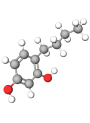
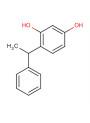
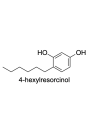
4-Hexylresorcinolat 0.5%Phenylethyl Resorcinolat 0.5%4-Butylresorcinolat 1%
I have a few questions regarding their use for skin brightening:
- Based on the recommended usage amounts for each, which of these ingredients would you recommend for achieving skin brightening results, ordered from most to least recommended?
- Can these ingredients be used together in a single formulation? If so, which specific combinations (e.g., two ingredients or all three) are advisable without overlapping effects?
- If all three ingredients are used together at their recommended percentages, besides potential increased cost, what other effects might they have on the skin?
Answer
Choosing and Combining Resorcinol Derivatives for Skin Brightening
4-Hexylresorcinol, Phenylethyl Resorcinol, and 4-Butylresorcinol are all highly effective ingredients for skin brightening, primarily by inhibiting tyrosinase, a key enzyme in melanin synthesis.
1. Recommendation for Skin Whitening Results (Most to Least Recommended)
Based on the provided information and recommended usage percentages, we can rank the ingredients for skin whitening results as follows:
- Phenylethyl Resorcinol (0.5%): This ingredient is widely recognized for its outstanding efficacy in tyrosinase inhibition, even at low concentrations (recommended at 0.5%). Research indicates it is over 210 times more efficient than Kojic Acid in in-vitro experiments and has a lower irritation potential compared to older resorcinol derivatives.
- 4-Butylresorcinol (1%) (e.g., Activated Resorcinol™ or NanoRes™): This is a very potent ingredient for reducing the pigmentation process, significantly more effective than Vitamin C, Arbutin, Kojic Acid, and Alpha Arbutin. At 1%, it is the maximum recommended concentration for leave-on products for Activated Resorcinol™ and within the recommended range for NanoRes™, an encapsulated form that enhances stability and reduces irritation.
- 4-Hexylresorcinol (0.5%) (e.g., HR-White™): This is also a highly effective tyrosinase inhibitor, demonstrating superior efficacy compared to Hydroquinone, Kojic Acid, and licorice extract. Additionally, it possesses antioxidant and anti-glycation properties, offering further benefits to the skin.
In summary, all three ingredients are highly effective for skin brightening, but Phenylethyl Resorcinol and 4-Butylresorcinol are often highlighted for their remarkable efficacy at low to moderate concentrations.
2. Can They Be Used Together?
These resorcinol derivatives can be used together, but careful consideration is needed due to their similar mechanisms of action (tyrosinase inhibition). Combining them may not significantly enhance efficacy but will increase the risk of irritation.
- Recommendations:
- It is not recommended to use all three simultaneously at high concentrations. This can lead to redundant mechanisms and unnecessary increased irritation risk.
- If combining, choose 1-2 ingredients and consider integrating them with whitening agents that have different mechanisms of action, such as Niacinamide (Vitamin B3) or N-Acetyl Glucosamine, to enhance efficacy and reduce risks.
- Phenylethyl Resorcinol can be combined with Niacinamide, Kojic Acid, and Vitamin C.
- 4-Butylresorcinol (Activated Resorcinol™) can be used with Vitamin B3, N-Acetyl Glucosamine, but should not be used with Alpha Arbutin or AHAs due to potential effects on stability and efficacy.
3. Potential Effects on Skin if All Three Are Used at Recommended Percentages
If 4-Hexylresorcinol 0.5%, Phenylethyl Resorcinol 0.5%, and 4-Butylresorcinol 1% are all used together in a single formulation, in addition to increased cost, the following effects on the skin may occur:
- Increased Skin Irritation: All resorcinol derivatives are potent active ingredients. Using multiple types simultaneously at high concentrations significantly increases the risk of irritation, such as redness, itching, stinging, dryness, or peeling. Notably, 4-Butylresorcinol descriptions specifically warn that high doses can cause skin irritation.
- Risk of Sensitization or Photosensitivity: Combining multiple active ingredients can increase the likelihood of allergic reactions or make the skin more sensitive to sun exposure. This can counteract brightening efforts and potentially lead to new hyperpigmentation.
- Diminished Returns on Efficacy: Since these ingredients share similar primary mechanisms of action, using multiple types simultaneously may not result in a threefold increase in whitening efficacy. Instead, it might reach a saturation point, showing no significant difference in results compared to using just one or two appropriate ingredients.
- Formulation Stability Issues: Some resorcinol derivatives, such as Activated Resorcinol™ and Phenylethyl Resorcinol, are sensitive to light and pH levels in the formulation. Combining multiple such ingredients can lead to stability problems, such as discoloration (yellowing) or separation of the product.
Therefore, to achieve the best results and minimize skin risks, we recommend a judicious selection of whitening agents. Consider using only 1-2 of the most effective ingredients or combining them with actives that have different mechanisms of action to achieve desired results without undesirable side effects.