Review and Adjustment of Acne Whitening and Aloe Repair Gel Formulations
Question
Could you please review and provide feedback on my two gel formulations, an Acne Whitening Gel and an Aloe Repair Gel? I am a beginner formulator with combination, acne-prone skin and slight redness.
I also need clarification on how to correctly calculate ingredient percentages when using a pre-made base like an Aloe Gel base.
Here are my proposed formulations:
1. Acne Whitening Gel
- Pro Polymer: 0.5%
- Allantoin: 0.5%
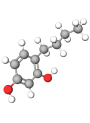
- Activated Resorcinol: 1.0%
- Butylene Glycol: 1.0%
- Water: 75.3%
- Other ingredients...
I am concerned about potential issues with ingredient solubility (specifically Activated Resorcinol and Allantoin) and the texture/viscosity of the gel, especially how Azelaic Acid might affect it. What adjustments are needed?
2. Aloe repair gel
- Aloe Gel base: 64%
- DMAE Liquid: [Percentage not specified in staff reply, but implied to be present]
- Other ingredients...
I am wondering if any ingredients in this formula, like DMAE Liquid, might affect the gel's consistency and if any adjustments are needed to maintain the desired texture.
Answer
Review of Whitening and Repairing Formulations
Thank you for sharing your formulations and questions. I understand you are a beginner and have combination, acne-prone skin with slight redness.
Regarding your question about calculating with a pre-made base: When using a pre-made base like the Aloe Gel base, you treat the base itself as a single ingredient in your formula. The percentage you use for the base (e.g., 64% for the Aloe repair gel) is the percentage of the total weight of your final product that is made up of that base. You don't need to calculate the individual ingredients within the base unless you are trying to understand the base's composition or modify it significantly. Your method of listing the base with its percentage, just like other ingredients, is the correct way to calculate your formula proportions.
Here is a review of your formulations based on the feedback provided:
1. Acne Whitening Gel
Based on the staff's feedback, here are the points to consider and adjustments recommended for this formula:
- Pro Polymer: The staff recommends increasing Pro Polymer from 0.5% to 1.5-2.0%. This is because Azelaic Acid can weaken the gel structure, and increasing the gelling agent (Pro Polymer) will help maintain the desired consistency.
- Allantoin: The staff noted that Allantoin's solubility in water is limited to 0.5% of the water content. With 75.3% water, the maximum Allantoin is about 0.3765%. Your proposed 0.5% is slightly over this. The staff recommends using only 0.2% to avoid undissolved powder, especially considering potential measurement inaccuracies with small amounts.
- Activated Resorcinol: It was noted that Activated Resorcinol might not dissolve completely at 1.0% with the original solvent system. The staff recommends increasing Butylene Glycol from 1.0% to 3-4% to improve the solubility of Activated Resorcinol.
You will need to adjust the percentage of water (or another ingredient) to accommodate these changes, ensuring the total formula adds up to 100%.
2. Aloe repair gel
Based on the staff's feedback, this formula is generally correct as written.
- DMAE Liquid: The staff mentioned that DMAE Liquid has a risk of weakening the gel consistency. They suggest that after you have mixed the formula, you might need to add an additional amount of Pro Polymer (e.g., around 0.5%) to thicken the gel back up if it becomes too thin. This is a potential adjustment to make after the initial mixing.
In summary, for the Acne Whitening Gel, you should revise the percentages of Pro Polymer, Allantoin, and Butylene Glycol and adjust the water accordingly. For the Aloe repair gel, the formula is correct, but be prepared to potentially add a small amount of Pro Polymer after mixing if the texture is too thin due to the DMAE.
Related Products Mentioned
Safe-B3™ (Vitamin B3, Niacinamide)
Allantoin
Natural Bisabolol (Brazil Chamomile)
GlucoBright™ (Acetyl Glucosamine)
Natural Betaine (Crystal)
Disodium EDTA
Aloe Vera Gel (Heavy)
Pro Polymer™ (Gel Maker)
WaterLock™ (Polyquaternium-51)