Review and Adjustment of Serum Formulation with Hyaluronic Acid, Argireline, and Ceramide Complex
Question
I have developed a cosmetic formulation with the following ingredients and mixing steps, aiming for a serum/gel texture:
Ingredients:
- Hyaluronic Acid (Standard Molecule) 0.5%
- Hyaluronic Acid (Nano Molecule) 0.5%
- Sesaflash 5%
- Argireline 5%
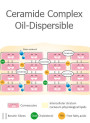
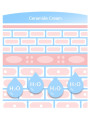
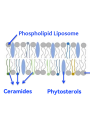
- Ceramide Complex 10%
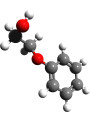
- Phenoxyethanol 1%
- Water (balance to 100%)
Mixing Steps:
- Mix Hyaluronic Acid (Standard Molecule) 0.5% and Hyaluronic Acid (Nano Molecule) 0.5% with water (Step A).
- Add Sesaflash 5%, Argireline 5%, and Ceramide Complex 10% (Step B).
- Add Phenoxyethanol 1% and refrigerate (Step C).
Based on this formulation and process, I have the following questions:
- Are the ingredients and mixing steps correct?
- What are the disadvantages of this formula, and what ingredients should be adjusted?
- If I already use a product with Matrixyl 3000, is it unnecessary to add it to this formula, and will I get the same efficacy?
- What are the effects if I use Hyaluronic Acid (Standard Molecule) 0.5% and Hyaluronic Acid (Nano Molecule) 0.5%, which are not acid/alkali resistant?
- If I don't use Hyaluronic Acid (Standard Molecule) or Hyaluronic Acid (Nano Molecule) at all and just mix the other ingredients with water, can it still be used?
Answer
Review of Your Cosmetic Formulation
Thank you for sharing your formulation and questions. Here is a review and answers based on your ingredients and general formulation principles:
1. Are the ingredients and mixing steps correct?
The ingredients you've chosen are suitable for a skincare product. However, the percentages for Hyaluronic Acid (1% total) and Ceramide Complex (10%) are quite high compared to typical recommendations, which can impact the final texture.
Regarding the mixing steps:
- Step A (Mixing Hyaluronic Acid with Water): Dissolving Hyaluronic Acid powder takes time and requires proper hydration. Simply mixing may not be sufficient. It's best to let it soak for several hours (e.g., in the refrigerator) or use a high-speed blender to ensure it fully dissolves and forms a gel, as noted by the staff and product descriptions.
- Step B (Adding Sesaflash, Argireline, Ceramide Complex): This step is generally fine for adding water-soluble/dispersible ingredients. However, the method for Ceramide Complex depends on its type. If it's a powder, it might need special dispersion (e.g., heating with glycol) before adding to water, which isn't in your steps.
- Step C (Adding Phenoxyethanol and Refrigerating): Adding the preservative at the end is correct. Refrigerating can help with HA dissolution and is good for long-term storage of some ingredients.
Overall, the ingredients are suitable, but the percentages of Hyaluronic Acid and Ceramide Complex are high, and the mixing steps, particularly for dissolving Hyaluronic Acid and incorporating Ceramide Complex, might need refinement depending on the specific types of ingredients used.
2. What are the disadvantages? What ingredients should be adjusted?
Disadvantages:
- The high total concentration of Hyaluronic Acid (1%) will likely make the product feel sticky or tacky on the skin, as the staff mentioned.
- The high concentration of Ceramide Complex (10%) might also affect the texture and could be more than necessary depending on the specific type used.
Adjustments:
- Hyaluronic Acid: Consider reducing the total Hyaluronic Acid concentration to 0.1-0.5% for better texture while still providing good hydration.
- Ceramide Complex: Check the type of Ceramide Complex. If it's a powder, reduce the concentration to 1-3% and follow proper dispersion instructions. If it's a liquid/gel, 10% is within range but could be reduced if the texture is too heavy.
- Ensure Hyaluronic Acid is fully dissolved by soaking or blending properly.
- Check the final pH of your product and adjust it to be between 4.0-6.0 for optimal ingredient stability and efficacy, especially for Argireline.
3. If I already use a product with Matrixyl 3000, is it unnecessary to add it to this formula, and will I get the same efficacy?
Matrixyl 3000 and Argireline work differently. Matrixyl 3000 stimulates collagen, while Argireline relaxes muscles to reduce expression wrinkles. Using a separate product with Matrixyl 3000 provides its benefits. Your formula provides Argireline's benefits.
As the staff advised, if you're already using a product with Matrixyl 3000, adding it again to this formula isn't strictly necessary to get its effects, and using more than recommended isn't always more effective. Using a separate Matrixyl 3000 product alongside this Argireline formula is a good way to get both types of benefits.
4. What are the effects of using Hyaluronic Acid (Standard Molecule) 0.5% and Hyaluronic Acid (Nano Molecule) 0.5%, which are not acid/alkali resistant?
Hyaluronic Acid is stable within a pH range of 3.0-9.0. It is not resistant to very low (<3.0) or very high (>9.0) pH. If your final product's pH is outside this range, the Hyaluronic Acid can degrade, causing the product to lose its gel texture and reducing its moisturizing effectiveness. It's important to ensure your final pH is within the stable range.
5. If I don't use Hyaluronic Acid (Standard Molecule) or Hyaluronic Acid (Nano Molecule) at all and just mix with water, can it still be used?
Yes, you can mix the other ingredients with water. However, without Hyaluronic Acid, which provides gelling and significant hydration, the product would be a thin liquid (like a toner or essence) instead of a gel or serum. It would still contain the active ingredients but would lack the textural and enhanced moisturizing benefits of Hyaluronic Acid.
Related Products Mentioned
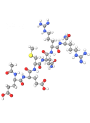
Acetyl Hexapeptide-8 (eq Argireline)
Pal-GHK, Pal-GQPR (eq Matrixyl 3000)
Phenoxyethanol (Extra Pure)

Phenoxyethanol SA (eq. Optiphen Plus)