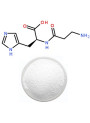
Review of Anti-Aging Face Cream Formula and Mixing Procedure
Question
I have created a face cream formula for normal to dry skin, aimed at reducing wrinkles and boosting collagen. Could you please review the formula and the mixing steps?
My formula is as follows:
- Safe-B3™ (Vitamin B3) 5%
- Matrixyl 3000 6%
- Acetyl Hexapeptide-8 10%
- L-Carnosine 0.40%
- Ectoine 1.50%
- Repair Activator™ 15%
- Satin Cream Maker™ 1.50%
- Rose Hip Oil 5%
- Apricot Kernel Oil 5%
- Melon Flavor 1%
- Mild Preserved Eco™ 1%
- 1,3-Propanediol 10%
- Water 32.10%
- Total 100%
My mixing steps are:
- Combine Phase A (water-soluble ingredients + water + 1,3-Propanediol) and Phase B (oils + Satin Cream Maker™).
- Add Phase A into Phase B while mixing.
- Add fragrance and preservative.
I am concerned about the stability and whether using Melon Flavor is appropriate for a face cream.
Answer
Subject: Review of Anti-Aging Face Cream Formula
Thank you for submitting your face cream formula for review, aimed at reducing wrinkles and boosting collagen for normal to dry skin.
Based on the formula details provided and the staff's feedback, here is a review and suggested revision:
The staff has reviewed your formula and provided the following key points:
- Melon Flavor: It is recommended to use a Melon Fragrance suitable for skincare products instead of a Flavor, which is typically for lip products or those intended for oral contact.
- Water Content: The original formula had a relatively low water content, which could potentially lead to instability and separation of the cream emulsion.
- 1,3-Propanediol: To address the low water content, the staff recommended removing 1,3-Propanediol (10%) or reducing its percentage significantly (to 2-3%). Removing it allows for a higher water percentage, improving stability.
- Mixing Method: The staff clarified the correct emulsification procedure: the oil phase (Phase B) should be added gradually into the water phase (Phase A) while continuously mixing, not the other way around.
Based on these recommendations, here is a revised formula (removing 1,3-Propanediol and adjusting water) and the corrected mixing steps:
Revised Formula
| Ingredient | Percentage |
|---|---|
| 1. Safe-B3™ (Vitamin B3) | 5% |
| 2. Matrixyl 3000 | 6% |
| 3. Acetyl Hexapeptide-8 | 10% |
| 4. L-Carnosine | 0.40% |
| 5. Ectoine | 1.50% |
| 6. Repair Activator™ | 15% |
| 7. Satin Cream Maker™ | 1.50% |
| 8. Rose Hip Oil | 5% |
| 9. Apricot Kernel Oil | 5% |
| 10. Melon Fragrance | 1% |
| 11. Mild Preserved Eco™ | 1% |
| 12. Water | 42.10% |
| Total | 100% |
- (Note: The water percentage has been adjusted to bring the total to 100% after removing 1,3-Propanediol and keeping other percentages as originally listed.)*
Revised Mixing Instructions
- Phase A: Combine ingredients 1, 2, 3, 4, 5, 6, and 12 (Water). Mix well until all water-soluble ingredients are fully dissolved.
- Phase B: Combine ingredients 8 and 9 (Oils).
- Add ingredient 7 (Satin Cream Maker™) to Phase A and mix until dispersed.
- Gradually add Phase B into Phase A while continuously stirring or blending. Continue mixing for 1-10 minutes until a stable cream emulsion is formed.
- Add ingredients 10 (Melon Fragrance) and 11 (Mild Preserved Eco™) to the cream. Mix thoroughly until evenly incorporated.
This revised formula addresses the water content issue and uses a more appropriate fragrance type, while the corrected steps ensure proper emulsification.
Hope this information is helpful!
Related Products Mentioned
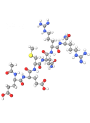
Acetyl Hexapeptide-8 (eq Argireline)
Pal-GHK, Pal-GQPR (eq Matrixyl 3000)

Safe-B3™ (Vitamin B3, Niacinamide)

Rosehip Oil (Extra Virgin Organic)
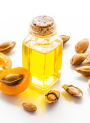
Apricot Kernel Oil (Refined)

Satin Cream Maker™
Mild Preserved Eco™ (Preservative-Free)
Ectoine (Ectoin, from Bio-fermentation)