Review of BHA Toner and Vitamin C Serum Formulations
Asked by: pattypatty359
On: January 19, 2024
Product Type:
Cosmetics
Answered
Question
Seeking expert review on two cosmetic formulations: a BHA toner for oily/acne-prone skin (Formula 1) and a Vitamin C serum (L-Ascorbic Acid) in a silicone base (Formula 2). Specifically, I need advice on ingredient compatibility, potential formulation issues (like pH or solubility), expected texture, efficacy for stated goals, and appropriate mixing procedures.
Answer
Formulation Review
Formula 1: BHA Toner
This formula is designed as a lightweight toner for oily, acne-prone skin, featuring BHA (Salicylic Acid), Niacinamide, and Zinc PCA.
- Ingredient Compatibility: The ingredients in this formula are generally compatible. Niacinamide (Safe-B3™) and Zinc PCA work well together in a water-based system. Witch Hazel and Propanediol are also compatible with the other water-soluble ingredients. Mild Preserved Eco™ is a suitable preservative for this type of formula.
- Salicylic Acid Efficacy and pH: Liquid Salicylic Acid (40% Active) at 2.5% provides 1% active Salicylic Acid. For Salicylic Acid to be most effective as an exfoliant and acne treatment, the formula's pH should be in the range of 3.0-4.0. Niacinamide and Zinc PCA are most stable and soluble in a slightly higher pH range (around 4.0-7.0 for Niacinamide, 4.0-6.0 for Zinc PCA). You will need to carefully adjust the pH of the final formula to balance the efficacy of Salicylic Acid with the stability and solubility of Niacinamide and Zinc PCA. Aiming for a pH between 3.5 and 4.0 would be a good compromise.
- Sufficiency for Exfoliation and Acne: A 1% concentration of active Salicylic Acid is a standard and effective level for treating mild to moderate acne and providing exfoliation. Combined with the oil-reducing properties of Niacinamide and Zinc PCA, this formula has good potential for addressing oily skin and acne.
- Increasing BHA: You can potentially increase the Liquid Salicylic Acid percentage to 5% (providing 2% active Salicylic Acid) for stronger exfoliation and acne treatment. However, this significantly increases the risk of skin irritation, redness, and dryness, especially in a leave-on toner format. It is recommended to start with 1% active Salicylic Acid and see how your skin tolerates it before considering increasing the concentration.
- Texture: With high percentages of Witch Hazel, Propanediol, and water, this formula will have a thin, liquid consistency, typical of a toner. It will not be an emulsion as there are no oil components or emulsifiers.
Formula 2: Vitamin C Serum
This formula aims to create a Vitamin C serum for collagen stimulation using L-Ascorbic Acid in a silicone-based system.
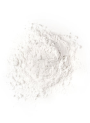
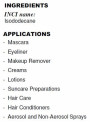
- Ingredient Compatibility and Formulation Method: There is a significant compatibility issue in this formula. Vitamin C (L-ascorbic acid) (Ultra-Fine) is a water-soluble ingredient that requires a low pH (2.0-4.0) for stability and effectiveness. The base of your formula consists of Cyclopentasiloxane, Isododecane, and Silicone Gel (Dimethicone Crosspolymer in Cyclopentasiloxane base), which are all oil/silicone-soluble and do not contain a water phase. L-Ascorbic Acid powder will not dissolve or properly disperse in this anhydrous silicone/oil mixture, leading to poor efficacy, potential irritation from undissolved powder, and an unstable product. The proposed mixing method will not work because the Vitamin C will not dissolve in phase A. Mild Preserved Eco™ is also primarily water-soluble and its effectiveness in this anhydrous system is questionable.
- Suitability for Oily Skin: The silicone and isododecane base ingredients themselves are generally lightweight and non-comedogenic, making them suitable for oily skin in terms of feel. However, the fundamental issue with the active ingredient's solubility makes this formula problematic regardless of skin type.
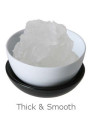
- Texture: If you were to mix the base ingredients (Cyclopentasiloxane, Isododecane, Silicone Gel), they would form a soft, smooth gel/serum texture. The Silicone Gel (Thick & Smooth) is described as opaque, so the resulting texture would likely be translucent or opaque, not a clear gel. The texture would feel lightweight and non-greasy due to the volatile silicones and isododecane. However, as noted, the Vitamin C will not integrate properly.
- Gel Adherence: The silicone base already provides some degree of film-forming and adherence to the skin. If you were using a compatible active ingredient, this base would likely provide the desired feel. However, to create an effective L-Ascorbic Acid serum, you would need to use a different formulation approach, such as a water-based solution with a low pH, or an anhydrous system specifically designed to dissolve or suspend L-Ascorbic Acid (often using glycols).
- Stimulating Collagen: While 15% L-Ascorbic Acid is a potent concentration for collagen stimulation, its inability to dissolve and remain stable in this silicone base means it will not be effective.
Recommendations:
- For Formula 1: Proceed with caution regarding the pH adjustment to ensure both Salicylic Acid efficacy and Niacinamide/Zinc PCA stability. Start with the lower Salicylic Acid concentration to assess skin tolerance.
- For Formula 2: This formulation approach is not suitable for L-Ascorbic Acid. To create an effective Vitamin C serum with L-Ascorbic Acid, consider formulating it in a water-based solution with a pH between 3.5 and 4.0, or using a different, compatible form of Vitamin C (like Ascorbyl Tetraisopalmitate for oil-based formulas or Sodium Ascorbyl Phosphate/Magnesium Ascorbyl Phosphate for water-based formulas that don't require a very low pH).
Related Products Mentioned
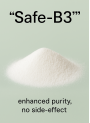
Safe-B3™ (Vitamin B3, Niacinamide)
Cosmetics
Vitamin C (L-ascorbic acid) (Ultra-Fine)
Cosmetics
Isododecane (Germany)
Cosmetics
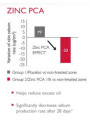
Zinc PCA
Cosmetics
Mild Preserved Eco™ (Preservative-Free)
Cosmetics