Revising a Hair Serum/Leave-in Conditioner Formula for Dry and Damaged Hair
Question
I'm trying to create a Leave-in Conditioner/Hair Serum for dry, frizzy, and damaged hair. My initial formula uses a high oil phase (Avocado Oil, Argan Oil), high protein (Hydrolyzed Wheat Protein, Hydrolyzed Soy Protein), low water, and Laureth-23 as an emulsifier. I'm concerned about stability, texture (heavy/greasy/sticky), and effectiveness. Could you please review my approach and suggest a revised formula and mixing method to achieve a stable, effective, and pleasant-to-use serum?
Answer
Revised Hair Serum Formula and Method
Thank you for sharing your hair serum formula idea! It's a great starting point with beneficial ingredients like Vitamin B5 and hydrolyzed proteins. Based on your goal for dry, frizzy, and damaged hair, and aiming for a stable, effective, and pleasant-to-use serum, here are some suggestions for revising your formula and method:
Analysis of Your Original Formula and Suggested Changes
Your initial formula has a very high oil phase relative to the water phase, which is unusual for a typical Leave-in Conditioner or serum (usually Oil-in-Water emulsions with a high water content). This can lead to instability (separation), a heavy/greasy feel, and potentially sticky texture from the high protein concentration in a small amount of water.
To create a stable and effective serum, we need to adjust the ratios and add a few key ingredient types:
- Increase Water Phase: Make water the primary ingredient (60-70%+).
- Reduce Oil & Protein: Lower the percentage of oils (Avocado Oil, Argan Oil) to 3-10% total and proteins (Hydrolyzed Wheat Protein, Hydrolyzed Soy Protein) to 1-5% each (total protein 5-10%).
- Add a Proper Emulsifier: Laureth-23 is a surfactant but not a primary emulsifier for creating stable O/W emulsions with significant oil content. You need an emulsifier designed for this purpose. Examples include Ceteareth-25, or natural options like LeciCream™ or PhosphoMax™. SoftGel 305 is also an option that provides both emulsifying and conditioning properties.
- Add a Thickener: This helps create the desired serum or light lotion texture and improves emulsion stability. Examples include Hydroxyethyl Cellulose (HEC), Carbomer U21, or Hydroxyethyl Acrylate/Sodium Acryloyldimethyl Taurate Copolymer.
- Add a Conditioning Agent: While oils and proteins condition, cationic conditioning agents significantly improve slip, reduce static, and smooth the hair cuticle, which is excellent for dry/frizzy hair. Examples include Cetrimonium Chloride or Behentrimonium Chloride (though specific examples weren't found in the recent search, the type is important). SoftGel 305 (Polyquaternium-37) is a conditioning polymer that also acts as an emulsifier.
- Add a Preservative: Crucially, any formula containing water MUST have a broad-spectrum preservative to prevent microbial growth and ensure safety and shelf life. Examples include Mild Preserved Eco™, PE 1090 Preservative, or Coco-Preserve™.
- Adjust pH: The final product should have a pH suitable for hair (around 4.5-5.5) for optimal cuticle smoothing and stability.
Sample Formula Structure (Example Percentages)
This is a guideline to show ingredient categories and typical ranges, not an exact formula. You will need to experiment to find the texture you like.
- Phase A (Water Phase):
- Purified Water: 60-70%
- Panthenol (Vitamin B5): 1-3%
- Hair Wheat Protein (Hydroxypropyltrimonium Hydrolyzed Wheat Protein): 1-3%
- Hydrolyzed Soy Protein: 1-3% (If available - wasn't found in recent search)
- Thickener (Hydroxyethyl Cellulose (HEC), Carbomer U21, or Hydroxyethyl Acrylate/Sodium Acryloyldimethyl Taurate Copolymer): 0.1-0.5%
- Phase B (Oil Phase):
- Avocado Oil (Refined): 3-7%
- Argan Oil (Organic - Virgin - Deodorized): 1-3%
- Emulsifier (Ceteareth-25, LeciCream™, PhosphoMax™, or SoftGel 305): 3-7% (Adjust based on oil % and emulsifier type)
- Laureth-23: 1-3% (Optional, can help with feel)
- Phase C (Cool Down Phase - Add below 40°C):
- Cationic Conditioning Agent (e.g., Cetrimonium Chloride solution, or use SoftGel 305 in Phase B): 1-5%
- Preservative (Mild Preserved Eco™, PE 1090 Preservative, Coco-Preserve™, etc.): 0.5-1.5% (Check supplier usage rate)
- Fragrance/Essential Oil: 0.1-0.5% (Optional)
- pH Adjuster (e.g., Citric Acid Solution): As needed to reach pH 4.5-5.5
Revised Mixing Method (for O/W Emulsion)
- Weigh ingredients for Phase A and Phase B into separate heat-resistant containers.
- Heat both Phase A and Phase B in a water bath (or controlled heat) to around 70-75°C until all solids in the oil phase are melted.
- Slowly pour Phase B (Oil Phase) into Phase A (Water Phase) while mixing continuously with a stick blender or high-shear mixer for 3-5 minutes to create a stable emulsion.
- Switch to a slower mixer (like a spatula or regular stirrer) and continue stirring occasionally while the emulsion cools down to below 40°C.
- Add ingredients from Phase C (Preservative, Fragrance, etc.) and mix well.
- Check the pH using a pH meter or strips and adjust to 4.5-5.5 using a few drops of Citric Acid solution if needed. Mix thoroughly after adjusting pH.
- Transfer to a clean container.
Making emulsions requires practice, especially getting the right texture and stability. Start with small batches and adjust percentages as needed. Good luck with your formulation!
Related Products Mentioned
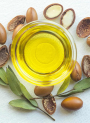
Argan Oil (Virgin - Deodorized)
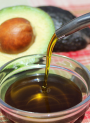
Avocado Oil (Refined)
Laureth-23
Mild Preserved Eco™ (Preservative-Free)
Ceteareth-25