Safety of Methanol Impurity in Cosmetic-Grade Denatured Ethyl Alcohol
Question
Regarding cosmetic-grade denatured ethyl alcohol used in hand sanitizers (sprays/gels), the COA shows a Methanol limit of Max 15 ppm. Given that Methanol is generally prohibited by regulatory bodies for use as the main alcohol in hand sanitizers, is this trace amount (15 ppm) considered safe and acceptable for topical cosmetic applications? Why is it present if Methanol is prohibited?
Answer
Understanding Denatured Ethyl Alcohol in Cosmetics
Denatured ethyl alcohol is ethanol that has had additives included to make it unsuitable for drinking. This is often done for tax purposes, as pure ethanol intended for consumption is typically taxed differently than ethanol used for industrial or cosmetic purposes.
For cosmetic applications, including hand sanitizers and sprays, ethyl alcohol is commonly used as a solvent, a penetration enhancer, and for its antimicrobial properties. Cosmetic-grade denatured alcohol is specifically formulated using denaturants that are acceptable for topical use.
Your concern about Methanol (Methyl Alcohol) is valid, as Methanol is toxic and prohibited by regulatory bodies like the FDA for use as the primary alcohol in hand sanitizers. However, the presence of Methanol you mentioned (Max 15 ppm) likely refers to a strict limit on Methanol as a potential impurity in cosmetic-grade ethanol, not as an intentional denaturing agent at a significant concentration.
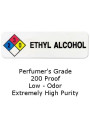
High-purity cosmetic-grade ethyl alcohol, such as the Ethyl Alcohol (99.9% , 200 Proof, Research/Perfumer Grade) and Ethyl Alcohol (96% , Perfumer Grade, Low-Odor), is denatured using methods and substances that are safe for cosmetic application. The 99.9% grade, for example, is described as denatured by a volatile compound without using bitter substances, making it suitable for various uses, including those where low odor is important.
The limit of 15 ppm for Methanol is an extremely low concentration (0.0015%). Regulatory bodies set such stringent limits for impurities to ensure the safety of cosmetic products. As long as the cosmetic-grade ethyl alcohol meets these purity standards and is used appropriately in formulations, the trace amount of Methanol impurity at this level is not considered harmful for topical applications like hand sanitizers.
Therefore, cosmetic-grade denatured ethyl alcohol that complies with purity standards and regulatory limits for impurities like Methanol is safe and appropriate for use in hand sprays and gels.