Sediment in PCMX Disinfectant Formula
Question
I am making a disinfectant formula with the following composition (%):
- Propylene Glycol: 2
- Glycerin: 0.5
- Butylene Glycol: 3
- vite: 0.1
- B5: 0.1
- PCMX: 0.5
- 95%alcohol: 3
- Add water to make up to 100%
Mixing Procedure:
Mix 1, 2, 3, 4, 6, 7 and stir until PCMX dissolves. Then pour into water that has dissolved 5.
Problem:
After mixing, a sediment similar to the attached picture forms, which feels oily when rubbed. I thought it might be due to vite, so I adjusted the formula by not adding Vitamin E, but the problem persisted.
- I also tried changing the two types of glycol to only Propylene Glycol 5% and adding 95% alcohol 5% to help dissolve PCMX, but the sediment still formed.
Questions:
- Could you please advise on how to fix this problem and what is causing it?
- If I still want to make a disinfectant formula with 0.5% PCMX, what is the solution?
- Does the mixture still have disinfectant efficacy despite the sediment?
The problem is similar to Product Name (https://www.myskinrecipes.com/topic11445.html)
Answer
Subject: Sediment in Formula
Hello,
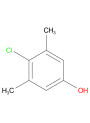
Regarding the sediment issue in your disinfectant formula, it is highly likely caused by the precipitation of PCMX (Chloroxylenol). PCMX has low solubility in water. In your formula, the concentration of PCMX (0.5%) exceeds its solubility limit in the final mixture, which is mostly water.
Here are the answers to your questions:
What is causing the sediment and how to fix it?
- Cause: The sediment is most likely PCMX that has precipitated out of the solution because it is not sufficiently soluble in the water-heavy final mixture.
- Fix: To prevent precipitation, you need to increase the solubility of PCMX in the formula. This can be achieved by:
- Increasing the concentration of co-solvents like Propylene Glycol, Butylene Glycol, and/or 95% alcohol in the formula. These solvents help keep PCMX dissolved.
- Adding a suitable non-ionic solubilizer or surfactant (e.g., Polysorbate 20, PEG-40 Hydrogenated Castor Oil) to the formula. Solubilizers help disperse and dissolve ingredients that are not easily soluble in water.
How to make a formula with 0.5% PCMX without sedimentation?
- You will need to adjust your formula to include a higher proportion of solvents or add a solubilizer. The exact amount needed depends on the specific ingredients and their interactions, but increasing the total percentage of glycols and alcohol significantly (e.g., aiming for a total solvent concentration where 0.5% PCMX remains clear) or incorporating a solubilizer at an effective concentration should resolve the issue. You might need to experiment with the ratios.
Does the mixture still have disinfectant efficacy despite the sediment?
- The disinfectant efficacy of the mixture will be reduced. PCMX is the active ingredient responsible for disinfection. When it precipitates, it is no longer fully dissolved and available to act against microbes in the solution. Only the portion of PCMX that remains dissolved will contribute to the disinfectant effect. The precipitated solid has little to no efficacy in this state.
We have identified PCMX (Chloroxylenol) as product ID 7286, which is likely the ingredient causing this issue due to its low water solubility.
Hope this helps!
Related Products Mentioned