Serum and Sunscreen Formulation Questions
Question
I have several questions about formulating skincare products:
- Can I use two different serums, both containing 1% Hyaluronic Acid, together or at different times? Is using this concentration safe regardless of the amount applied?
- What is the best approach for formulating a serum suitable for oily skin with wrinkles? Should I use a Silicone serum base or a Hyaluronic Acid gel base? I am considering removing Standard HA and increasing Nano HA to 1% to reduce stickiness. Is this a good strategy?
- In my sunscreen formulation, can I replace Caprylic/Capric Triglyceride 5% with Coenzyme Q10 (Liposomes) 3%?
- Do I need to add Phenoxyethanol 1% and Disodium EDTA 0.2% to my sunscreen formula (which contains 64.5% water)?
Answer
Answer to Your Formulation Questions
Here are the answers to your questions based on the staff's previous replies:
Using two serums with 1% Hyaluronic Acid (HA): Yes, you can use both serums together or at different times. The staff confirmed that a 1% concentration of Hyaluronic Acid is appropriate and safe, regardless of how much product you apply, as long as the concentration in the formula is 1%. Using it at this concentration will provide hydration without drawing water out of the skin.
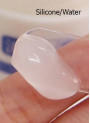
Serum formulation for oily skin with wrinkles: For oily skin, a silicone serum base is generally recommended over a Hyaluronic Acid gel base because it feels less sticky. The staff suggested exploring silicone serum options or using a Pro Polymer gel base as a lighter alternative to Hyaluronic Acid gel. Regarding your question about removing Standard HA and increasing Nano HA to 1%, this is a valid approach to reduce stickiness, as the staff suggested using Nano HA at 1% with a lighter base like Pro Polymer gel or even in a toner.
Sunscreen formulation changes:
- You can replace Caprylic/Capric Triglyceride with Coenzyme Q10 (Liposomes) at 3%. However, the staff noted that this might result in a heavier texture. They recommended considering adding back 2-3% of Caprylic/Capric Triglyceride to help the Light Cream Maker emulsifier function correctly, or testing the formula without it first.
- Regarding the addition of Phenoxyethanol and Disodium EDTA to the sunscreen: Yes, you should include Phenoxyethanol 1% and Disodium EDTA 0.2% in your sunscreen formula because it contains water (64.5%). These ingredients are necessary for preservation and stability in water-based formulations.
Related Products Mentioned
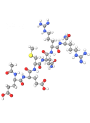
Acetyl Hexapeptide-8 (eq Argireline)

Pal-GHK, Pal-GQPR (eq Matrixyl 3000)
Safe-B3™ (Vitamin B3, Niacinamide)

Allantoin
Light Cream Maker™
Phenoxyethanol (Extra Pure)
Disodium EDTA
Silicone Gel (Ultra Clear, Super Silky)
Pro Polymer™ (Gel Maker)
Silky Serum Base (Face/Eye)