Serum Cloudiness at Low Temperature
Question
I formulated a serum containing cannabis oil, essential oil, and a surfactant. The serum appears cloudy when in an air-conditioned room but is clear at room temperature. I suspect this might be due to the dandruff guard ingredient. If I want the serum to be consistently cloudy across different temperatures, should I try reducing the amount of surfactant?
Answer
Understanding the Cloudiness
- Solubility of Ingredients: Many ingredients have different solubility limits at different temperatures. Some substances are less soluble in colder temperatures. If an ingredient (like the "dandruff guard" or even components of the cannabis oil) is dissolved in the serum, and its concentration is close to its solubility limit at room temperature, a drop in temperature (like in an air-conditioned room) can cause it to exceed its solubility limit and precipitate out of the solution. These tiny precipitated particles scatter light, making the serum appear cloudy. Piroctone Olamine, a common "dandruff guard" ingredient, for example, relies on solvents like surfactants or ethanol for solubility.
- Emulsion Stability: Your serum contains oil (cannabis oil) and likely a water phase, mixed with a surfactant. This creates an emulsion (tiny droplets of oil dispersed in water, or vice versa). The stability of an emulsion can be affected by temperature. Changes in temperature can affect the properties of the surfactant or the viscosity of the phases, leading to changes in the size or distribution of the oil droplets. If the droplets grow larger or clump together at lower temperatures, they can scatter more light and cause cloudiness.
It's highly probable that either the "dandruff guard" ingredient's solubility is decreasing in the cold, or the stability of your oil-in-water emulsion is being compromised at lower temperatures, leading to larger oil droplets.
Reducing Surfactant to Maintain Cloudiness
You asked if reducing the surfactant would make the serum cloudy all the time. Surfactants play a crucial role in solubilizing ingredients and stabilizing emulsions.
- If the "dandruff guard" ingredient's solubility depends on the surfactant concentration (as is the case with Piroctone Olamine), reducing the surfactant would indeed decrease its solubility. This could potentially cause it to precipitate and make the serum cloudy even at room temperature.
- However, reducing the surfactant might also destabilize your oil/water emulsion. Instead of a stable cloudy serum, you might end up with an unstable mixture where the oil and water phases separate over time, which is undesirable.
Simply reducing the surfactant might not give you a stable, consistently cloudy product. It could lead to unpredictable behavior, including separation or sedimentation.
Achieving a Stable Cloudy Serum
If you desire a stable cloudy serum across different temperatures, you need to formulate it specifically to be a stable emulsion or dispersion that appears cloudy. This involves:
- Selecting appropriate surfactants and co-surfactants: Choose a system that can create and maintain a stable dispersion of oil droplets (or other particles causing cloudiness) within the desired temperature range.
- Optimizing surfactant concentration: Use enough surfactant to create the desired dispersion, but not so much that it fully solubilizes everything if cloudiness is desired.
- Considering thickeners or stabilizers: Adding ingredients that increase the viscosity of the serum can help keep particles or oil droplets suspended, contributing to stable cloudiness and preventing sedimentation or separation.
- Adjusting ingredient concentrations: Ensure the concentration of the "dandruff guard" or other potentially problematic ingredients is appropriate for the solvent system and desired temperature stability.
In summary, while reducing surfactant might cause cloudiness at higher temperatures by decreasing ingredient solubility or emulsion stability, it's unlikely to result in a stable cloudy serum and could lead to separation. To achieve stable cloudiness, focus on formulating a stable emulsion or dispersion designed to maintain its cloudy appearance across your target temperature range. The temperature sensitivity you observe strongly suggests a need to adjust the overall formulation for better stability or solubility control.
Relevant products that might be involved include:
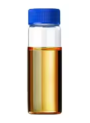
- Dandruff-Guard™ (Piroctone Olamine)
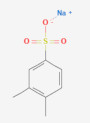
- Various surfactants like Sophorolipid, Sodium Xylene Sulfonate, or Sucrose Cocoate.
Related Products Mentioned

Dandruff-Guard™ (Piroctone Olamine)