Serum Formula Adjustment for Stickiness and Penetration Enhancer Comparison
Question
I am using Pitera 100% and find it quite sticky.
My skin is oily and acne-prone, but I haven't experienced breakouts from it.
I would like to try adjusting the formula. My proposed formula is:
- Galactomyces 65 %
- Bifida 5 %
- Preservative 1 %
- Laurocapram 2 %
Are these ingredients compatible and will the formula still be effective?
Also, is there a significant difference in results between the penetration enhancers Laurocapram and Dimethyl Isosorbide?
Answer
Proposed Formula Compatibility and Effectiveness
Your proposed formula consists of:
- Galactomyces Ferment Filtrate (Pitera) 65%
- Bifida Ferment Lysate 5%
- Preservative 1%
- Laurocapram 2%
Both Galactomyces Ferment Filtrate and Bifida Ferment Lysate are water-soluble ingredients commonly used in skincare for their beneficial properties. The concentrations you've chosen (65% and 5%) are within the recommended usage rates for these ingredients.
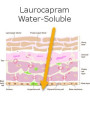
Laurocapram acts as a penetration enhancer, helping other ingredients absorb better into the skin. Since Galactomyces and Bifida are water-soluble, the Water Soluble type of Laurocapram would be appropriate. The recommended usage rate for Laurocapram is 1-3%, so 2% is suitable.
Combining these ingredients in a water-based formula is generally compatible. The high concentration of ferment filtrates (total 70%) is likely the reason for the stickiness you experienced with 100% Pitera. Reducing the Galactomyces to 65% will help somewhat, but the overall high concentration might still feel a bit heavy, especially on oily skin.
The formula should still be effective as it contains significant amounts of both Galactomyces and Bifida, known for their skin-benefiting properties, enhanced by the Laurocapram. You should ensure that the preservative you choose is compatible with the other ingredients and the pH range of the formula.
Laurocapram vs. Dimethyl Isosorbide (DMI)
Both Laurocapram (Water Soluble) and Dimethyl Isosorbide (DMI) are effective penetration enhancers suitable for water-soluble active ingredients like Galactomyces and Bifida.
- Laurocapram (Water Soluble): Recommended usage rate is 1-3% (2% is suggested). It is suitable for water-soluble actives. It should be mixed in the water phase below 60°C. The description advises avoiding its use with other carriers except 1,2-Hexanediol.
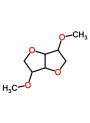
- Dimethyl Isosorbide (DMI): Recommended usage rate for transporting ingredients is typically 3%, but it can be used up to 10% for dissolving ingredients. It can withstand higher temperatures during mixing (up to 80°C). DMI is widely used in many well-known skincare products and is considered safe and efficient. It can help enhance the penetration of various water-soluble actives like Vitamin C, Hyaluronic Acid, and Salicylic Acid. DMI does have a characteristic ether-like smell that might need masking.
Comparison:
Both can effectively enhance the penetration of your ferment filtrates. DMI is often considered a more versatile and potentially stronger enhancer, with a higher maximum usage rate. However, it has an odor. Laurocapram is also effective at a lower usage rate and is a good option if you prefer to avoid the DMI odor or if 2% enhancement is sufficient for your needs. The "results" or perceived efficacy can vary depending on the specific formula and individual skin. If you are aiming for maximum penetration enhancement and don't mind the potential odor (which can often be masked), DMI might offer slightly better performance. If minimizing stickiness is a primary goal, using a penetration enhancer like either Laurocapram or DMI can help the formula absorb faster, potentially improving the skin feel compared to a simple water-based solution of the ferments.
In summary, your proposed formula is likely compatible and effective. Reducing the ferment concentration should help with stickiness compared to 100%. Both Laurocapram and DMI are good choices as penetration enhancers for this type of formula, with DMI potentially offering stronger enhancement but having an odor.
Related Products Mentioned
Laurocapram (Water Soluble)