Serum Formula Review and Adjustment for Acne-Prone Skin
Question
I am trying to create a serum formulation with the following ingredients and percentages:
- Calendula 5%
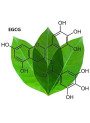
- Pure-EGCG 1%
- Licochalcone A 1%
- Tea Tree Oil (Water Soluble) 2%
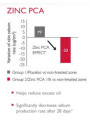
- Zinc PCA 1%
- Safe-B3 5%
- AnyGel™ 85%
I want this formula to be a lightweight, non-sticky, fast-absorbing serum that helps with:
- Reducing redness
- Reducing acne
- Reducing rash
- Reducing skin inflammation
- Controlling facial oiliness
- Tightening pores
- Strengthening the skin
I have a few questions as I am a beginner:
- Are the ingredients listed above compatible with each other?
- Should I adjust the formula anywhere?
- Should I add a preservative to the ingredients listed above?
- Should I add a deodorant or masking agent to the ingredients listed above?
- Do you have any additional recommendations?
Thank you for your help!
Answer
Subject: Formula Analysis and Ingredient Recommendations
Hello! Thank you for sharing your formula and questions. It's great that you're experimenting with creating your own serum!
Based on your goal of a lightweight, fast-absorbing serum targeting redness, acne, inflammation, oiliness, pores, and skin barrier strength, the ingredients you've chosen are excellent and well-suited for these concerns. Calendula, EGCG, Licochalcone A, Tea Tree Oil, Zinc PCA, and Niacinamide are all known for their beneficial properties for troubled skin.
However, there is one major point regarding the percentages in your formula:
- Formula Structure and AnyGel™ Percentage: The percentage for AnyGel™ (Dehydroxanthan Gum) is listed as 85%. This is incorrect. AnyGel™ is a thickener used to create the gel texture, and it is typically used at much lower concentrations, usually between 0.1% to 2%, depending on the desired thickness. The main component of a serum like this should be water (Aqua), which makes up the majority of the formula (e.g., 80-90% or more). The total percentage of all ingredients must always add up to 100%.
Let's address your specific questions:
- Ingredient Compatibility: Yes, the active ingredients you've chosen (Calendula, EGCG, Licochalcone A, Tea Tree Oil, Zinc PCA, Niacinamide) are generally compatible with each other and suitable for a water-based serum formulation. The water-soluble Tea Tree Oil is designed to disperse in water.
Formula Adjustment: Yes, the formula needs significant adjustment regarding the percentages. A typical structure for a water-based serum would look something like this:
- Water (Aqua): 80 - 90% (This is the base)
- Your Active Ingredients (Calendula, EGCG, Licochalcone A, Tea Tree Oil, Zinc PCA, Niacinamide): Use your desired percentages (5%, 1%, 1%, 2%, 1%, 5% respectively, totaling 15%). These percentages seem reasonable for efficacy, but always check the supplier's recommended usage rates.
- AnyGel™ (Dehydroxanthan Gum): 0.5 - 1.5% (Adjust this percentage to get your desired lightweight serum texture. Start low and increase if needed).
- Preservative: 0.5 - 1.5% (Essential! See point 3 below).
- Other Optional Ingredients (pH adjuster, chelating agent, humectant): Add as needed, making sure the total is 100%.
Example Adjusted Structure (Illustrative):
- Water (Aqua): 82%
- Calendula Extract: 5%
- Pure-EGCG: 1%
- Licochalcone A: 1%
- Tea Tree Oil (Water Soluble): 2%
- Zinc PCA: 1%
- Safe-B3 (Niacinamide): 5%
- AnyGel™: 1% (Adjust for texture)
- Preservative: 1% (Example percentage)
- Total: 100%
Should a preservative be added? Absolutely yes. Any formula containing water is highly susceptible to microbial growth (bacteria, mold, yeast). Adding a broad-spectrum preservative system is crucial to prevent contamination, ensure the safety of the product, and extend its shelf life. Do not skip this step.
- Should a fragrance/masking agent be added? This is optional. Tea Tree Oil has a characteristic scent. If you find the smell unpleasant, you can add a small amount of fragrance or a masking agent. However, for sensitive skin, it's often better to avoid added fragrance.
- Additional Recommendations:
- pH Adjustment: After mixing your serum, check the pH using pH strips or a meter. Adjust the pH to be skin-compatible, typically between 4.5 and 6.5. Niacinamide is most stable around pH 5-6. You might need a few drops of a pH adjuster like Lactic Acid or Sodium Hydroxide solution.
- Chelating Agent: Consider adding a chelating agent like Disodium EDTA (typically 0.05-0.1%). This helps improve stability by binding to metal ions in water that can cause discoloration or degradation of ingredients.
- Humectant: Adding a humectant like Glycerin or Propanediol (e.g., 2-5%) can help boost hydration and improve the feel of the serum.
It's wonderful that you are starting to create your own skincare! Don't worry about mistakes; it's part of the learning process. The ingredients you selected are a great starting point for addressing your skin concerns. Focus on getting the formula structure and percentages correct, and always include a preservative.
If you have any more questions as you refine your formula, feel free to ask!
Related Products Mentioned
Safe-B3™ (Vitamin B3, Niacinamide)

Calendula Extract (Water Soluble)
Tea Tree Oil (Water Soluble)
Zinc PCA
AnyGel™ (Dehydroxanthan Gum)