Serum Formulation for Dry/Dehydrated Skin and Water-Soluble Moisturizer Usage
Question
I want to formulate a serum for dry and dehydrated skin.
Based on the staff's initial advice that products for dry skin should primarily include oils, butters, and waxes to coat the skin, and that water-soluble moisturizers help with internal hydration but moisture is easily lost without the coating ingredients:
- Could you recommend ingredients suitable for a serum specifically for dry/dehydrated skin?
- I've heard that water-soluble moisturizers should not exceed 20% of the formula. Is this true, and what are the appropriate usage percentages for different types of water-soluble moisturizers in a serum?
Answer
Recommendations for Dry and Dehydrated Skin Serum
For dry and dehydrated skin, selecting ingredients for a serum should focus on both providing hydration to the inner layers of the skin and strengthening the skin barrier to reduce water loss.
Key ingredients recommended for a dry and dehydrated skin serum include:
Humectants: These ingredients help draw water into the skin and retain it, making the skin feel plump and hydrated.
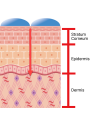
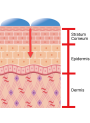
- Hyaluronic Acid: A substance naturally found in the skin, it's excellent at holding water. Different molecular weights offer different benefits. Large Molecule Hyaluronic Acid helps coat the skin surface and reduce water loss, while very small sizes (Nano Molecule or Super Low Molecule) can penetrate deeper to provide internal hydration. Alternatively, 4D Hyaluronic Acid combines multiple molecular weights for comprehensive hydration across skin layers.
- Glycerin: A basic yet effective humectant that helps draw water into the skin.
- Sodium PCA: A component of the skin's natural moisturizing factors (NMF), it helps maintain moisture balance and prevent water loss.
Barrier Repair Ingredients: Dry skin often has a weakened barrier, leading to easy water loss. These ingredients help strengthen the skin barrier.
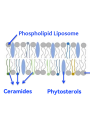
- Ceramides: Lipids that are crucial components of the skin barrier, helping to bind skin cells together, reduce water loss, and protect the skin from external factors. Ceracare™ Liposome-3, a Ceramide Complex in a liposomal form that disperses well in water, is suitable for serums to help restore the skin barrier.
- Safe-B3™ (Niacinamide or Vitamin B3): Helps stimulate ceramide production in the skin, strengthening the barrier, reducing water loss, soothing the skin, reducing redness, and improving skin tone.
Regarding Water-soluble Moisturizers and Usage Limits:
Water-soluble moisturizers, or Humectants, such as Glycerin, Hyaluronic Acid, and Sodium PCA, are essential ingredients in moisturizing products, especially in water-based serums. They function by attracting and holding water in the skin.
Regarding your question about whether water-soluble moisturizers should not exceed 20% of the formula, there is no strict rule that all water-soluble moisturizers must be limited to under 20%. The appropriate amount depends on the specific type of humectant, its concentration, and the overall formula composition.
- Some humectants, like Glycerin, can be used at high percentages (though very high concentrations without other balancing ingredients might feel sticky or uncomfortable).
- Powdered Hyaluronic Acid is often used at relatively low percentages (e.g., 0.1-0.5%) and provides good hydration.
- Hyaluronic Acid in concentrated gel forms, such as 4D Hyaluronic Acid, is recommended for use at higher percentages (e.g., 5-20% for very dry skin).
- Sodium PCA is typically used at low percentages (e.g., 0.5-2% of a 50% solution).
The key is to create a balanced formula. Especially for dry and dehydrated skin, the serum should contain both humectants to provide internal hydration and barrier-supporting ingredients like ceramides (in a serum) or oils/butters/waxes (in creams/lotions) to help coat the skin and reduce water evaporation. As the staff member mentioned, relying solely on humectants without ingredients to support the barrier will still result in easy moisture loss.
Related Products Mentioned

Safe-B3™ (Vitamin B3, Niacinamide)
Glycerin (USP/Food Grade)
Sodium PCA 50%