Serum Formulation: Mixing, Simplification, and Testing
Question
I am interested in the serum formula recommended by the staff. Could you please provide the mixing instructions for this formula? Additionally, I am a beginner and would like to know if certain ingredients can be reduced or omitted to simplify the formula or to test for potential skin reactions. Specifically, is it possible to omit ingredients like beta glucan, peptides (Pep-Coll, Argireline), or skin barrier/moisturizing ingredients (B3, Moist 72, Ceramide, Shea Butter Light Oil, Vitamin B5)? What would a simplified formula look like? What is the best way to test this formula or individual ingredients before making a large batch?
Answer
Hello,
I understand that you, lee_tao_tao, are interested in the serum formula recommended by the staff and would like to know the mixing instructions, as well as the possibility of reducing some ingredients for a beginner or to test certain ingredients.
Regarding the mixing method for the formula recommended by the staff, llerickll has provided the steps, which are correct for a formula containing both water-soluble and oil-soluble ingredients, along with an emulsifier and thickener.
Mixing Instructions (for the staff's recommended formula):
- Prepare the water phase: Combine all water-soluble ingredients (Bifida Ferment Lysate, Pep-Coll, Argireline, beta glucan, B3, Moist 72, Ceramide, 1,2-Hexanediol, Vitamin B5, and Water) in a container. Gradually add each ingredient to the purified water and stir or use a small mixer until each ingredient is completely dissolved before adding the next.
- Add the thickener/emulsifier: Once the ingredients in step 1 are well dissolved, gradually add Satin Cream Maker to the water phase. Stir or mix continuously until the texture starts to thicken to your desired consistency.
- Add the oil phase: Slowly add Shea Butter Light Oil to the thickened mixture. Stir or mix until the serum is homogeneous and smooth.
Simplifying the Formula for Beginners:
The formula recommended by the staff is already an improved version based on pirunaa222's original formula, with some redundant ingredients removed.
If you wish to further reduce ingredients for a beginner or to lower the cost for initial testing, while still focusing on anti-aging and skin barrier strengthening for dry skin, the staff previously advised that beta glucan primarily focuses on reducing irritation. If you do not currently have issues with irritation, you can consider omitting beta glucan from the formula.
Removing other key ingredients like Peptides (Pep-Coll, Argireline) or skin barrier/moisturizing ingredients (B3, Moist 72, Ceramide, Shea Butter Light Oil, Vitamin B5) would reduce the effectiveness in reducing wrinkles and strengthening the skin barrier, which are the main goals of this formula.
Therefore, a simplified formula omitting beta glucan would have the following approximate composition:
- Bifida Ferment Lysate 10%
- Pep-Coll 5%
- Argireline 10%
- B3 (Niacinamide) 5%
- Moist 72 2%
- Ceramide Complex 5%
- 1,2-Hexanediol 3%
- Shea Butter Light Oil 10%
- Satin Cream Maker 1.5%
- Vitamin B5 2%
- Water Remaining (approximately 46.5%)
Testing Ingredients:
I understand your concern about investing in many ingredients and potentially not liking the result or having a reaction. The best way to test is to make a small batch first, for example, 10-20 grams instead of 100 grams.
If you specifically want to test Bifida Ferment Lysate, you could make a very simple base formula with just purified water, a preservative, and Bifida Ferment Lysate at the recommended concentration to test for irritation specifically from this ingredient. However, testing the simplified full formula (as recommended above) will give you a better sense of the overall result.
Whether you make the full formula or the simplified version, it is always recommended to patch test the final product on a small area of your skin before applying it to your entire face to observe your skin's reaction.
I hope this information is helpful.
Related Products Mentioned
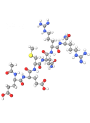
Acetyl Hexapeptide-8 (eq Argireline)
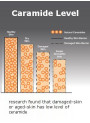
Ceramide Complex (CeraTouch™, Cream)
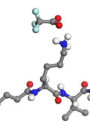
Pep®-Coll (Palmitoyl tripeptide-5)
Safe-B3™ (Vitamin B3, Niacinamide)

Satin Cream Maker™
MOIST72™
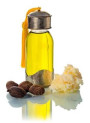
Shea Butter Light Oil