Serum Formulation with Specific Ingredients: Ratios, Mixing, and Stability
Question
How to formulate a serum using the following ingredients, including recommended ratios and mixing steps?
- Sodium PCA 50%
- Adenosine Triphosphate
- Sheep Placenta
- Hydrolyzed Pea Protein (High-Peptide)
- Collagen HP
- Gold Leaf
- Placental Enzyme
Answer
Creating a complete and stable serum formulation with precise ratios and mixing steps requires detailed knowledge of each ingredient's properties, compatibility, and the desired characteristics of the final product. This information is typically provided by the ingredient suppliers or developed through extensive formulation testing.
Based on the ingredients you listed and the products found in our database, here is some information on recommended usage rates and general mixing notes for the specific ingredients that matched our products:
-
- Usage Rate: 0.5-2%
- Mixing Method: Mix into the water phase of your formulation.
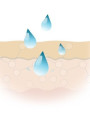
- Notes: This is a great moisturizer and part of the skin's natural moisturizing factors (NMF).
-
- Usage Rate: 1-5% (recommended 3%)
- Mixing Method: Dissolves in water with a pH range of 6.8-7.4, or can be dispersed in powder formulas.
- Notes: Known for anti-wrinkle and wound healing properties.
Sheep Placenta (Hydrolyzed Placental Extract)
- Usage Rate: 0.1-2% (recommended 1-2%)
- Mixing Method: Mix into water. Avoid exposing to heat. If your formula involves heating, add this ingredient in the final step after cooling.
- Notes: This is a protein-based ingredient. It is crucial to use adequate preservatives in your formulation when including this ingredient and perform a challenge test to ensure microbial stability.
Hydrolyzed Pea Protein (High-Peptide)
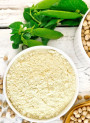
- Usage Rate: 0.5-5.0% (recommended 2% for skin and hair)
- Mixing Method: Can be mixed directly into the water phase.
- Notes: A natural protein that can nourish skin and hair. Like other proteins, requires adequate preservation.
-
- Usage Rate: 1-5% (recommend 5%)
- Mixing Method: Mix into the water phase. Avoid heat over 40°C.
- Notes: An ultra-miniature collagen combined with algae polysaccharide for hydration and wrinkle reduction.
Regarding Gold Leaf, our database search did not yield a specific cosmetic ingredient product matching this description that we can provide usage information for. Cosmetic formulations sometimes use gold flakes for visual effect, but these are typically not considered active ingredients and their inclusion and stability depend heavily on the overall formula base.
Important Considerations for Your Serum Formulation:
- Base Formulation: The percentages above are for the active ingredients. You will need a base for your serum, which typically includes purified water, humectants (like glycerin or butylene glycol), and potentially a thickener to achieve the desired texture.
- Preservation: Since several of these ingredients are protein-based (Collagen, Placenta, Vegetable Protein), your serum will be highly susceptible to microbial growth. It is absolutely essential to include an effective broad-spectrum preservative system at the correct usage rate and perform challenge testing to ensure the safety and stability of your product.
- pH Adjustment: Ensure the final pH of your serum is suitable for skin application (typically between 4.5 and 6.5) and is compatible with all your ingredients, especially Adenosine Triphosphate which has a specific pH requirement for dissolution.
- Compatibility and Stability: Mixing multiple active ingredients requires careful consideration of their compatibility. Some ingredients may interact or affect the stability or efficacy of others. It is highly recommended to perform small-scale tests to check for clarity, precipitation, color change, and overall stability over time and under different temperature conditions.
Without a complete formula and specific details on the form and source of each ingredient (especially Gold Leaf and the exact "Placental Enzyme"), providing a precise step-by-step mixing procedure is not possible. A general approach for a water-based serum would involve:
- Combining the water phase ingredients (water, humectants, water-soluble actives like Sodium PCA, Hydrolyzed Pea Protein).
- Adding ingredients that require specific conditions (like Adenosine Triphosphate within its pH range).
- Adding heat-sensitive ingredients (like Sheep Placenta and Collagen HP) after the main base has cooled down.
- Adding preservatives.
- Adjusting the pH if necessary.
- Adding any visual elements like Gold Leaf if compatible with the base and preservative system.
Always refer to the supplier's technical data sheet for each specific ingredient for the most accurate usage rates, solubility, compatibility, and handling instructions.