Serum Gel Formulation Review: Hyaluronic Acid, Vitamin C, Niacinamide
Question
I am creating a serum gel based on the concept of the Double Hyaluronic Acid formula. I have adjusted the ingredients as follows:
Base (Part A)
- น้ำกลั่นปราศจากเชื้อ: 47 %
- Witch Hazel (Alcohol Free) Plus Allantoin: 45 % (Can I use Witch Hazel instead of water in this part?)
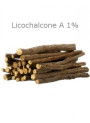
- Licorice Extract (Licochalcone A 1%): 0.5 %
- Hyaluronic Acid (Standard Molecule): 0.5 %
- Hyaluronic Acid (Small Molecule): 0.5 %
- Safe-B3™ (Vitamin B3, Niacinamide): 5 %
- Vitamin B6 (Pyridoxine Hydrochloride): 0.5 %
- Pro Polymer™ (Gel Maker): 0.5 % (Is the mixing order correct by adding the gel maker as item 8?)
- Phenoxyethanol SA (กันเสีย): 0.5 % (Do I need to add another preservative if the formula already uses 45% Witch Hazel?)
After preparing Part A, I will add the following Part B ingredients:
- Part A: 83.3 %
- Vitamin C (L-ascorbic acid) (Ultra-Fine): 15 %
- Glutathione (L-Glutathione Reduced) (Extrasol): 1.5 %
- Disodium EDTA: 0.2 %
Please review this formula. Thank you very much.
Answer
Formula Review and Suggestions
Thank you for sharing your serum gel formula based on the Double Hyaluronic Acid concept. It's a potent combination of ingredients aimed at hydration, anti-inflammation, oil control, and brightening. Let's review your questions and the overall formula.
Addressing Your Questions
Using Witch Hazel (Distillate) instead of Purified Water: Yes, you can technically use Witch Hazel (Distillate - Alcohol Free, Paraben Free) (Product ID: 162) to replace the Purified Water (Product ID: 838) portion in Part A. Both are water-based. However, your formula already includes 45% of Witch Hazel (Alcohol Free) Plus Allantoin (Product ID: 238). Replacing the remaining 47% purified water with the distillate would result in a very high total concentration of Witch Hazel (92%). While both Witch Hazel products are alcohol-free, such a high concentration might be overly astringent or potentially irritating for some skin types. Sticking to your original plan of using 47% purified water and 45% Witch Hazel Plus Allantoin is a balanced approach. If you prefer the distillate version, you could use 45% of the Witch Hazel Distillate and 47% purified water instead of the Witch Hazel Plus Allantoin.
Mixing order for Pro Polymer™ (Gel Maker): Adding Pro Polymer™ (Product ID: 234) as item 8 is not the ideal order. Gel makers like Pro Polymer™ need to hydrate properly in the water phase to form a smooth gel structure. Adding it later, especially after ingredients that can act as electrolytes or affect pH (like Vitamin B6), can interfere with its hydration and gel-forming ability, potentially resulting in a less smooth texture or requiring more effort to mix. It is generally recommended to add the gel maker to the water phase earlier in the process, allowing it to fully hydrate before adding other active ingredients.
Preservation with Phenoxyethanol SA: Your formula includes Phenoxyethanol SA (Product ID: 928) at 0.5%. This is a broad-spectrum preservative blend. While Witch Hazel (Alcohol Free) Plus Allantoin (Product ID: 238) contains its own preservative (Benzoic Acid), relying solely on it is not sufficient for preserving a complex water-based formula with multiple ingredients. Phenoxyethanol SA at 0.5% is on the lower end of its recommended usage rate (0.5-1.25%). Given the high water content and the presence of various active ingredients, it is highly recommended to perform a challenge test on your final formula to ensure that 0.5% Phenoxyethanol SA provides adequate preservation against microbial growth throughout the product's shelf life. You might need to increase the concentration of Phenoxyethanol SA (up to 1.25%) depending on the test results.
General Formula Feedback
- Potent Actives: Your formula contains a good mix of active ingredients like Niacinamide, Vitamin C, Glutathione, Licorice Extract, and Hyaluronic Acids, targeting multiple skin concerns.
- Vitamin C Stability and pH: The inclusion of 15% L-ascorbic acid (Product ID: 133) is a high and effective concentration for brightening. However, L-ascorbic acid is highly unstable in water and requires a low pH (ideally 3.5-4.0 for stability and efficacy, and for FDA compliance). This low pH is crucial for Vitamin C but is lower than the optimal pH range for Niacinamide (4.0-7.0). While Niacinamide is stated to be stable down to pH 3, its optimal function is in a slightly higher range. The low pH might also cause irritation for some users. Glutathione (Product ID: 225) can help stabilize Vitamin C, but maintaining the required low pH for 15% L-ascorbic acid in a water-based gel over time will be challenging.
- Mixing Process: Adding Vitamin C and Glutathione (Part B) to the pre-made gel (Part A) is the correct approach for these sensitive ingredients, adding them in the final step at a temperature below 30°C. However, dissolving 15% L-ascorbic acid powder smoothly into a gel base can be difficult and may result in a gritty texture if not done carefully.
Suggested Mixing Order
To improve the formulation process and stability, consider this mixing order:
Part A:
- Combine Purified Water (Product ID: 838) and Witch Hazel (Alcohol Free) Plus Allantoin (Product ID: 238).
- Add Disodium EDTA (Product ID: 184) to the water phase and mix until dissolved.
- Slowly sprinkle Pro Polymer™ (Product ID: 234) onto the surface of the water phase while stirring gently. Allow it to hydrate fully to form the gel. Avoid high-speed blending.
- Once the gel is formed and smooth, add Licorice Extract (Product ID: 69), Hyaluronic Acid (Standard Molecule) (Product ID: 79), Hyaluronic Acid (Small Molecule) (Product ID: 105), Safe-B3™ (Product ID: 74), and Vitamin B6 (Product ID: 643). Mix gently until all ingredients are evenly dispersed. Remember Vitamin B6 is sensitive to heat and light.
- Add Phenoxyethanol SA (Product ID: 928) and mix well.
Part B (Prepare separately and add to Part A):
- In a separate container, dissolve Glutathione (Product ID: 225) and Vitamin C (L-ascorbic acid) (Product ID: 133) in a minimal amount of the Part A base or purified water (if adjusting the total water content is acceptable). Ensure complete dissolution. This step is critical for the final texture.
- Slowly add the dissolved Part B mixture to the completed Part A gel base, mixing gently and thoroughly until homogeneous. Ensure the temperature is below 30°C when adding Part B.
Important Considerations
- pH Adjustment: You will likely need to adjust the final pH of the formula to be within the optimal range for L-ascorbic acid stability (3.5-4.0) using a suitable acid (e.g., Ferulic Acid, Citric Acid solution). Be aware that this pH might be lower than optimal for Niacinamide.
- Stability Testing: Due to the high concentration of L-ascorbic acid, the stability of the formula over time (color change, efficacy loss) is a major concern. Proper packaging (airless, opaque container) is essential. Consider adding antioxidants like Ferulic Acid or Vitamin E to help improve stability.
- Challenge Test: As mentioned, a challenge test is crucial to confirm the effectiveness of your preservative system.
- Skin Sensitivity: The low pH required for Vitamin C and the high concentration of Witch Hazel might cause irritation, especially for sensitive skin. Consider testing on a small area first.
This formula has the potential to be very effective, but careful attention to pH, mixing technique, and stability is required for a successful product.
Related Products Mentioned
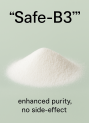
Safe-B3™ (Vitamin B3, Niacinamide)
Vitamin C (L-ascorbic acid) (Ultra-Fine)
Disodium EDTA
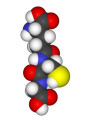
Glutathione (L-Glutathione) (Extrasol)
Pro Polymer™ (Gel Maker)
Vitamin B6 (Pyridoxine Hydrochloride)
Purified Water, TDS Limit 1PPM)