Serum Residue Issue with Niacinamide and Ethyl Ascorbic Acid
Question
What causes salt-like or creamy residue around the bottle opening of a serum containing 5.5% Niacinamide and 0.75% Ethyl Ascorbic Acid, and how can this issue be resolved?
Answer
Serum Residue Issue with Niacinamide and Ethyl Ascorbic Acid
The salt-like or creamy residue observed around the bottle opening of your serum formulation containing Niacinamide (5.5%) and Ethyl Ascorbic Acid (0.75%) is a common issue, likely caused by the crystallization of ingredients as the water or solvent evaporates from the opening.
Here's a breakdown of the potential causes and how to address them:
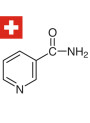
- Niacinamide Crystallization: Niacinamide, especially at concentrations around 5% or higher, can crystallize out of solution when the solvent evaporates. The concentration of 5.5% in your formula is within the range where this can occur.
- Ingredient Incompatibility: A significant factor is the known incompatibility between Niacinamide (Vitamin B3) and Ethyl Ascorbic Acid (a Vitamin C derivative). Combining these ingredients can lead to instability, potential degradation of one or both ingredients, and the formation of byproducts (like Nicotinic Acid from Niacinamide) which can contribute to crystallization and may appear as a white or creamy residue. The product description for Ethyl Ascorbic Acid explicitly advises against using it in formulas containing Vitamin B3.
Solutions:
Avoid Combining Incompatible Ingredients (Recommended): The most effective way to prevent this issue and ensure the stability and efficacy of your serum is to avoid combining Niacinamide and Ethyl Ascorbic Acid in the same formula. Consider using them in separate products applied at different times.
Formulation Optimization (If Combining is Necessary, Use with Caution): If you must combine them, you will need to optimize the formulation significantly. This is challenging due to the inherent incompatibility, and residue issues may still occur. Steps to try include:
- Increase Solvent/Humectant Ratio: Increase the percentage of humectants or glycols (like Glycerin, Propanediol, Butylene Glycol) in your formula. These help improve solubility and reduce the rate of water evaporation at the bottle neck, minimizing crystallization.
- Adjust pH: Ensure the pH of your final formula is within the acceptable range for Ethyl Ascorbic Acid (3.5-6.0) and also suitable for Niacinamide (optimally 4.0-7.0). A pH in the range of 4.0-5.0 might be a compromise, but the incompatibility remains a primary concern regardless of pH.
- Use Chelating Agents: Include a chelating agent like Disodium EDTA (as recommended for Ethyl Ascorbic Acid) at around 0.2% to help stabilize the formula by binding to metal ions.
Given the explicit incompatibility warning for Ethyl Ascorbic Acid and Vitamin B3, the most reliable solution is to formulate two separate serums rather than trying to stabilize a combination that is prone to issues.