Serum Separation Problem with High Silicone Content
Question
My serum formula containing 10% Cyclotetrasiloxane and 1% PEG-10 Dimethicone (SiliSolve™) separated. Could you please analyze the potential causes and recommend solutions to achieve a stable emulsion?
Answer
Analysis of Serum Separation Problem and Solutions
Dear Customer,
Regarding the serum formula you provided and the separation issue you encountered, our team has analyzed the formula and reviewed the information for related products. We have found that the problem is highly likely due to instability of the emulsion between the aqueous phase and the silicone phase in your formula.
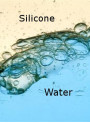
Your formula contains Cyclotetrasiloxane at 10%, which is a water-insoluble silicone. You have used SiliSolve™ (PEG-10 Dimethicone) at 1% to act as an emulsifier, bridging the water and silicone phases.
Upon reviewing the information for SiliSolve™ (PEG-10 Dimethicone), it is noted as a Water-to-Silicone emulsifier suitable for formulas with a high water phase (70-99%) and a total silicone/oil phase not exceeding 30%. However, the information also indicates that if using SiliSolve™ alone, the amount of other oil components in the formula should not exceed 3%.
In your formula, you have 10% Cyclotetrasiloxane, a liquid silicone, and only 1% SiliSolve™. The ratio of emulsifier to the silicone phase (1:10) is likely insufficient to create and maintain a stable emulsion with such a high concentration of silicone (10%). This likely leads to the separation of the silicone phase from the aqueous phase over time.
Furthermore, the mixing technique is crucial for creating a stable emulsion. The instructions for SiliSolve™ recommend gradually adding the water phase to the silicone phase (containing SiliSolve™) little by little, while continuously stirring or blending. If the mixing order is reversed, or the water phase is added too quickly, the emulsion may not form properly or may have low stability.
Recommended Solutions:
- Increase the amount of SiliSolve™: This is the most direct solution to the problem. Try increasing the concentration of SiliSolve™ in your formula. You could start by trying 2-3% or more, gradually increasing the amount and testing the stability of the resulting serum until you achieve a homogeneous texture that does not separate. The appropriate amount will depend on the compatibility of all ingredients in your formula and practical testing.
- Improve the Mixing Technique: Ensure you are using the correct mixing technique as recommended: gradually add the water phase to the silicone phase containing SiliSolve™, while stirring or blending with sufficient and continuous shear during the addition.
- Consider using additional Co-emulsifiers or Stabilizers (if necessary): If increasing SiliSolve™ alone does not resolve the issue, you might consider using a co-emulsifier or other types of thickeners/stabilizers that are compatible with your system to help strengthen and stabilize the emulsion. However, based on your formula components, increasing SiliSolve™ is likely the first step you should try.
In summary: The main cause of separation in this serum formula is likely the insufficient amount of SiliSolve™ to stabilize 10% Cyclotetrasiloxane in a water-based formula. The primary recommendation is to try increasing the concentration of SiliSolve™ and improve the mixing technique to achieve a stable emulsion.
Related Products Mentioned
Alpha Arbutin (Switzerland)
Ethoxydiglycol (e.q. Transcutol)