Shampoo Formulation Review and Low Foam Issue
Question
I am making a shampoo formulation using the following ingredients:
- Water
- Lauryl Glucoside (ID 177)
- Coco-Betaine (ID 126075)
- WaterLock™ (ID 258)
- SiliWater™ (ID 525)
- Vitamin B5 (Panthenol) (ID 6873)
- Natural Moisturizing Amino Acids (ID 214)
- Hydro Protein (Hydrolyzed Silk Protein) (ID 995)
- Fragrance (4%)
After mixing, the product has very low foam. Is this issue normal? Could you please provide a review of my formulation and suggest improvements, particularly regarding the low foam and overall stability/texture?
Answer
Formulation Review and Suggestions
Your formula contains several good ingredients for hair care, aiming for mildness and conditioning.
- Lauryl Glucoside (ID 177) and Coco-Betaine (ID 126075) are mild surfactants. Lauryl Glucoside is non-ionic and very gentle but doesn't produce much foam on its own. Coco-Betaine is zwitterionic and acts as a foam booster and secondary surfactant, adding mildness and conditioning.
- WaterLock™ (ID 258) is a conditioning polymer that helps hair retain moisture and provides a smooth feel.
- SiliWater™ (ID 525) is a water-soluble silicone that adds softness, shine, and helps with detangling without heavy build-up.
- Vitamin B5 (Panthenol) (ID 6873) is excellent for moisturizing and strengthening hair, which helps reduce breakage and split ends.
- Natural Moisturizing Amino Acids (ID 214) provide moisture and help improve hair structure.
- Hydro Protein (Hydrolyzed Silk Protein) (ID 995) helps strengthen hair and improve its texture, contributing to reduced breakage and a smoother feel.
Here are some points to consider and potential adjustments:
- Fragrance (น้ำหอม): The 4% concentration is very high for a shampoo, especially if you have a sensitive scalp or are experiencing hair loss. High levels of fragrance can be irritating. It is strongly recommended to reduce the fragrance concentration significantly, typically to 0.5-1% in shampoo.
- Coco-Betaine Concentration: The forum reply suggested reducing Coco-Betaine from 20% to 10%. While 20% is on the higher side for Coco-Betaine as a secondary surfactant, reducing it will likely decrease foam further. Given your concern about low foam, you might keep it higher than 10%, but perhaps 15% would be a good compromise between mildness, foam, and cost. The total surfactant concentration (Lauryl Glucoside + Coco-Betaine) is a key factor for cleansing and foam.
- Thickener: As noted, the formula will be very liquid without a thickener. Adding a suitable thickener for surfactant systems, such as SugarThick™ (ID 510), is necessary to achieve a usable shampoo consistency. Start with 1-3% and adjust as needed.
- Preservative: It is essential to add a preservative to any water-based product like shampoo to prevent bacterial and fungal growth, which can spoil the product and be harmful. Your formula must include a preservative. Consider a broad-spectrum preservative like Mild Preserved Eco™ (ID 1001) at 1.0-1.5% or Mild Preserved™ COS (ID 33939) at 0.75-1.5%.
Suggested Mixing Order
A general mixing order for this type of shampoo formulation would be:
- Add water to your mixing vessel.
- Slowly add Lauryl Glucoside (ID 177) to the water while stirring gently. Lauryl Glucoside is viscous and alkaline, so gentle stirring is important to avoid excessive foam and help it disperse. Warming it slightly (around 50-60°C) before adding can help it mix easier, but avoid overheating the main batch.
- Gently add Coco-Betaine (ID 126075) to the mixture. Continue stirring gently.
- Add the water-soluble active ingredients: WaterLock™ (ID 258), SiliWater™ (ID 525), Vitamin B5 (ID 6873), Natural Moisturizing Amino Acids (ID 214), and Hydrolyzed Silk Protein (ID 995). Stir gently until fully dissolved.
- In a separate small container, mix your Fragrance with Flora Solve™ Clear (ID 718). Use 2-3 parts Flora Solve™ Clear for every 1 part Fragrance. Stir well until the fragrance is fully solubilized and the mixture is clear.
- Add the solubilized fragrance mixture to the main batch and stir gently to combine.
- Adjust the pH of the formula. Lauryl Glucoside has a high pH, and the final shampoo pH should ideally be between 5.0-6.5 for hair health and mildness, and also for optimal performance of some ingredients and the preservative. Use a suitable acid like Citric Acid or Lactic Acid solution to lower the pH, adding it slowly and checking the pH with a pH meter or test strip until the desired range is reached.
- Add the thickener, SugarThick™ (ID 510). It can be added directly and stirred gently, or warmed slightly first to make it easier to handle. Add gradually while stirring until the desired viscosity is achieved. Avoid over-stirring.
- Add the Preservative (e.g., Mild Preserved Eco™ ID 1001 or Mild Preserved™ COS ID 33939). Stir gently to incorporate. Ensure the temperature is suitable for the chosen preservative (below 80°C for Mild Preserved Eco™, below 45°C for Mild Preserved COS).
Addressing Low Foam
You mentioned that the shampoo didn't produce much foam. This is likely due to the choice and concentration of surfactants:
- Lauryl Glucoside (ID 177) is known for being very mild but having low foaming properties.
- Coco-Betaine (ID 126075) is a foam booster but doesn't provide the primary cleansing foam like anionic surfactants (e.g., SLS, SLES, Sodium Cocoyl Isethionate).
- Your formula primarily uses mild, non-ionic and zwitterionic surfactants. While gentle, they naturally produce less foam compared to formulas based on sulfates or other strong anionic surfactants.
To potentially improve foam while keeping the formula relatively mild, you could consider:
- Checking the pH: Ensure the final pH is in the recommended range (5.0-6.5). pH can affect surfactant performance.
- Adding a Foam Booster/Stabilizer: You could explore adding a small amount of another mild co-surfactant known for foam boosting, like Decyl Glucoside or Coco Glucoside (if compatible and desired), or a traditional foam stabilizer like Cocamide MEA (check compatibility and regulatory status). However, adding more ingredients adds complexity.
- Accepting Milder Foam: Gentle shampoos often have less profuse or stable foam than conventional shampoos. The mildness is a trade-off for less lather. If mildness is the priority (especially with hair loss concerns), the current foam level might be acceptable.
- Mixing Technique: Avoid vigorous stirring during preparation, as this can incorporate too much air initially, leading to larger, less stable bubbles that collapse quickly. Gentle mixing is better.
In summary, your formula has good conditioning ingredients for fine, breakage-prone hair. The key adjustments needed are reducing the fragrance, adding a thickener, and adding a preservative for safety. The low foam is expected with these mild surfactants, but ensuring the correct pH and gentle mixing can help optimize it.
Related Products Mentioned
Lauryl Glucoside

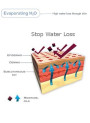
WaterLock™ (Polyquaternium-51)
SiliWater™ (silicone dissolved in water)
Mild Preserved Eco™ (Preservative-Free)