Shampoo Thickening Issue with Salt
Question
I formulated a shampoo but the viscosity did not increase as expected after adding salt. Could you please review the formula below to identify any potential issues?
My formula details are as follows:
- Sulfate Free Shampoo Base: 12%
- Cond-Foam: 5%
- Poly-Conditioner Eco: 2%
- น้ำกลั่น (Distilled Water): 79%
- เกลือ (Salt): 2%
After mixing and waiting for 12 hours, the formula did not thicken at all. However, when I replaced the Sulfate Free Shampoo Base (ingredient #1) with Cocamidopropyl Betaine, the formula thickened successfully. I would appreciate your advice on this.
Answer
Based on your formula and observations, the reason your original shampoo formula (using Sulfate Free Shampoo Base and Cond-Foam) did not thicken with salt, while the version using Cocamidopropyl Betaine did, is due to the interaction between different types of surfactants and electrolytes like Sodium Chloride (salt).
Your original formula contains:
- Sulfate Free Shampoo Base (likely Sodium Lauroyl Glutamate, an anionic surfactant)
- Cond-Foam (Sodium Lauroyl Sarcosinate, an anionic surfactant)
- Poly-Conditioner Eco (likely Polyquaternium-7, a cationic polymer)
- น้ำกลั่น (Distilled Water)
- เกลือ (Sodium Chloride)
Anionic surfactants like Sodium Lauroyl Glutamate and Sodium Lauroyl Sarcosinate can be thickened with salt, but their response is highly dependent on the specific blend and concentration. In your original combination, these two anionic surfactants, even with the addition of Polyquaternium-7, did not form the necessary micellar structures that efficiently increase viscosity upon salt addition.
When you replaced the "Sulfate Free Shampoo Base" with Cocamidopropyl Betaine, you introduced an amphoteric surfactant. Amphoteric surfactants, like Cocamidopropyl Betaine, are known to work synergistically with anionic surfactants (like the Sodium Lauroyl Sarcosinate from Cond-Foam) to create mixed micelles. These mixed micelles are highly sensitive to electrolytes such as Sodium Chloride. The addition of salt causes these micelles to grow and change shape (often into rod-like structures), which significantly increases the viscosity of the solution.
Therefore, the successful thickening observed when using Cocamidopropyl Betaine is because the blend of Cocamidopropyl Betaine and Sodium Lauroyl Sarcosinate forms a system that is effectively thickened by salt, whereas the original blend of Sodium Lauroyl Glutamate and Sodium Lauroyl Sarcosinate is not as responsive to salt thickening at those concentrations.
If you want to achieve thickening with your original surfactant system (Sulfate Free Shampoo Base and Cond-Foam), you might need to explore alternative thickening agents that do not rely solely on electrolyte response, such as:
- Cellulose gums (e.g., Hydroxyethylcellulose)
- Acrylate polymers (e.g., Carbomers, Acrylates Copolymer)
- Natural gums (e.g., Xanthan Gum)
However, incorporating an amphoteric surfactant like Cocamidopropyl Betaine is a common and effective method for achieving salt-responsive thickening in sulfate-free systems.
Here are the relevant products mentioned:
- Cocamidopropyl Betaine
- Cond-Foam (Sodium Lauroyl Sarcosinate)
- Sodium Chloride
Related Products Mentioned
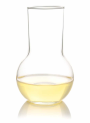
Cocamidopropyl Betaine