Silicone-Free W/O Sunscreen SPF50 PA++++ Formulation Stability
Asked by: thawatch2203
On: November 20, 2019
Product Type:
Cosmetics
Answered
Question
I want to create a silicone-free sunscreen with SPF50 PA++++. I'm unsure if the following ingredients will be compatible, as I'm concerned about phase separation.
Here is the formulation:
- น้ำกลั่น ปราศจากเชื้อ: 50%
- SPF Protect Ultra™ II: 15%
- Bisoctrizole (Compare to Tinosorb M): 10%
- Zinc Oxide Neutral: 8%
- Oil-Fix™ W (Water-Resistant, Oil/Silicone): 4%
- PMMA Booster (SPF/Color Booster): 3%
- Polyhydroxystearic acid: 3%
- WaterGuard™ Lite: 3%
- Water-Capsule™ (Water-in-Oil Cream): 2%
- Mild Preserved Eco™ (Preservative-Free): 1%
- Satin Cream Maker™: 1%
Mixing Method:
- Water Phase: Mix 1 + 3 + 6 + 10 + 11 together.
- Oil Phase: Mix 2 + 4 + 5 + 7 + 8 + 9 together.
Answer
Formulation Review
Based on the formulation you provided and the properties of the ingredients, there are a few factors that could contribute to separation in your silicone-free water-in-oil sunscreen formula:
- Conflicting Emulsification Systems: Your formula uses a combination of emulsifiers and stabilizers designed for different emulsion types, which can lead to instability. You are using
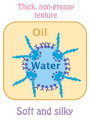
Water-Capsule™andOil-Fix™ Win the oil phase, which are intended for creating and stabilizing water-in-oil (W/O) emulsions. However, you are also usingSatin Cream Maker™in the water phase, which is an oil-in-water (O/W) emulsifier and thickener. Including an O/W emulsifier in the water phase of a W/O formulation can disrupt the W/O structure and cause separation. - High Oil/Solid Load: The total percentage of oil-soluble ingredients and dispersed solids (like sunscreen filters,
Oil-Fix™ W,Polyhydroxystearic acid,Water-Capsule™,Satin Cream Maker™in the oil phase, and potentiallyWaterGuard™ Lite) appears to be higher than the typical oil phase percentage recommended forWater-Capsule™(5-20%). WhileOil-Fix™ Whelps stabilize high oil loads, the combination with an O/W emulsifier and the overall high dispersed phase percentage can still be challenging for stability.
Mixing Method Considerations
- Heating SPF Protect Ultra™ II: The description for
SPF Protect Ultra™ IIindicates it should be heated to 70-80°C and blended into the oil phase for proper dissolution and full sun protection performance. Your mixing method does not mention heating the oil phase, which could lead to incomplete dissolution ofSPF Protect Ultra™ IIand contribute to instability and potentially lower SPF/PA values than expected. - Zinc Oxide Dispersion: While
Zinc Oxide Neutralcan be dispersed in oil, ensuring a very fine and stable dispersion is crucial in a W/O system to prevent settling or aggregation over time.
Recommendations for Stability
To improve the stability of your silicone-free W/O sunscreen and prevent separation, consider the following:
- Revise the Emulsification System: Focus on using only W/O emulsifiers and stabilizers in the oil phase. Remove
Satin Cream Maker™from the water phase. You may need to adjust the percentages ofWater-Capsule™andOil-Fix™ Wor explore other W/O emulsifiers suitable for higher oil/solid loads if needed. - Properly Incorporate SPF Protect Ultra™ II: Ensure the oil phase containing
SPF Protect Ultra™ IIis heated to 70-80°C and blended thoroughly before combining with the water phase. - Optimize Dispersion: Ensure all solid ingredients like
Zinc Oxide Neutral,Bisoctrizole, andPMMA Boosterare very well dispersed in their respective phases before emulsification. Using an oil-dispersible grade of Zinc Oxide might offer better compatibility with the oil phase. - Adjust Percentages: Review the percentages of the oil and water phases to be within the recommended usage levels of your chosen W/O emulsifier system.
By addressing the conflicting emulsifiers and ensuring proper processing steps like heating and dispersion, you can significantly improve the stability of your silicone-free sunscreen formulation.
Related Products Mentioned

Satin Cream Maker™
Cosmetics
Water-Capsule™ (Water-in-Oil Cream)
Cosmetics

Purified Water, TDS Limit 1PPM)
Cosmetics
Mild Preserved Eco™ (Preservative-Free)
Cosmetics

SPF Protect Ultra™ II
Cosmetics
PMMA Booster (Color Booster)
Cosmetics
Polyhydroxystearic acid
Cosmetics