Silicone Gel Droplets in Emulsion
Question
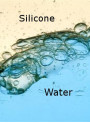
I am making a cream emulsion and am encountering an issue where the silicone gel (Cyclopentasiloxane (and) Dimethicone/Vinyl Dimethicone Crosspolymer) appears as small droplets (like water droplets) within the cream texture.
- How can I prevent these silicone gel droplets from forming?
- I have tried adding
SiliSolve™ (PEG-10 Dimethicone)at 2%, but the droplets are still visible. - My current method involves adding the silicone (1.5%) to the oil phase, heating it, and then mixing it with the water phase.
- I am unsure at which step the silicone should be added.
- I have tried adding
- Could you please provide the ratio of Cyclopentasiloxane to Dimethicone in the
Silicone Gel (Vinyl Dimethicone Crosspolymer)product available on your website (referencing the product page: https://www.myskinrecipes.com/shop/th/volatile-base-silicone-elastomer/201-silicone-gel-vinyl-dimethicone-crosspolymer.html)?
Answer
Addressing Silicone Gel Droplets in Emulsions
It sounds like you're experiencing issues incorporating Silicone Gel 9040 into your emulsion, causing it to appear as droplets. This can happen if the silicone phase isn't properly emulsified or dispersed within the water phase.
Here are a couple of points to consider based on your process and the products you're using:
Mixing Method with SiliSolve™: Our SiliSolve™ (PEG-10 Dimethicone) is a water-to-silicone binder. The recommended mixing procedure is to add the water phase gradually to the silicone/oil phase, not the other way around. If you are adding the silicone/oil phase to the water phase, this could be the reason for poor incorporation and droplet formation. Ensure you are slowly adding your heated water phase to the heated oil/silicone phase containing SiliSolve™ and Silicone Gel 9040, while continuously stirring or homogenizing.
Adding Silicone Gel 9040: Silicone gels like Silicone Gel 9040 are dispersions of a silicone crosspolymer in a volatile carrier (Cyclopentasiloxane). Heating this type of ingredient in the oil phase might sometimes affect its structure or dispersion properties. A common practice is to add such silicone gels during the cool-down phase of the emulsion, or even after the emulsion has fully formed and cooled, incorporating it with gentle mixing until homogeneous. You could try adding Silicone Gel 9040 at a lower temperature or after emulsification to see if that improves incorporation.
Using 2% SiliSolve™ should generally be sufficient to help bridge the water and silicone phases, provided the mixing method is optimized.
Composition of Silicone Gel 9040
Silicone Gel 9040 is composed of Cyclopentasiloxane and Dimethicone Crosspolymer. The Cyclopentasiloxane acts as a volatile carrier that helps spread the product and evaporates upon application, leaving behind the network formed by the Dimethicone Crosspolymer, which provides the soft, smooth, and mattifying feel.
The product description lists the INCI name as Cyclopentasiloxane (and) Dimethicone Crosspolymer. While the exact percentage ratio of Cyclopentasiloxane to Dimethicone Crosspolymer is not specified in the product information, Cyclopentasiloxane is the primary component acting as the carrier for the Dimethicone Crosspolymer gel network.