Silicone-Water Emulsion Separation with SiliSolve and High Viscosity Silicone
Question
My formula using the following ingredients separated and did not mix:
- Silicone oil 1000: 5%
- Water: 94%
- SiliSolve: 1%
Why is this happening?
Answer
Why Did Your Silicone-Water Formula Separate?
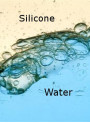
It appears your formulation of Silicone oil 1000 (5%), Water (94%), and SiliSolve (1%) separated because the mixing procedure is critical for SiliSolve™ to properly emulsify silicone oil and water.
SiliSolve™ is designed to bind water and silicone together, but it requires a specific method to work effectively. The most common reason for separation is not following the correct mixing steps.
Correct Mixing Procedure for SiliSolve™
Based on the product information for SiliSolve™:
- Combine the SiliSolve™ with the Silicone oil 1000. Stir or blend this mixture until it is homogeneous.
- Prepare the water phase separately.
- Crucially, add the water phase to the silicone + SiliSolve™ mixture gradually, little by little, while continuously stirring or blending. Do not add all the water at once, as this will make it very difficult to achieve a stable emulsion.
Adding the silicone phase to the water phase, or adding the water too quickly, will likely result in separation.
Consider Silicone Viscosity
Another potential factor is the viscosity of the Dimethicone you are using. The product information for SiliSolve™ indicates compatibility with Dimethicone up to 50 cSt. You are using Dimethicone 1000 cSt, which is a much higher viscosity. While SiliSolve™ can bind water and silicone, using a very high viscosity silicone like 1000 cSt might be challenging to emulsify stably at only 1% concentration of SiliSolve™, even with the correct mixing procedure.
If following the correct mixing procedure does not resolve the separation issue, you might consider trying a lower viscosity Dimethicone (e.g., 10 cSt or 50 cSt) with SiliSolve™ at the recommended usage rate (0.5-1%) to see if a stable emulsion can be achieved.
Related Products Mentioned