Skin Whitening Cream Formulation: Thickening Issues and Adding Sunscreen
Question
I am trying to formulate a skin whitening cream and encountered issues with thickening.
My formulation attempt used:
- Light Cream Maker™ (1%)
- Lactic Acid (5%)
- Sea Kelp Bioferment (2%)
- Other ingredients (Grape Seed Oil, Vitamin B3, water, Phenoxyethanol)
The cream did not thicken properly. I have the following questions:
- Why did the cream not thicken with this formulation? Is 1% Light Cream Maker™ too low, especially with Lactic Acid and Sea Kelp present?
- Can I add Xanthan Gum to help thicken the cream? If so, what percentage should I use and what is the correct method to incorporate it?
- How can I add sunscreen (SPF 20) to this type of cream? What types of sunscreen (physical like Zinc Oxide and Titanium Dioxide, or chemical) are compatible?
- When is the correct stage to add preservatives (like Phenoxyethanol), fragrance, and color to the formulation?
- I have also considered these specific formulations:
- Formula with Sunscreen: Zinc Oxide 5%, Titanium Dioxide 5%, Cyclomethicone, Warp Cream Maker™, Grape Seed Oil, Sea Kelp, Vitamin B3, Lactic Acid, water, Phenoxyethanol.
- Formula without Sunscreen: Light Cream Maker™, Grape Seed Oil, Sea Kelp, Vitamin B3, Lactic Acid, water, Phenoxyethanol.
Are these formulations feasible?
- I also wonder about adding Vitamin C (L-Ascorbic Acid or derivatives) and its compatibility with these formulations.
- Should I measure the pH of the water phase?
Answer
Skin Whitening Cream Formulation Advice
Hello! It's completely understandable to feel a bit confused when starting out with cosmetic formulation. It takes practice and experimentation, so don't be discouraged!
Based on your attempts and the feedback you've received, let's break down the issues and how to address them.
Why the Cream Didn't Thicken
You mentioned that your cream didn't thicken properly when using 1% Light Cream Maker™ with Lactic Acid and Sea Kelp. This is likely due to a couple of reasons, as pointed out by cosmeceutical7:
- Insufficient Light Cream Maker™: 1% might be too low, especially in a formula with challenging ingredients.
- Ingredient Compatibility: Light Cream Maker™ (Product ID: 141) can be sensitive to electrolytes and low pH. Lactic Acid (Product ID: 6376, Product ID: 7768) is acidic, and Sea Kelp Extract (Product ID: 77) can contain salts (electrolytes). These ingredients can interfere with the thickening mechanism of Light Cream Maker™, requiring a higher percentage of the emulsifier or the use of a co-thickener.
Using Xanthan Gum to Thicken
Yes, adding Xanthan Gum (Product ID: 216, Product ID: 31764) is an excellent way to help thicken your cream and improve stability! Xanthan Gum is a common and effective thickener in cosmetic formulations.
How to Incorporate Xanthan Gum:
- Usage Rate: Start with a low percentage, typically 0.1% to 0.5%. A little goes a long way.
- Disperse Properly: To prevent clumping, it's best to disperse Xanthan Gum in a small amount of glycerin or oil from your formula before adding it to the water phase. Mix it thoroughly until you get a smooth paste, then slowly add this paste to your water phase while stirring or blending vigorously.
- Hydration: Allow the Xanthan Gum time to fully hydrate (swell) in the water phase. This can take some time, even with vigorous mixing. Once hydrated, the water phase will become noticeably thicker.
- Proceed with Emulsification: Once your water phase is thickened with Xanthan Gum, proceed with combining it with your oil phase containing the Light Cream Maker™ as you normally would.
Adding Xanthan Gum will help boost the viscosity and stability of your cream, especially with the challenging ingredients like Lactic Acid and Sea Kelp.
Incorporating Sunscreen (SPF 20)
Adding sunscreen to your whitening cream is a good idea for added protection. The compatibility depends on the type of sunscreen you use (physical or chemical) and the base of your cream (water-in-oil or oil-in-water).
- Physical Sunscreens (like Zinc Oxide (Product ID: 292) and Titanium Dioxide (Product ID: 295)) are powders that need to be properly dispersed in either the oil or water phase, depending on how they are treated (coated or uncoated) and the type of emulsion (W/O or O/W). For an SPF 20, you would typically need around 10-15% total physical filters, depending on the specific type and particle size. As mentioned in the staff reply, physical sunscreens often work well in silicone-based or water-in-oil formulas (like those made with Warp Cream Maker™ (Product ID: 288)), but specific dispersed forms are available for water-based formulas too.
- Chemical Sunscreens are oils or powders that dissolve in the oil phase.
Incorporating sunscreen requires careful formulation to ensure even dispersion (for physical filters) and stability, as well as achieving the desired SPF level. It's often easiest to use pre-dispersed forms of physical sunscreens or follow specific sunscreen base formulas.
Adding Preservatives, Fragrance, and Color
Yes, you are correct! Preservatives (like Phenoxyethanol (Product ID: 155)), fragrance, and color are typically added in the final step of your formulation, after the emulsion has formed and cooled down (usually below 40°C to avoid degrading heat-sensitive ingredients like fragrance and some preservatives). This minimizes their exposure to heat and potential interference with the emulsification process.
Your Proposed Formulas
Looking at your formulas:
- Formula with Sunscreen: The formula with Zinc Oxide (Product ID: 292) and Titanium Dioxide (Product ID: 295) at 5% each, Cyclomethicone, Warp Cream Maker™ (Product ID: 288), Grape Seed Oil (Product ID: 120), Sea Kelp (Product ID: 77), Vitamin B3 (Product ID: 74), Lactic Acid (Product ID: 6376, Product ID: 7768), water, and Phenoxyethanol (Product ID: 155) seems like a reasonable starting point for a water-in-silicone/oil emulsion using Warp Cream Maker™. However, as cosmeceutical7 noted, keeping Lactic Acid in a formula intended for daytime use with sunscreen might not be ideal as AHAs can increase sun sensitivity. If you want both whitening and sun protection, consider using other whitening agents that don't increase photosensitivity or formulate a separate night cream with Lactic Acid.
- Formula without Sunscreen: Your second formula using Light Cream Maker™ (Product ID: 141), Grape Seed Oil (Product ID: 120), Sea Kelp (Product ID: 77), Vitamin B3 (Product ID: 74), Lactic Acid (Product ID: 6376, Product ID: 7768), water, and Phenoxyethanol (Product ID: 155) is where you experienced the thickening issue. As discussed, increasing the Light Cream Maker™ percentage or adding Xanthan Gum (Product ID: 216, Product ID: 31764) should help. Cosmeceutical7 correctly advised using Light Cream Maker™ here as there is no silicone, unlike the first formula which is suited for Warp Cream Maker™.
Vitamin C Consideration
Regarding Vitamin C (Product ID: 133, Product ID: 265), the staff correctly pointed out that L-Ascorbic Acid (Product ID: 133) is unstable in water-based formulas and requires specific conditions (low pH, no water, or special stabilization). Using a stable derivative like Ascorbyl Glucoside (AA-2G) (Product ID: 265) or Sodium Ascorbyl Phosphate (SAP) might be easier for a beginner.
Keep experimenting and adjusting your formulas based on the behavior of the ingredients. Don't hesitate to try increasing the emulsifier/thickener or adding a co-thickener like Xanthan Gum!
Relevant Product IDs: 141, 120, 77, 74, 6376, 7768, 133, 265, 155, 216, 31764, 288, 292, 295, 117, 227, 669, 737, 6936, 8585, 11054, 126152, 121, 111
Related Products Mentioned
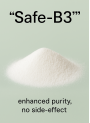
Safe-B3™ (Vitamin B3, Niacinamide)

Sea Kelp Extract
Shea Butter (Refined , Deodorised)
Vitamin C (L-ascorbic acid) (Ultra-Fine)
Light Cream Maker™
Phenoxyethanol (Extra Pure)
Shea Butter (Ultra Soft)
Warp Cream Maker™ (e.q. Nikkomulese wo)
Zinc Oxide (Micronized)
Shea Butter Light Oil
Shea Butter Water
Golden Shea Butter (Virgin, Ghana)
NanoShea™ (Liquid Shea Butter, 30%)