Skincare Formulation Advice: Customizing Gel, Cream Bases, Vitamin C Serums, and Usage Order
Question
I need advice on formulating skincare products for my combination, acne-prone skin, focusing on whitening, moisture, anti-aging, and non-comedogenic properties. I have several questions:
- What ingredients should I add to a Pure Aloe Vera Gel base to achieve whitening, moisture, anti-aging, and non-comedogenic effects? What texture (specifically, is it sticky?) can I expect from the resulting gel?
- If I want to switch to a cream base in the future, is Satin Cream Maker suitable for creating a fast-absorbing, non-greasy texture? How likely is it to cause clogged pores?
- I am interested in purchasing Vitamin C serums but am unsure which one is more suitable for my skin type (combination, acne-prone with oily T-zone and dry cheeks). Please recommend between Stabilized Vitamin C Serum and Vitamin C E Ferulic.
- Can the Vitamin C serums (both Stabilized Vitamin C Serum and Vitamin C E Ferulic) be used directly? Is it necessary to adjust the pH, especially for production? If pH adjustment is needed, is TEA the correct ingredient to use? Can a stirrer with a magnetic bar be used for mixing?
- Given the low pH of both Vitamin C serums, will they cause skin irritation? Can they be used frequently and continuously? Can they be used during the daytime? Is there a risk of them thinning the skin over time?
- I currently use CM cream (Clindamycin) from a skin clinic. How should I layer or schedule the application of the homemade Aloe Vera Gel cream (from question 1), the Vitamin C serum (from question 3), and the CM cream?
Answer
Skincare Formulation Advice for Combination, Acne-Prone Skin
Here is information regarding your questions about formulating skincare with Aloe Vera Gel, Vitamin C serums, Satin Cream Maker, and how to incorporate them with your CM cream.
1. Adding Ingredients to Pure Aloe Vera Gel
To create a cream suitable for your combination, acne-prone skin focusing on whitening, moisture, anti-aging, and non-comedogenic properties using a Pure Aloe Vera Gel base, you can add various active ingredients.
For whitening and anti-aging, consider ingredients like Niacinamide (Vitamin B3). It offers multiple benefits including improving skin tone, reducing redness, strengthening the skin barrier, and providing anti-aging effects, and is often well-tolerated by acne-prone skin. Alpha Arbutin is another effective ingredient for skin brightening.
For moisture, adding Hyaluronic Acid is beneficial. It provides hydration without feeling heavy or clogging pores, suitable for both the dry areas and the oily T-zone.
The texture of the resulting gel will depend on the specific ingredients and their concentration. Generally, adding water-soluble ingredients to a gel base will maintain a lightweight, non-greasy gel consistency. The Pure Aloe Vera Gel base itself is designed to be a gel.
2. Satin Cream Maker as a Cream Base
Yes, Satin Cream Maker is a suitable option if you want to switch to a cream base that is fast-absorbing and non-greasy.
Regarding comedogenicity, ingredients that are soluble in water typically do not clog pores. Satin Cream Maker is dispersible in water, which means it is unlikely to cause clogged pores.
3. Choosing a Vitamin C Serum
Based on your skin type, which is combination and acne-prone with an oily T-zone and dry cheeks, the Stabilized Vitamin C Serum is generally recommended for normal to oily skin types. The Vitamin C E Ferulic serum is typically recommended for dry skin.
4. Using Vitamin C Serums and pH Adjustment
The Stabilized Vitamin C Serum is intended to be used as a finished product. While you can try using it directly, for commercial production, the pH must be adjusted according to regulations (typically to a pH of at least 3.5 for cosmetic products). Mixing additional ingredients into the Stabilized Vitamin C Serum is generally not recommended as it may affect its stability, except for fragrance and coloring within specified limits.
If pH adjustment is necessary, Triethanolamine (TEA) can be used for this purpose.
For mixing ingredients, especially when dissolving powders like L-Ascorbic Acid (found in Vitamin C E Ferulic), a stirrer and magnetic bar can be used. Ensure you follow specific mixing instructions for each ingredient to maintain formula stability.
5. Irritation, Frequency, and Daytime Use of Vitamin C Serums
Vitamin C, particularly in the form of L-Ascorbic Acid which is present in both serums, is acidic and can potentially cause skin irritation due to its low pH. It is recommended to perform a patch test before applying it regularly, especially if you have sensitive or acne-prone skin.
Vitamin C does not cause skin thinning in the way that exfoliating acids like AHAs do.
You can use Vitamin C serums regularly if your skin tolerates them well. For daytime use, it is crucial to use sunscreen as Vitamin C can increase sun sensitivity, although it also provides antioxidant protection against sun damage. Always perform a patch test first to ensure your skin does not react negatively to daytime application.
6. Application Order with CM Cream
When using your homemade Aloe Vera Gel cream, Vitamin C serum, and CM cream (which contains Clindamycin), it is recommended to apply them at separate times of the day or leave a gap of at least 30 minutes between applications. This is because Clindamycin may interact with other cosmetic formulations, potentially affecting its efficacy or the efficacy of the other products.
For example, you could use the Vitamin C serum in the morning and the CM cream and Aloe Vera Gel cream in the evening, or apply one set of products, wait 30 minutes, and then apply the others.
Related Products Mentioned
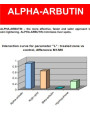
Alpha Arbutin (Switzerland)
Vitamin C E Ferulic
Safe-B3™ (Vitamin B3, Niacinamide)


Pure Aloe Vera Gel (ไม่ใช่เครื่องสำอาง)
Triethanolamine 99%