Skincare Formulation Guide: Batch Sizes, Containers, and Testing Protocols
Question
1. What are the suitable containers and batch sizes for mixing skincare products throughout the process, from formulation development and initial testing to stability testing?
2. After mixing the formula, is it necessary to let the product rest for 1 night? Should measurements be taken before or after resting, or should they be repeated, and how?
Answer
1. Suitable Containers and Batch Sizes for Skincare Development
Choosing the right batch size and container is crucial for accuracy and efficiency during the formulation process.
Recommended Batch Sizes:
- Formulation Development (Trial & Error): 50g to 100g. This size is small enough to minimize ingredient waste but large enough to be measured accurately on a standard lab scale.
- Initial Testing (Sensory/Efficacy): 100g to 200g. This provides enough sample for multiple applications or for a small group of testers to evaluate texture and skin feel.
- Stability Testing: 300g to 500g. You will need enough volume to fill several stability jars (e.g., 3-4 jars of 30-50g each) to be placed in different environments (Room Temperature, 45°C, and Fridge).
Container Selection:
- Material: Borosilicate glass beakers are the industry standard. They are heat-resistant (essential for hot-process emulsions), chemically inert, and easy to clean.
- Size Rule: Always use a container that is 1.5 to 2 times the volume of your batch. For example:
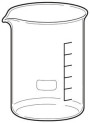
- For a 50g batch, use a 150 ml beaker.
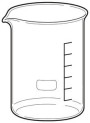
- For a 100g-200g batch, use a 400 ml or 500 ml beaker.
- Note: Using a beaker that is too large can lead to high ingredient loss (sticking to the walls), while one that is too small will cause splashing during high-shear mixing.
2. Post-Mixing Procedures: Resting and Measurement
The 24-Hour Resting Period (Equilibration)
It is highly recommended to let your product rest for at least 24 hours before final evaluation. This period allows for:
- De-aeration: Air bubbles introduced during mixing rise to the surface and escape.
- Viscosity Stabilization: Polymers and thickeners (like carbomers or gums) take time to fully hydrate and reach their final thickness.
- Emulsion Setting: The internal structure of the emulsion stabilizes as it reaches room temperature completely.
Measurement Protocol:
- Immediate Measurement (T=0): Measure the pH immediately after the formula has cooled to room temperature. This ensures the pH is in a safe range and that your preservative system is active.
- 24-Hour Measurement (T=24h): This is your True Baseline. Re-measure the pH and viscosity. You will often notice a slight shift compared to the immediate measurement. Record these values as the starting point for stability testing.
- Stability Testing Measurements: During stability testing (e.g., at 1 week, 1 month, 3 months), you should measure the pH and viscosity again to check for any significant drift, which could indicate formula instability.
Pro Tip: Always cover your beakers with aluminum foil or plastic wrap during the resting period to prevent moisture loss and contamination.
Follow-up Replies
Question:
1. What are the suitable containers and batch sizes for mixing skincare products throughout the process, from formulation development and initial testing to stability testing?
2. After mixing the formula, is it necessary to let the product rest for 1 night? Should measurements be taken before or after resting, or should they be repeated, and how?
3. For sensory and physical testing after preparing the product in a beaker, what kind of containers should it be transferred to? Also, what containers should be used for stability testing?
Answer:
1. Suitable Containers and Batch Sizes for Skincare Development
Choosing the right batch size and container is crucial for accuracy and efficiency during the formulation process.
Recommended Batch Sizes:
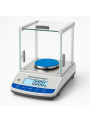
- Formulation Development (Trial & Error): 50g to 100g. This size is small enough to minimize ingredient waste but large enough to be measured accurately on a precision lab scale.
- Initial Testing (Sensory/Efficacy): 100g to 200g. This provides enough sample for multiple applications or for a small group of testers to evaluate texture and skin feel.
- Stability Testing: 300g to 500g. You will need enough volume to fill several stability jars to be placed in different environments (Room Temperature, 45°C, and Fridge).
Container Selection for Mixing:
- Material: Borosilicate glass beakers are the industry standard. They are heat-resistant (essential for hot-process emulsions), chemically inert, and easy to clean.
- Size Rule: Always use a container that is 1.5 to 2 times the volume of your batch. For example, for a 50g-100g batch, a Glass beaker 150 ml is ideal.
Containers for Testing and Stability:
After mixing in a beaker, the product should be transferred to specific containers for evaluation:
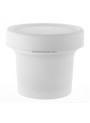
- Sensory & Physical Testing: Transfer to a clean, wide-mouth Cream jar (e.g., 100ml opaque or matte white). A wide mouth allows for easy access to the product for skin-feel evaluation and physical inspection.
- Stability Testing: Use airtight jars or Glass test tubes with glass stoppers (especially brown/amber glass for light-sensitive formulas). Ensure the containers are filled to about 80-90% to minimize headspace air while allowing for slight expansion.
2. Post-Mixing Procedures: Resting and Measurement
The 24-Hour Resting Period (Equilibration)
It is highly recommended to let your product rest for at least 24 hours before final evaluation. This period allows for:
- De-aeration: Air bubbles introduced during mixing rise to the surface and escape.
- Viscosity Stabilization: Polymers and thickeners take time to fully hydrate and reach their final thickness.
- Emulsion Setting: The internal structure of the emulsion stabilizes as it reaches room temperature completely.
Measurement Protocol:
- Immediate Measurement (T=0): Measure the pH immediately after the formula has cooled to room temperature. This ensures the pH is in a safe range and that your preservative system is active.
- 24-Hour Measurement (T=24h): This is your True Baseline. Re-measure the pH and viscosity. You will often notice a slight shift compared to the immediate measurement. Record these values as the starting point for stability testing.
- Stability Testing Measurements: During stability testing (e.g., at 1 week, 1 month, 3 months), you should measure the pH and viscosity again to check for any significant drift, which could indicate formula instability.
Pro Tip: Always cover your beakers or jars during the resting period to prevent moisture loss and contamination.
Related Categories
Beaker
Related Products Mentioned
Glass beaker 150 ml
Glass beaker 400 ml
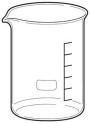
Glass beaker 500 ml
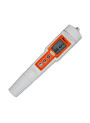
Digital pH meter (For Laboratory)

Viscosity Meter 100K mPa.s
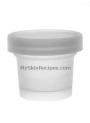
Cream jar, opaque white, 100ml