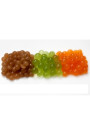
Sodium Alginate Beads Breaking in Shower Gel
Question
I am formulating a shower gel with the following ingredients: Sodium Laureth Sulfate (SLES), Sodium Hyaluronic Acid, 4Na EDTA, and sodium alginate beads. After one night, the sodium alginate beads broke. What could be the cause?
Answer
Hello,
Regarding the issue of sodium alginate beads breaking in your shower gel after one night, the ingredients you mentioned in the shower gel, particularly 4Na EDTA, are the most likely cause for the beads breaking.
Explanation:
Sodium alginate beads are typically formed by dropping a sodium alginate solution into a solution containing calcium ions (like calcium chloride). The calcium ions cross-link the alginate molecules, forming a gel structure (the bead).
4Na EDTA (Tetrasodium EDTA) is a chelating agent that effectively binds to various metal ions, including calcium ions. When 4Na EDTA is present in the shower gel, it will chelate the calcium ions within the sodium alginate beads. This removes the calcium that holds the bead structure together, causing the alginate gel structure to loosen and break down.
Other ingredients like SLES (Sodium Laureth Sulfate), a surfactant, and Sodium Hyaluronic Acid, a humectant, are much less likely to be the primary cause of the sodium alginate beads breaking.
Solution:
The best way to prevent sodium alginate beads from breaking in this case is to avoid using 4Na EDTA (or other types of EDTA) in your shower gel formula. If a chelating agent is necessary for the formula, you might need to consider using a different type of bead that is not based on calcium alginate, or find ways to make the beads more stable in the presence of EDTA, which can be more complex.
Therefore, it is highly probable that the 4Na EDTA in your shower gel formula is causing the sodium alginate beads to break.