Sodium Alginate Gel Beads: Formulation, Stability, and Ingredient Questions
Question
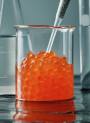
I am making gel beads using Sodium Alginate. My process involves preparing a liquid base (water, color, fragrance, preservative like Global Guard™) and adding 2.5g of Sodium Alginate to 500g of the liquid base, blending, and refrigerating. I then drop this solution into a setting bath.
I previously used Sodium Chloride for the setting bath, but the beads dissolved. I understand I should use Calcium Chloride instead. Is Calcium Chloride with 74% purity acceptable?
I also want to use Glycolic Acid (AHA) 100% Powder to lower the pH of the formulation. Can Glycolic Acid be used for pH adjustment in this type of formulation? Should it be added before or after adding the Sodium Alginate, considering the stability of the gel?
Regarding the finished beads, how should they be stored for long-term use (e.g., in Calcium Chloride solution or DI water)? Is there a recommended method for commercial long-term storage?
Finally, I am looking for Salmon Egg Extract. Do you have this ingredient, or can you provide information on where to source it?
Answer
Making Sodium Alginate Gel Beads
You are on the right track with using sodium alginate to create gel beads. The process involves dropping a solution containing sodium alginate into a setting bath.
The key to forming stable beads is the reaction between sodium alginate and calcium ions. When the sodium alginate solution comes into contact with a solution containing calcium ions, the calcium ions cross-link the alginate chains, forming a gel structure that holds its shape.
Based on your experience with the beads dissolving, it sounds like the issue was using Sodium Chloride instead of Calcium Chloride for the setting bath. Sodium Chloride (common salt) does not provide the necessary calcium ions for this reaction.
Therefore, the setting bath must contain Calcium Chloride. Using Calcium Chloride with 74% purity is acceptable.
Your process steps for preparing the sodium alginate solution (mixing water, color, fragrance, and preservative, then adding sodium alginate, blending, and refrigerating) are generally correct for preparing the solution to be dropped. The ratio you mentioned (2.5g sodium alginate in 500g liquid base) seems reasonable for forming beads, but you may need to adjust the concentration of both sodium alginate and Calcium Chloride solution depending on the desired bead size and firmness.
Regarding the other ingredients:
- Preservative: You mentioned using Global Guard™. This is a suitable preservative for cosmetic formulations. Other preservatives are also available if needed, such as Global Guard™ 221.
- pH Adjustment: You asked about using Glycolic Acid (AHA) 100% Powder to lower the pH. Glycolic Acid can be used to adjust pH in cosmetic formulations. However, alginate gels are sensitive to pH. While you can adjust the pH of your base solution before adding sodium alginate, adding acidic ingredients like Glycolic Acid after the gel has formed or in high concentrations in the alginate solution itself can potentially affect the gel structure and stability. It's best to adjust the pH of the base liquid before adding the sodium alginate, keeping in mind the optimal pH range for sodium alginate gel formation and the stability of other ingredients.
- Bead Storage: Regarding storing the finished beads, there is limited experience with long-term storage methods for these types of beads in different media like Calcium Chloride solution or DI water. Storing them in a liquid is generally necessary to prevent drying. The optimal storage medium might depend on the specific formulation and desired shelf life, but we cannot provide a definitive recommendation for long-term commercial storage.
- Salmon Egg Extract: You inquired about sourcing Salmon Egg Extract. While we may not carry the specific extract you are looking for, we do offer related ingredients such as HyaCap™ Salmon Roe, Salmon Roe Extract (Norway), Salmon Roe Extract (DNA, RNA, Protein Content Guaranteed), and Pep-Marine Placenta™ (Salmon Ovary Peptide). Information on external suppliers is not available.
Related Products Mentioned
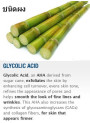
Glycopure™ (Glycolic Acid (AHA) Powder)

Global Guard™ K712
Salmon Roe Extract (Norway)
Global Guard™ 221 (pH 2-7, Natural)
Salmon Roe Extract