Sodium Alginate Gelling Issue and Ingredient Compatibility in Formulation
Question
I am trying to make a gel using Sodium Alginate. Can I use Sodium Chloride (table salt) to make it gel? My formula also contains Vitamin B3 (Niacinamide), Vitamin C (L-ascorbic acid), and Disodium EDTA. I am having trouble getting the Sodium Alginate to form a gel.
Answer
Formulation Advice for Sodium Alginate Issue
You are experiencing an issue where your Sodium Alginate is dissolving in your solution instead of forming a gel. This is because Sodium Alginate requires Calcium Chloride to create a gel structure, not Sodium Chloride (table salt).
Sodium Alginate forms a gel through a reaction with calcium ions. The calcium ions link the alginate chains together, forming a stable gel. Sodium Chloride does not provide these calcium ions.
Additionally, there are other compatibility issues in your formula:
- Vitamin B3 (Niacinamide) and Vitamin C (L-ascorbic acid) are generally incompatible when combined, potentially leading to degradation of the active ingredients.
- Vitamin C (L-ascorbic acid) is unstable when dissolved directly in water and typically requires a low pH or specific formulation techniques for stability.
- Disodium EDTA may not be necessary and can sometimes cause issues depending on the other ingredients.
Due to these incompatibilities and the use of the incorrect gelling agent, your current formula cannot be easily salvaged. You will need to reformulate.
To use Sodium Alginate for gelling or spherification, you should dissolve the Sodium Alginate in water first, and then add this solution to a liquid containing Calcium Chloride.
If you want to use the active ingredients you have, consider formulating them separately or exploring alternative forms of Vitamin C that are more stable or compatible with Niacinamide. You may also need to choose a different thickener if you want a gel texture without using the calcium-alginate method.
Here is a summary of the key points:
- Sodium Alginate requires Calcium Chloride to form a gel, not Sodium Chloride.
- Vitamin B3 (Niacinamide) and Vitamin C (L-ascorbic acid) are generally incompatible in the same formula.
- L-ascorbic acid is unstable in water and requires specific formulation conditions.
- Your formula will need to be reformulated considering these incompatibilities and the correct use of gelling agents.
Related Products Mentioned
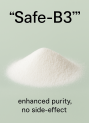
Safe-B3™ (Vitamin B3, Niacinamide)

Allantoin
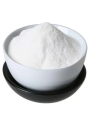
Vitamin C (L-ascorbic acid) (Fine)
Disodium EDTA
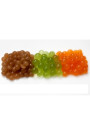
Sodium Alginate (80Mesh, 600cps)
Calcium Lactate