SPF Calculation vs. In-vivo Testing for Sunscreen Formula (Avobenzone, Oxybenzone, Octocrylene)
Question
I have a sunscreen formula with the following chemical filters:
- Avobenzone 2%
- Oxybenzone 4%
- Octocrylene 6%
Based on simple calculations for individual ingredients (e.g., 1% Oxybenzone = SPF 1.5), the theoretical SPF seems to be around 15 with PA++. However, commercial products like Banana Boat use similar percentages (Avobenzone 3%, Oxybenzone 4%, Octocrylene 6%) and achieve SPF 50, PA+++. Why is there such a large difference between the simple calculation and the results of commercial products with similar compositions?
Answer
Understanding SPF Calculation in Sunscreen Formulations
You asked about calculating the SPF value for your formula containing Avobenzone (2%), Oxybenzone (4%), and Octocrylene (6%). You noted that a simple calculation based on individual ingredients suggests a lower SPF (around 15, PA++) compared to commercial products using similar percentages.
It's true that calculating the final SPF and PA values for a sunscreen formulation with multiple chemical filters is complex and not a simple additive process. Here's why:
- Synergistic Effects: Sunscreen ingredients often work together synergistically. This means their combined protection is greater than the sum of their individual contributions. For example, Octocrylene and Oxybenzone are known to help stabilize Avobenzone, which is crucial for maintaining its UVA protection, and this interaction can boost the overall SPF.
- In-vivo Testing: The final SPF and PA values claimed on product labels are determined through standardized in-vivo (on-skin) testing, not theoretical calculations. This testing accounts for the complex interactions between ingredients within the specific formulation, as well as how the product is applied.
- Formulation Matters: The base formula (emulsifiers, solvents, etc.) and the way the sunscreens are dispersed can significantly impact the final efficacy and test results.
The simple calculations provided for individual ingredients (like 1% Oxybenzone = SPF 1.5 or 1% Octocrylene = SPF 1.5-1.7) offer a basic idea of their potential contribution, but they do not account for the synergistic effects when combined in a real formula. As you saw in the forum discussion, a commercial product like Banana Boat uses percentages similar to yours (Avobenzone 3%, Oxybenzone 4%, Octocrylene 6%) and achieves SPF 50, PA+++. This is a clear example of the synergistic effect in action.
While there are simulation tools available (like the BASF Sunscreen Simulator mentioned in the Octocrylene description) that can provide a more advanced theoretical estimate, they are still approximations. The most accurate way to determine the SPF and PA of your specific formula is through proper laboratory in-vivo testing.
Therefore, while a simple calculation provides a minimum baseline, the actual SPF of your formula with Avobenzone (2%), Oxybenzone (4%), and Octocrylene (6%) is likely higher due to the synergistic effects of these filters working together, especially the stabilization of Avobenzone by Oxybenzone and Octocrylene. The exact value would need to be confirmed by testing.
Related Products Mentioned
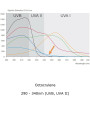
Octocrylene