GOV.UK. Guidance: Cosmetic products safety and compliance.
Supports the requirement for a Responsible Person, PIF, and CPSR for cosmetic products in the UK market.
Hi hope you are well.
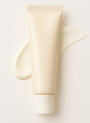
I would like to check if the manufacturer actually did SPF testing to substantiate claims for Light Moisturizing Sunscreen (SPF50+, PA++++, Compare to Beauty of Joseon) or if the testing would need to be performed by me if I would like to sell it under my brand in the UK.
Also, the laboratory was asking for formula percentages; would it be possible to obtain this?
Many thanks
Regarding your inquiry about the Light Moisturizing Sunscreen (SPF50+, PA++++, Compare to Beauty of Joseon), here is the technical breakdown concerning testing, UK regulations, and formula details.
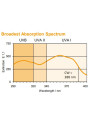
The manufacturer has conducted internal testing to confirm that this formulation achieves a minimum of SPF50+ and PA++++. This product is designed as a high-performance base for customization or private labeling.
To sell this product under your own brand in the UK, you must comply with the UK Cosmetics Regulation (Schedule 34 of the Product Safety and Metrology etc. Amendment etc. (EU Exit) Regulations 2019).
The following quantitative data is available for this formulation to assist your laboratory or safety assessor:
| Ingredient | Percentage (%) |
|---|---|
| Dibutyl Adipate | 10.0% |
| Propanediol | 5.0% |
| Diethylamino Hydroxybenzoyl Hexyl Benzoate | 2.0% |
| Polymethylsilsesquioxane | 2.0% |
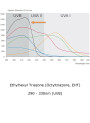
| Ethylhexyl Triazone | 2.0% |
| Methylene Bis-Benzotriazolyl Tetramethylbutylphenol | 2.0% |
| Coco-Caprylate/Caprate | 2.0% |
| Caprylyl Methicone | 2.0% |
| Diethylhexyl Butamido Triazone | 2.0% |
| Glycerin | 2.0% |
| Butylene Glycol | 2.0% |
| Pentylene Glycol | 2.0% |
| Poly C10-30 Alkyl Acrylate | 1.0% |
| Polyglyceryl-3 Methylglucose Distearate | 1.0% |
| Decyl Glucoside | 1.0% |
| Acrylates/C10-30 Alkyl Acrylate Crosspolymer | 1.0% |
| Sodium Stearoyl Glutamate | 0.5% |
Sources supporting the key technical claims in this answer
Supports the requirement for a Responsible Person, PIF, and CPSR for cosmetic products in the UK market.
The international standard for in-vivo SPF testing required for high-level label claims.
Provides the benchmark for SPF 50+ categorization and UVA protection ratios used in the UK and EU.