Stability of Vitamin C (L-Ascorbic Acid) with Ferulic Acid and Vitamin E
Question
Regarding the general formulation, how effective is the combination of Ferulic Acid and Vitamin E in helping to reduce the oxidation of Vitamin C (L-Ascorbic Acid)? Specifically, considering a formula with 15% L-ascorbic acid, 1% Ferulic Acid, and 1% Vitamin E, will this combination provide good or limited stability? Please consider the formulation approach used in the Vitamin C E Ferulic kit.
Answer
Vitamin C (L-Ascorbic Acid) Formulation for Stability
You are correct that L-ascorbic acid is prone to oxidation, especially when mixed directly with water. This can cause it to lose its effectiveness quickly.
Adding antioxidants like Ferulic Acid and Vitamin E can help reduce oxidation. However, as the staff mentioned, simply combining L-ascorbic acid with Ferulic Acid and Vitamin E at the percentages you proposed (15% L-ascorbic acid, 1% Ferulic Acid, 1% Vitamin E) may not provide optimal stability for the L-ascorbic acid in a formula, particularly in a water-based product.
L-ascorbic acid requires specific conditions to remain stable, including a low pH (ideally below 3.5) and often the presence of chelating agents like Disodium EDTA to prevent degradation caused by metal ions. Ferulic Acid itself is not water-soluble and requires solvents like Ethoxydiglycol or ethanol.
The Vitamin C E Ferulic kit is specifically formulated using CE Ferulic technology to address these stability challenges and create a stable environment for L-ascorbic acid. This kit is designed to effectively stabilize the L-ascorbic acid, ensuring it remains potent for longer compared to simple combinations of the individual ingredients.
Therefore, while your proposed ingredients are beneficial antioxidants, using the Vitamin C E Ferulic kit is recommended for better stability and effectiveness of L-ascorbic acid in your formulation.
Related Products Mentioned
Vitamin E (Tocopheryl Acetate)
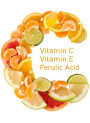
Vitamin C E Ferulic
Pure-Ferulic Acid™