Stability Testing and Australian Regulatory Compliance for Customized Cleansing Balm Bases
Question
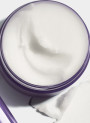
We are planning to create a commercial cosmetic cleansing balm line in Australia using one of the following bases:
- Cleansing Balm (Colorless, Fragrance-Free) (ID 31507)
- Cleansing Balm (Soft, Colorless, Fragrance-Free) (Compare to Elemis) (ID 33477)
- Do these base formulations already have established stability testing data?
- If we customize the base by adding ingredients such as fragrance, color, or other active ingredients, will the final product remain stable? Is additional stability testing required for the customized formulation?
- What regulatory requirements and documentation (e.g., stability proof, Product Information File (PIF)) are necessary to launch this customized product line commercially in Australia?
Answer
The two Cleansing Balm bases are provided with an established shelf life, but any customization requires new stability testing.
Stability of the Bases
Both Cleansing Balm (Colorless, Fragrance-Free) (ID 31507) and Cleansing Balm (Soft, Colorless, Fragrance-Free) (Compare to Elemis) (ID 33477) are stated to have a shelf life of at least 24 months when stored tightly closed at room temperature. This indicates that the base formulations have undergone internal stability assessment to determine this shelf life.
Key Stability Notes:
- Cleansing Balm (Colorless, Fragrance-Free) (ID 31507): This base has a hard texture and requires melting and pouring into the final container. Its stability is generally robust for a balm texture.
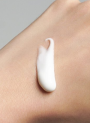
- Cleansing Balm (Soft, Colorless, Fragrance-Free) (ID 33477): This base is softer and is explicitly noted to be temperature-sensitive. At temperatures above 35°C, it may turn into a liquid oil, and while it will thicken again when cooled, there is a warning that "a little perfume on the surface of the balm... is a bit like separating layers." This inherent characteristic must be managed during customization and storage.
Stability of Customized Products
While the bases are designed to be customized with fragrance, color, or other ingredients, the stability of the final customized product is not guaranteed by the base's shelf life.
- Mandatory Testing: Any addition of new ingredients—especially high concentrations of essential oils/fragrance, colorants, or active ingredients—can alter the physical stability (texture, separation), chemical stability (oxidation), and microbiological stability of the product.
- You must perform your own comprehensive stability testing (e.g., accelerated aging, freeze-thaw cycles) on the final formulation to ensure it remains safe and effective for the intended shelf life.
Suitability for Commercial Product Line in Australia
The bases are suitable starting points for a commercial line, but placing the final product on the Australian market requires strict adherence to local regulations.
- Regulatory Compliance: The final product must comply with Australian cosmetic regulations, including those enforced by the Australian Competition and Consumer Commission (ACCC) and the National Industrial Chemicals Notification and Assessment Scheme (NICNAS), now part of the Australian Industrial Chemicals Introduction Scheme (AICIS).
- Product Information File (PIF): You must create a complete Product Information File (PIF) for your final product, which includes:
- A full safety assessment (CPSR).
- Proof of stability (your own stability testing data).
- Good Manufacturing Practice (GMP) documentation.
- Accurate ingredient labeling (INCI names).
In summary, the bases have established stability for their uncustomized state, but for a commercial product line in Australia, you are legally required to conduct full stability and safety testing on your final, customized formulation.