Stabilizing IR3535 Mosquito Repellent Lotion for High Temperature (50°C)
Asked by: swati.vernam
On: May 09, 2026
Product Type:
Cosmetics
Answered
Question
I want a mosquito repellent lotion with IR3535 (for both adults and children). The formulation should be able to handle summer temperatures of 50°C.
I am looking for suggestions on whether my formulation is missing any ingredients or if any are overloaded. Please provide suggestions using INCI names so I can search for them easily (I cannot purchase ingredients directly from this website).
I am testing IR3535 at 5%, 8%, and 10%. My current recipe failed.
Current Formulation (10% IR3535):
- IR3535: 10%
- PG: 7%
- Cetyl Alcohol: 5%
- PEG-100 stearate: 3.5%
- CCTG: 3.5%
- Polyacrylate Cross Polymer: 2%
- Tween-20: 1.2%
- Preservative: 1%
- IPM: 2%
- Aqua: Q.S.
In this formulation, the oil separates after some time. Also, what should the pH be for this type of product?
Answer
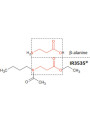
To create a stable mosquito repellent lotion with Ethyl butylacetylaminopropionate (IR3535) that can withstand 50°C summer temperatures, the emulsion "architecture" needs to be adjusted. Your current formulation failed primarily because the emulsifier system is too hydrophilic (too high HLB) and lacks a structural co-emulsifier to hold the oil droplets at high temperatures.
Why the Current Formulation Failed
- HLB Imbalance: Your current emulsifiers, PEG-100 Stearate and Polysorbate 20, are both very hydrophilic (high HLB). Without a lipophilic (low HLB) partner like Glyceryl Stearate, the emulsion is unstable.
- Active Ingredient Nature: IR3535 is a polar ester. It behaves differently than standard oils and can migrate into the water phase, weakening the emulsion.
- Temperature Sensitivity: At 50°C, Cetyl Alcohol (5%) begins to soften significantly. Without a robust emulsifier network, the viscosity drops and the oil separates.
- Polymer Overload: While Polyacrylate Crosspolymer-6 is excellent, using 2% as the primary stabilizer without a balanced emulsifier system often leads to "syneresis" (water squeezing out) or separation under heat.
Recommended Revised Formulation (INCI Names)
This structure targets an HLB of approximately 11–12, which is more suitable for this oil phase.
- Ethyl butylacetylaminopropionate (IR3535): 10.0%
- Glyceryl Stearate: 1.8% (Crucial low-HLB partner)
- PEG-100 Stearate: 1.6%
- Cetearyl Alcohol: 2.0% (More stable at high heat than Cetyl Alcohol alone)
- Caprylic/Capric Triglyceride: 3.5%
- Isopropyl Myristate: 1.0% (Reduced to improve stability)
- Propylene Glycol: 4.0% (Reduced to minimize interference with the polymer)
- Polyacrylate Crosspolymer-6: 0.8%
- Xanthan Gum: 0.2% (Provides essential secondary suspension at 50°C)
- Preservative: 1.0%
- Water: Q.S. to 100%
Ideal pH and Stability
The ideal pH for this formulation is 6.0 – 6.5.
- Why? IR3535 is an ester. If the pH drops below 5.5, it can undergo acid-catalyzed hydrolysis, which destroys the active ingredient and causes the lotion to become thin and unstable.
- Buffering: It is highly recommended to use a small amount of a buffer (e.g., Sodium Citrate and Citric Acid) to keep the pH stable at 6.2, especially for long-term storage in hot climates.
Processing Tips
- Phase Addition: Add the IR3535 into the Oil Phase before emulsification.
- Temperature: Heat both phases to 75°C. Emulsify with high shear (homogenizer).
- Cooling: Use moderate stirring during cooling. Do not use high shear once the temperature drops below 40°C, as this can break the developing wax network.
- Neutralization: If using a polymer that requires neutralization, ensure the water phase is adjusted to pH 6.0+ before adding the oil phase.
Relevant References
Sources supporting the key technical claims in this answer
IFSCC Monograph: Introduction to Cosmetic Emulsions.
Merck Technical Data Sheet: IR3535 Formulation Guidance.
Related Products Mentioned
Propylene Glycol (USP)
Cosmetics
Cetyl Alcohol
Cosmetics
Polysorbate 20 (Tween 20)
Cosmetics
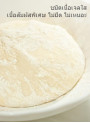
Cetearyl Alcohol (50/50, e.q. Lanette O)
Cosmetics
Isopropyl Myristate (Deodorized)
Cosmetics
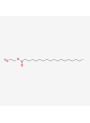
PEG-100 Stearate
Cosmetics
Ethyl butylacetylaminopropionate (IR3535)
Analytical
Citric Acid (Anhydrous, Natural)
Cosmetics
Sepimax Zen
Cosmetics