Stable Vitamin C for Microneedle Formulation
Question
If I want to use ascorbic acid in the production of microneedles, which must be heat-resistant, highly soluble, stable, and not easily degrade, which type of ascorbic acid should I use?
Answer
Stable Vitamin C for Microneedles
For producing microneedles that require a stable, heat-resistant, and highly soluble form of vitamin C, pure L-Ascorbic Acid is generally not suitable due to its inherent instability, particularly when exposed to heat and moisture.
Several stable derivatives of Vitamin C are available that offer improved properties better suited for formulation processes like those used for microneedles.
Considering the need for high stability and heat resistance, Ethyl Ascorbic Acid stands out. It is a highly stable, water-soluble derivative that can withstand high temperatures well, making it suitable for various formulation processes.
Other stable Vitamin C derivatives you could consider, depending on the specific microneedle manufacturing process and desired properties, include:
- Ascorbyl Glucoside (AA-2G): This is a water-soluble, moderately stable form. It is stable in water and heat up to 40°C, but might require pH adjustment during formulation (pH 6.5-6.8).
- Sodium Ascorbyl Phosphate (SAP) and Magnesium Ascorbyl Phosphate (MAP): These are highly stable, water-soluble derivatives. They are stable in formulas with a pH between 7-9 but should avoid heating above 60°C.
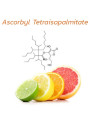
- Ascorbyl Tetraisopalmitate (Perfect-C™): This is an oil-soluble derivative known for its excellent stability and good heat resistance. It is highly effective but requires an oil-compatible matrix for the microneedles.
- Ascorbyl Palmitate (Vitamin C Ester): This is another oil-soluble form that is more stable than L-Ascorbic Acid and can be mixed in the oil phase at temperatures around 70°C. However, its efficacy in areas other than anti-oxidation may be less compared to other derivatives.
For microneedles, a water-soluble and highly heat-stable option like Ethyl Ascorbic Acid appears to be the most suitable choice among the derivatives, as it can better withstand potential heat during manufacturing and dissolve effectively in the skin. However, the best choice will ultimately depend on the specific materials and process used for the microneedles.
Related Products Mentioned
Vitamin C (L-ascorbic acid) (Ultra-Fine)
Vitamin C (L-ascorbic acid) (Fine)
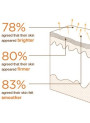

Vitamin C (L-ascorbic acid) (Standard)